


Part 6
Security Before Prosperity: Why No Nation Can Build Wealth on a Foundation of Fear
By Gloria Fraser, MFR
Opening Reflection
History teaches a simple but unforgiving lesson: prosperity does not flourish where fear governs daily life. Investors may tolerate bureaucracy, businesses may adapt to difficult regulations and citizens may endure economic hardship for a season. But when insecurity becomes widespread, confidence begins to disappear, investment retreats, productivity declines and even the most ambitious economic reforms struggle to succeed. Before a nation can build lasting prosperity, it must first convince its people that they are safe enough to dream, to work and to invest in tomorrow.
When President Bola Ahmed Tinubu assumed office in May 2023, he inherited not only an economy under immense structural pressure but also one of the most complex security environments in Nigeria’s modern history. Across different parts of the federation, the nature of insecurity varied significantly. Terrorism, banditry, kidnapping for ransom, oil theft, communal conflicts, separatist violence and organised criminal networks presented distinct challenges requiring different operational responses. Although successive administrations had invested heavily in strengthening the Armed Forces, the Police, intelligence agencies and other security institutions, the threat landscape had continued to evolve in both scale and sophistication.
It is impossible to understand Nigeria’s economic challenges without understanding this security reality. Economies do not grow in isolation from public safety. Farmers cannot cultivate fields they are afraid to enter. Manufacturers hesitate to establish factories where supply chains are constantly threatened. Foreign investors carefully assess political stability and security risks before committing long-term capital. Tourism cannot flourish where travellers fear for their safety, and local entrepreneurs inevitably reduce investment when uncertainty becomes the dominant feature of daily life.
Security is therefore not merely a military responsibility.
It is an economic asset.
Indeed, history demonstrates that every nation that has sustained rapid economic transformation has first established a reasonable degree of public order. Singapore strengthened the rule of law before becoming a global financial centre. Rwanda restored internal security before rebuilding its economy after the 1994 genocide. Colombia significantly weakened powerful criminal organisations before attracting substantial new investment. Even China’s extraordinary industrial expansion rested upon decades of internal stability that gave businesses the confidence to invest, manufacture and export on an unprecedented scale.


Nigeria’s circumstances are different, but the underlying principle remains the same. Development follows confidence, and confidence follows security.
Recognising this relationship, President Tinubu’s administration placed security among its highest national priorities. Beyond conventional military operations, the emphasis increasingly shifted towards intelligence-led operations, inter-agency coordination, improved surveillance, enhanced technology and closer collaboration between federal institutions and local communities. The objective was not merely to respond to attacks after they occurred, but to prevent them, disrupt criminal networks and restore confidence across vulnerable communities.
That strategic shift reflected an important truth.
Security is not measured solely by the number of operations conducted or criminals arrested. It is measured by whether farmers return safely to their fields, whether highways become safer for travellers, whether businesses invest with confidence and whether ordinary citizens can once again pursue their daily lives without constant fear.
Ultimately, that is the security dividend every reforming nation seeks.
And without it, even the most carefully designed economic reforms will struggle to achieve their full potential.
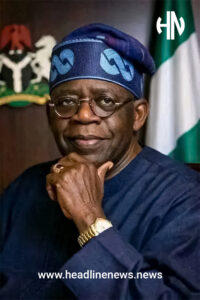


Every successful nation eventually discovers the same enduring truth: security is not the reward of development; it is the condition that makes development possible. Roads, factories, schools, hospitals and financial markets may symbolise national progress, but none can flourish where fear has replaced confidence. The first duty of every state is therefore not merely to govern its people, but to secure them. Without that assurance, prosperity becomes an ambition rather than an achievement.
This reality explains why security should never be viewed solely through the narrow prism of military operations or crime statistics. It is the invisible infrastructure upon which every successful economy is built. Investors may be attracted by natural resources, favourable policies or tax incentives, but they commit long-term capital only when they believe that lives, property and commercial activity can be protected by a capable and dependable state. In the same way, farmers cultivate more land when they are confident they will harvest it, manufacturers expand production when supply chains are secure and entrepreneurs create new businesses when they believe tomorrow will be safer than today.
History repeatedly confirms this relationship.
No nation has achieved sustained economic transformation while large parts of its territory remained hostage to persistent insecurity. South Korea’s industrial rise was built upon decades of internal stability. Rwanda’s economic recovery followed the painstaking restoration of national security and institutional confidence. Colombia began attracting significant investment only after weakening the grip of insurgent and organised criminal groups. Although each country’s experience was shaped by its own history, they all demonstrated the same principle: security is not an isolated sector of government. It is the foundation upon which every other sector depends.
Nigeria’s challenge is more complex because its security threats are diverse and geographically distinct. Terrorism in the North-East, banditry across parts of the North-West and North-Central, kidnapping for ransom, oil theft, piracy, communal conflicts and organised criminal networks each require different operational responses. No single strategy can effectively address every threat. Success depends upon a combination of professional intelligence gathering, modern technology, capable armed forces, effective policing, judicial efficiency, community cooperation and sustained political commitment.
Recognising this complexity, President Bola Ahmed Tinubu’s administration has increasingly emphasised intelligence-driven operations, improved coordination among security agencies, investment in surveillance technology and greater collaboration between federal and sub-national institutions. These efforts have produced measurable successes in several operations, while also demonstrating that lasting security cannot be achieved through military action alone. Criminal networks survive on financing, logistics, local support systems and weak institutions. Breaking those networks requires a comprehensive national strategy that extends far beyond the battlefield.
Equally important is the relationship between security and economic opportunity.
Communities trapped in cycles of poverty, unemployment and social exclusion often become more vulnerable to criminal recruitment and violent extremism. Security operations may suppress immediate threats, but long-term stability depends upon expanding legitimate opportunities for young people, improving education, strengthening local economies and ensuring that citizens experience the practical benefits of peace. Security and development therefore reinforce one another. Each becomes stronger when the other succeeds.
That broader understanding is central to Nigeria’s Great Reset.
Economic reforms cannot succeed if insecurity continues to discourage investment, disrupt agriculture and weaken national confidence. Likewise, security victories become difficult to sustain if economic conditions leave millions without meaningful opportunities. The two challenges are inseparable. A stronger economy supports stronger security institutions, while improved security creates the confidence upon which economic growth depends.
History will judge this administration not simply by the number of operations conducted or criminals apprehended. It will judge whether Nigeria became a country in which citizens could once again travel freely, cultivate their farms without fear, establish businesses with confidence and raise their families in communities protected by the rule of law. Those are the outcomes that define genuine national security.
The Final Word
History remembers the monuments nations build, but it first remembers whether those nations created the peace that made those monuments possible. Every highway, every factory, every thriving farm, every successful business and every foreign investment ultimately rests upon a foundation that cannot be seen but must never be taken for granted—the confidence that lives, property and opportunity are protected by the state. If President Bola Ahmed Tinubu’s security reforms succeed in restoring that confidence while reinforcing his broader economic programme, future generations may look back on this period not simply as a time when Nigeria confronted insecurity, but as the moment it reclaimed the stability upon which enduring prosperity was built. For nations are not transformed by wealth alone. They are transformed when security gives hope the confidence to invest in the future.
Food for Thought
“The wealth of a nation is built by its people, but the confidence to create that wealth is built by security.”


THE NATIONAL PATRIOTS.
The National Patriots believe that security remains the indispensable foundation of Nigeria’s national renewal. Sustainable economic reforms, productive investment and social progress can flourish only where citizens live without fear and institutions uphold the rule of law. A secure Nigeria is not merely a safer nation; it is the essential pathway to lasting prosperity, unity and development.




