


Part 7
From Reform to Renewal: Why Infrastructure Determines the Success of Every Economic Revolution
By Gloria Fraser, MFR
Opening Reflection
History remembers the reforms that rescued economies, but it celebrates the infrastructure that transformed them. Roads are more than concrete. Railways are more than steel. Ports are more than gateways to trade. Power stations are more than engineering projects. Together, they form the invisible architecture upon which nations build prosperity. Economic reforms may stabilise a country, but infrastructure gives that stability a destination. Without it, reform remains an idea. With it, reform becomes development.
Every successful economic transformation has eventually reached the same conclusion: lasting prosperity cannot be built on policy alone. Sound fiscal management may restore confidence. Stable institutions may encourage investment. Security may create the environment for enterprise. Yet none of these achievements can realise their full potential unless they are supported by modern infrastructure capable of moving people, goods, services and ideas efficiently across the economy.
This is one of the defining lessons of modern development.
Singapore became one of the world’s great trading centres because it invested relentlessly in world-class ports, airports and logistics. China transformed itself into the manufacturing hub of the global economy through decades of investment in highways, railways, industrial parks and electricity generation. India’s recent economic rise has been strengthened by sustained expansion of transport corridors, digital infrastructure and logistics networks. In every case, infrastructure did not merely accompany economic growth. It accelerated it.
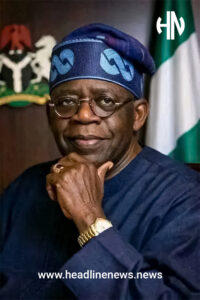
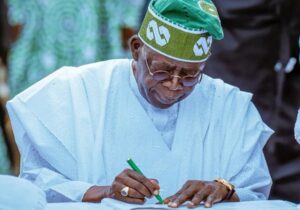
President Bola Ahmed Tinubu appears to recognise this historical reality.
His economic programme has consistently presented infrastructure not as an isolated government activity but as one of the principal instruments through which reform can be translated into higher productivity, stronger investment and broader national prosperity. Roads, railways, power, ports, housing, gas infrastructure, agriculture and digital connectivity are intended to become the physical foundations upon which the wider reform agenda rests.
That distinction is important.
Governments often announce reforms. Great nations build the infrastructure that allows those reforms to endure.
And that is the larger question now confronting Nigeria.
Every great nation is eventually recognised not by the speeches its leaders delivered, but by the infrastructure they left behind. History does not drive on political promises. It travels on highways, sails through modern seaports, generates power from reliable grids and measures progress by the opportunities those investments create for ordinary citizens. Infrastructure is where vision becomes visible, and where reform begins to change everyday life.
That is why infrastructure should never be viewed merely as a collection of construction projects. It is the physical expression of a nation’s economic philosophy. Every modern highway reduces the cost of moving agricultural produce from rural communities to urban markets. Every efficient railway lowers transportation costs for manufacturers. Every functional port strengthens trade and competitiveness. Every megawatt of additional electricity expands industrial capacity and encourages investment. Infrastructure does not simply connect places; it connects productivity with prosperity.
For decades, economists have argued that one of Nigeria’s greatest constraints has not been a shortage of talent or natural resources, but the cost of moving people, goods, energy and capital efficiently across the country. Farmers have watched harvested crops perish because rural roads were impassable. Manufacturers have spent billions of naira generating their own electricity. Businesses have absorbed the costs of traffic congestion, inefficient logistics and inadequate transport networks. These are not isolated inconveniences. They are structural barriers to national competitiveness.
President Bola Ahmed Tinubu’s infrastructure agenda seeks to confront these long-standing obstacles as part of a broader programme of economic renewal. Major investments in federal highways, rail development, gas infrastructure, energy projects, ports, housing and digital connectivity are intended not merely to modernise public assets but to reduce the cost of doing business, stimulate private investment and strengthen Nigeria’s productive capacity. The objective is to create an economy where growth is driven increasingly by production, commerce and innovation rather than by consumption alone.
Yet history also offers an important caution.
Infrastructure should never be measured by the number of projects announced or the kilometres of roads commissioned. It should be measured by the economic value it creates. A highway succeeds when it expands trade, reduces travel time and attracts investment. A railway succeeds when it lowers the cost of moving goods and supports industrial production. A port succeeds when it improves efficiency and strengthens exports. Infrastructure becomes transformational only when it improves the daily lives of citizens and increases the competitiveness of the national economy.
This is why implementation matters as much as ambition.
Projects must be completed on schedule, maintained properly and integrated into a coherent national development strategy. Public resources must be managed transparently, while partnerships with the private sector should continue to mobilise additional investment, technology and expertise. The success of Nigeria’s infrastructure programme will therefore depend not simply on engineering excellence but on institutional discipline, prudent financial management and continuity of purpose across successive administrations.
There is another reason why infrastructure occupies such a central place in Nigeria’s Great Reset.
Economic reforms often require patience before their benefits become visible. Infrastructure provides tangible evidence that difficult decisions are being converted into lasting national assets. When citizens see new transport corridors, improved power supply, expanded industrial zones, modern healthcare facilities and better schools, reforms cease to be abstract economic concepts. They become visible investments in the country’s future.
That is the bridge between sacrifice and hope.
It is also the bridge between policy and prosperity.
History will not remember this era because roads were built or contracts were awarded. It will remember whether those investments helped unlock Nigeria’s extraordinary economic potential, strengthened national unity, created employment and positioned the country to compete more effectively within Africa and the global economy.
The Final Word
The greatest monuments any generation leaves behind are not the speeches it delivered or the elections it won, but the foundations upon which future generations continue to build. Infrastructure is one of those foundations. It outlives governments, survives political transitions and continues creating opportunities long after those who conceived it have left office. If President Bola Ahmed Tinubu’s reforms succeed in converting economic adjustment into enduring national assets that expand productivity, attract investment and improve the lives of ordinary Nigerians, history may conclude that this was the moment when reform gave way to renewal. For nations are not transformed by what they promise to build. They are transformed by what they complete, sustain and pass on to those who follow.
Food for Thought
“Infrastructure is the language through which one generation speaks to the next. Great nations ensure that message is one of opportunity, not neglect.”


THE NATIONAL PATRIOTS.
The National Patriots believe that infrastructure is the enduring legacy of visionary leadership. Roads, railways, power, ports and digital connectivity are not simply public projects; they are investments in national productivity, unity and prosperity. Nigeria’s future will be shaped not by the promises it makes, but by the foundations it builds for generations yet unborn.

Princess Gloria Adebajo-Fraser MFR.
Former Special Adviser to Former President Goodluck Jonathan GCFR.




