


Part 8
The Toughest Questions: Can Nigeria’s Great Reset Succeed?
By Gloria Fraser, MFR
Opening Reflection
Every great reform eventually reaches the same moment. The excitement of bold announcements fades. The hardship of adjustment becomes real. Hope begins to compete with doubt, and citizens ask the question that history itself will eventually answer: Was the sacrifice worth it? No government can avoid that question. No reform can escape it. In every generation, the legitimacy of difficult decisions is determined not by the courage with which they were announced, but by the results they ultimately produce.
One of the greatest mistakes any government can make is to assume that criticism is merely political opposition. Democracies advance because difficult questions are asked, uncomfortable evidence is examined and leaders are held accountable for the promises they make. President Bola Ahmed Tinubu’s reform programme should therefore be subjected to rigorous public scrutiny, not because it deserves hostility, but because reforms of this magnitude deserve honest evaluation.
The concerns expressed by many Nigerians are neither imaginary nor insignificant.
Millions continue to struggle with the rising cost of food, transportation, housing and healthcare. Small businesses face higher operating costs. Manufacturers continue to navigate inflationary pressures and exchange-rate adjustments. Families whose incomes have not kept pace with rising prices understandably question when the promised benefits of reform will become visible in their daily lives. These concerns deserve neither dismissal nor ridicule. They deserve thoughtful answers supported by evidence and measurable progress.
History offers an important reminder.
Major reforms rarely enjoy universal support during their early stages. India’s liberalisation programme, Indonesia’s restructuring after the Asian Financial Crisis, Ghana’s economic reforms during the 1980s and Rwanda’s post-conflict reconstruction all attracted criticism, uncertainty and political resistance. Yet history eventually judged those reforms according to outcomes rather than opinion polls. Some succeeded because governments sustained them while protecting vulnerable citizens. Others faltered because implementation weakened, institutions failed or political resolve diminished.
That distinction is crucial for Nigeria.
The debate is no longer whether President Tinubu’s reforms are ambitious. Few would dispute that they are. The more important question is whether implementation will be sufficiently disciplined, transparent and inclusive to produce lasting improvements in the lives of ordinary Nigerians.
That is where the real test begins.
History is rarely persuaded by good intentions alone.
History is not unkind to nations that struggle. It is unkind to nations that refuse to learn. Every great reform carries uncertainty, every transformation demands sacrifice and every generation must decide whether the discomfort of change is preferable to the consequences of standing still. The question before Nigeria is therefore not whether reform has been difficult. The question is whether the country has the discipline, the leadership and the collective resolve to see it through.
That question cannot be answered by government alone. It belongs equally to the opposition, the private sector, organised labour, civil society, the media and ordinary citizens. Economic transformation is not sustained by presidential speeches or policy documents. It is sustained when institutions remain strong, public confidence grows and national priorities survive the turbulence of political competition.
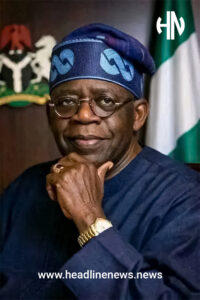
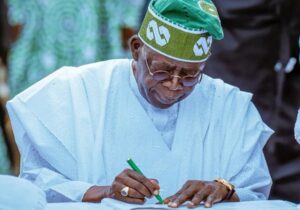
For President Bola Ahmed Tinubu, the greatest challenge is no longer announcing reforms. That phase has largely been completed. The greater responsibility now is to ensure that the reforms produce visible improvements in the lives of ordinary Nigerians. Citizens who have accepted difficult adjustments are entitled to expect measurable progress. They should see expanding employment opportunities, improved infrastructure, greater security, more reliable electricity, increased agricultural production, stronger industrial growth and better-targeted social support for vulnerable households. Those outcomes are not political favours. They are the standard by which every reform programme must ultimately be judged.
This is where implementation becomes more important than intention.
History offers many examples of governments that designed impressive reform programmes but failed to execute them with consistency. Others began boldly but gradually lost momentum as political pressures mounted. Some allowed corruption, institutional weakness or poor communication to erode public confidence. Successful reform requires far more than sound economic ideas. It requires capable institutions, transparent governance, disciplined public finance and a willingness to adjust policies where evidence demonstrates that improvements are necessary.
That balance is particularly important in a democracy.
Supporting reform should never require silence in the face of genuine shortcomings. Equally, criticising government should not require rejecting every policy regardless of its long-term merit. Mature democracies create space for both accountability and continuity. Governments must remain open to constructive criticism, while critics should distinguish between policies that require improvement and policies whose abandonment could create even greater national difficulties.


Nigeria has reached such a moment.
The reforms initiated by President Tinubu have already altered the direction of economic policy in ways that previous administrations debated but ultimately left unresolved. Whether those decisions become the foundation of national renewal or another chapter of unrealised promise will depend upon what happens next. Consistency must replace uncertainty. Delivery must replace declaration. Institutions must become stronger than personalities, and national interest must remain greater than partisan advantage.
Ultimately, no reform programme succeeds because its architects believe in it.
It succeeds because citizens gradually experience its benefits in their homes, businesses and communities. When inflation moderates sustainably, when investment expands, when young people find meaningful employment, when farmers cultivate in safety, when manufacturers produce competitively and when families regain confidence in tomorrow, the arguments surrounding reform begin to fade. Results become the most persuasive response to criticism.
That is the challenge now before President Tinubu’s administration.
It is also the opportunity.
The Final Word
Every generation is presented with a defining national choice. Some choose the comfort of postponement and leave difficult decisions to those who follow. Others accept temporary hardship in pursuit of a stronger future. Nigeria now stands at that historic crossroads. President Bola Ahmed Tinubu has chosen the path of structural reform, fully aware that history rarely rewards leaders for choosing the easier road. Whether that choice ultimately transforms the nation will depend not on the boldness of the decisions already taken, but on the discipline, integrity and consistency with which they are carried through to completion. History will not ask whether Nigerians debated these reforms passionately. It will ask whether they produced a more secure, more productive, more prosperous and more united nation. That—and that alone—will be the enduring verdict on Nigeria’s Great Reset.
Food for Thought
“Reforms are remembered not for the courage that begins them, but for the results that sustain them.”


THE NATIONAL PATRIOTS
The National Patriots believe that Nigeria’s Great Reset should be judged with fairness, patience and evidence. Constructive criticism strengthens democracy, while disciplined implementation strengthens reform. The ultimate measure of leadership is not the popularity of difficult decisions, but their capacity to build a safer, stronger and more prosperous Nigeria for future generations.

Princess Gloria Adebajo-Fraser MFR.
Former Special Adviser to Former President Goodluck Jonathan.




