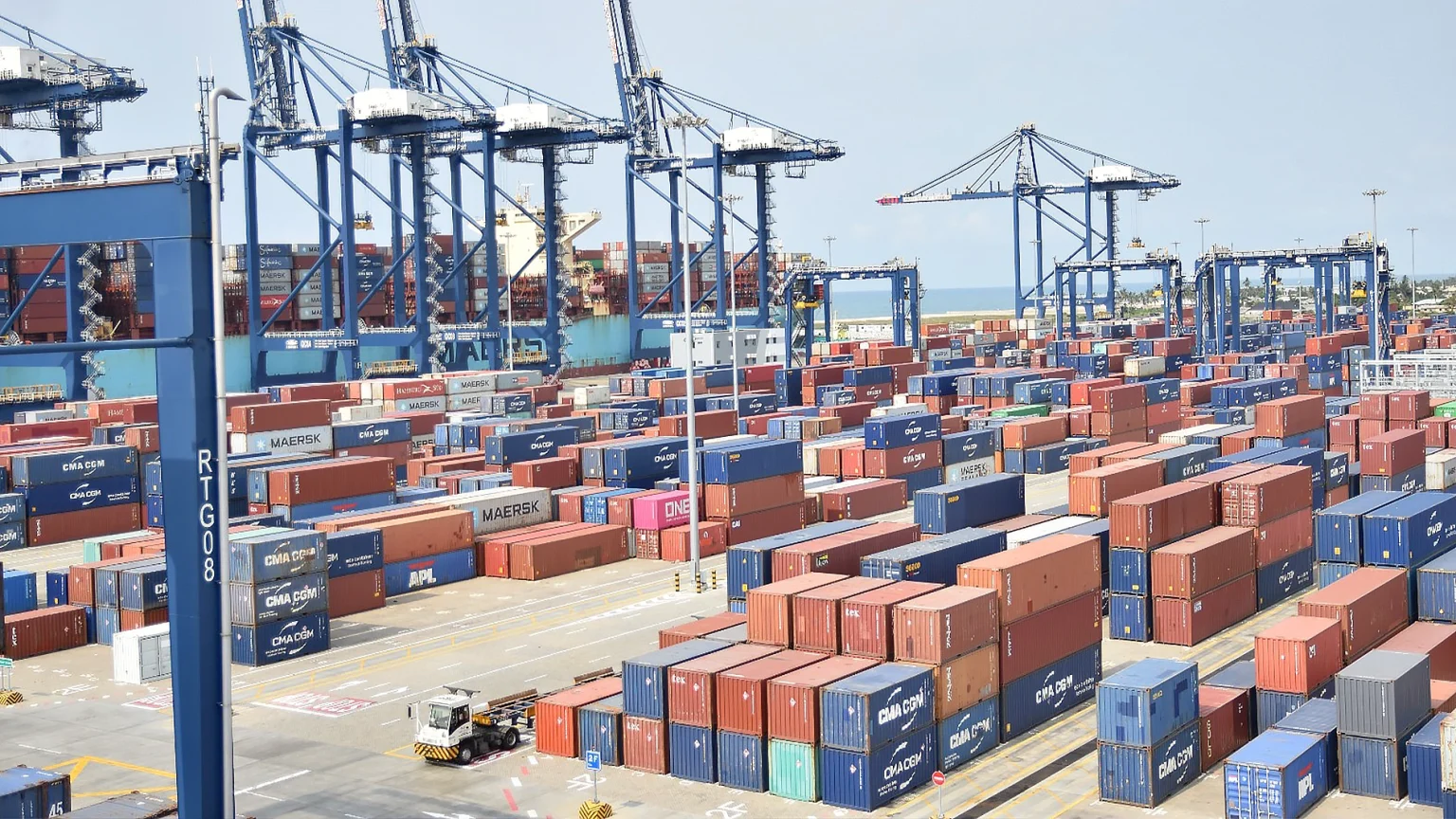
Nigeria’s ongoing maritime reforms and port infrastructure upgrades are beginning to produce visible results, with the sector recording strong growth in the first quarter of 2026 and reinforcing the country’s ambition to become a major trade hub under the African Continental Free Trade Area (AfCFTA).
The renewed momentum follows President Bola Tinubu’s decision in August 2023 to establish the Federal Ministry of Marine and Blue Economy, a move aimed at diversifying the economy away from crude oil and unlocking the country’s estimated $296 billion maritime potential.
For years, Nigeria’s ports handled most of the nation’s international trade but struggled with poor infrastructure, congestion, insecurity, bureaucratic delays and inefficient cargo clearance systems. These long-standing challenges weakened competitiveness and pushed cargo traffic to neighbouring countries.
Industry data had estimated that inefficiencies in the maritime sector cost Nigeria about N7.97 trillion annually.

To reverse the trend, the Tinubu administration launched wide-ranging reforms focused on modernising port infrastructure, improving operational efficiency, boosting maritime security and strengthening Nigeria’s position in regional trade.
The reforms are now beginning to show results.
According to first-quarter 2026 operational figures released by the Nigerian Ports Authority (NPA), the sector recorded strong growth in cargo throughput, vessel tonnage, exports and container traffic.
Although the number of ocean-going vessels dropped slightly from 1,102 in Q1 2025 to 1,092 in Q1 2026, Gross Registered Tonnage (GRT) surged by 19.5 per cent to 46.75 million. The increase indicates that Nigerian ports are now receiving larger and more efficient vessels capable of carrying more cargo.
The development has been linked partly to the growing impact of the Lekki Deep Sea Port, which has expanded Nigeria’s ability to accommodate large international ships and improve economies of scale.
Cargo throughput also rose significantly during the quarter. Total cargo traffic excluding crude oil terminals increased by 11.6 per cent to 32.38 million metric tonnes, compared to 29.02 million metric tonnes during the same period last year.
Import cargo grew moderately by 3.3 per cent to 18.11 million metric tonnes, while export cargo recorded a much stronger rise of 23.7 per cent to 14.13 million metric tonnes.
The increase in exports reflects expanding industrial and agricultural production, improved trade facilitation and stronger export logistics. Analysts say this aligns with the government’s broader strategy to diversify the economy and strengthen non-oil exports.
Container operations also showed notable improvement. Outbound laden container traffic jumped by 67.6 per cent, rising from 61,332 TEUs in Q1 2025 to 102,803 TEUs in Q1 2026.

The growth in containerised exports is particularly significant because it is often associated with processed goods, manufactured products and higher-value agricultural exports.
Meanwhile, empty container traffic declined by 44.7 per cent, a development considered positive as it reflects better container utilisation and more balanced cargo movement.
Vehicle handling across Nigerian ports also recorded strong growth. Traffic rose by 67 per cent to 58,870 units in the first quarter of 2026, compared to 35,262 units during the same period last year.
Transshipment activity also expanded sharply, with container transshipment traffic increasing by 83.1 per cent. This suggests Nigeria is gradually emerging as a regional cargo redistribution hub within West Africa.
Speaking recently, NPA Managing Director, Dr Abubakar Dantsoho, warned that Nigeria risks losing regional cargo opportunities if its ports fail to match global standards in efficiency, speed and reliability.
“The time has come for a paradigm shift in the structure of Nigeria’s economy towards the full utilisation of our marine resources,” Dantsoho said. “Our port system, if properly harnessed, can serve as a major driver of economic growth.”
Despite accounting for more than 60 per cent of West Africa’s GDP, Nigeria currently handles only about 25 per cent of the region’s cargo traffic.
Under AfCFTA, competition for cargo dominance across Africa is expected to intensify, making efficiency and infrastructure critical to future success.
To strengthen port competitiveness, the Federal Government recently secured legislative approval for a $1 billion loan to rehabilitate the Lagos Port Complex and Tin Can Island Port.
Procurement processes are also underway for upgrades at Warri, Port Harcourt, Onne and Calabar ports, while new deep seaports are being developed in Bayelsa, Cross River, Akwa Ibom and Ondo states.
At the same time, the government is pushing digitalisation reforms through the deployment of the Port Community System and the National Single Window platform to reduce delays, improve transparency and speed up cargo clearance.
Maritime security has also improved considerably. Nigeria has now recorded more than four years without piracy incidents, largely due to the Deep Blue security programme and enhanced surveillance operations in the Gulf of Guinea.
Industry stakeholders believe the improving operational figures recorded in Q1 2026 reflect a maritime sector gradually moving toward greater efficiency, stronger export competitiveness and increased regional relevance.
While challenges such as infrastructure gaps and logistics bottlenecks remain, the reforms are increasingly positioning Nigeria to compete more effectively within Africa’s evolving trade landscape under AfCFTA.