

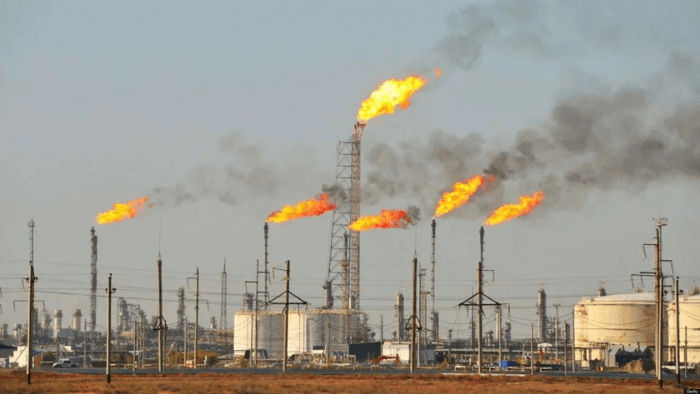
A new global report has revealed that just nine countries were responsible for 83 percent of all gas flaring worldwide in 2025, despite accounting for only 46 percent of global oil production.
The findings show that global gas flaring increased for the third consecutive year, rising from 157 billion cubic metres (bcm) in 2024 to 167 bcm in 2025.

Gas flaring is the practice of burning natural gas produced during oil extraction instead of capturing and using it. The process wastes valuable energy resources and significantly contributes to greenhouse gas emissions.
According to the report, gas flaring released an estimated 429 million tonnes of carbon dioxide equivalent emissions in 2025, including around 50 million tonnes from unburned methane.

Russia, Iran, Iraq, Venezuela, Mexico, Libya, Algeria, Nigeria and the United States accounted for the overwhelming share of global gas flaring. More than 60 percent of the increase recorded in 2025 came from Russia, Mexico and Iran alone, with the three countries adding about 6 billion cubic metres of flared gas during the year. Russia remained the world’s largest gas-flaring nation after recording a 9 percent increase.
The report estimates that the gas wasted through flaring in 2025 was worth about $54 billion. It also noted that the volume of gas burned exceeded the amount of liquefied natural gas transported through the Persian Gulf and was roughly equal to Africa’s total annual gas consumption.

Experts estimate that eliminating routine gas flaring globally would require between $70 billion and $100 billion in investment. However, the technologies needed to capture and utilize associated gas are already available. The main barriers remain inadequate pipeline infrastructure, limited gas markets, insufficient financing and weak regulatory enforcement.
Reducing gas flaring could provide significant economic and social benefits. Countries such as Egypt, India and Iraq could reduce costly gas imports, improve electricity generation and expand access to clean cooking energy. The report noted that one billion cubic metres of natural gas can generate about four billion kilowatt-hours of electricity, while countries like Angola and the Republic of Congo could also benefit from making better use of associated gas.

Although global flaring increased, the report highlighted notable progress in some countries. The United States recorded the largest reduction in flaring volumes in 2025 after commissioning the Matterhorn Express pipeline, while Kazakhstan has cut gas flaring by 87 percent since 2012 through stronger regulations and investments in supporting infrastructure.
The report concluded that consistent government policies and sustained investment can significantly reduce gas flaring, strengthen energy security, create economic opportunities and lower greenhouse gas emissions.




