

- HeadlineNews.News Special Report.
“Northern Governors Renew Call for State Police to Tackle Insecurity”
By the National Patriots, HeadlineNews.News Investigative Desk –
May 2025
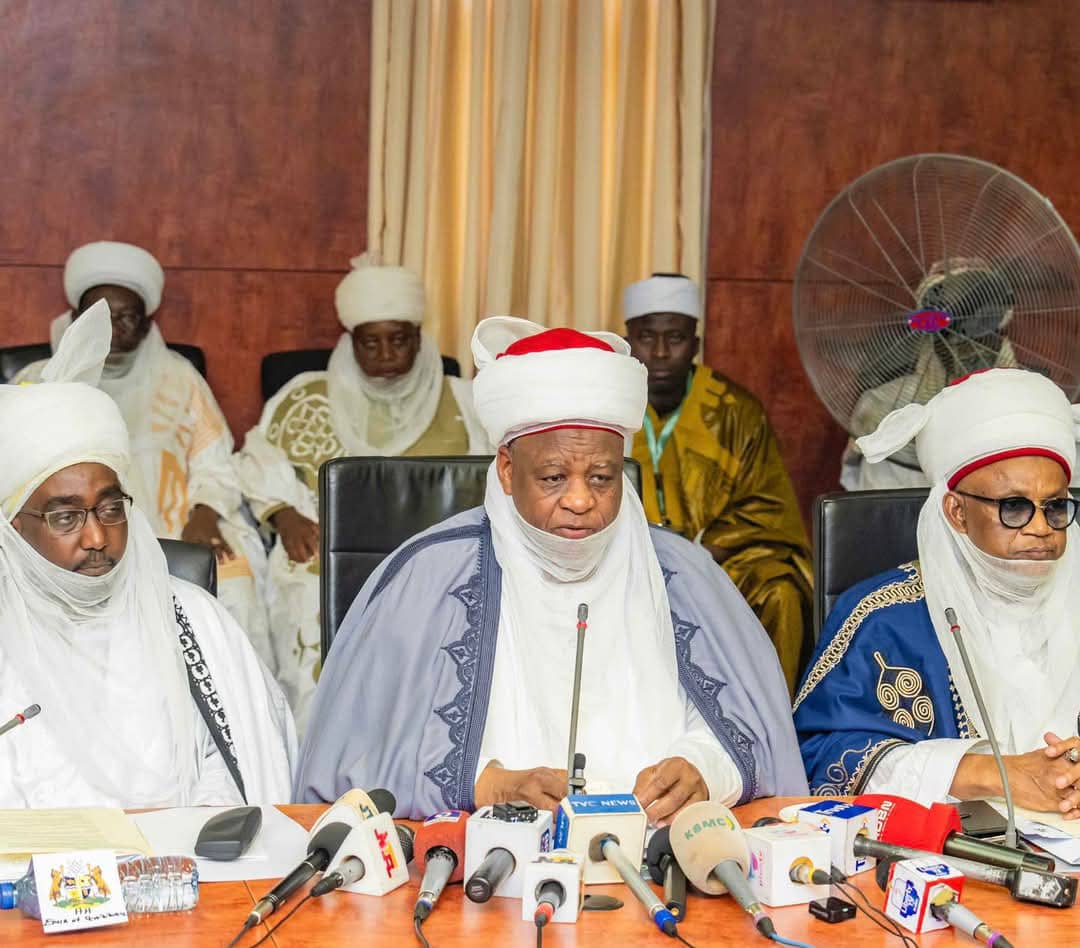
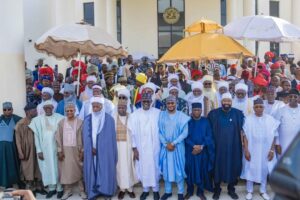
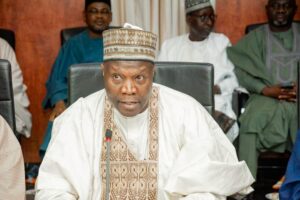
Kaduna, Nigeria — In a significant policy shift, governors from Nigeria’s Northern States have collectively reaffirmed their support for the establishment of state police as a necessary measure to combat deepening insecurity across the region. The renewed stance emerged during the recent Northern States Governors’ Forum (NSGF) meeting held at the Sir Kashim Ibrahim House, Kaduna, chaired by Gombe State Governor Muhammad Inuwa Yahaya and attended by traditional leaders led by the Sultan of Sokoto, His Eminence Sa’ad Abubakar III.
According to one of the governors in an exclusive interview with HeadlineNews.News, the forum extensively discussed “our resolve on the importance of state police in resolving the security challenges in Northern Nigeria,” adding that “the time for federal monopoly on policing has passed.”

Why State Police, and Why Now?
The Northern region has borne the brunt of Nigeria’s security crisis in the past decade—ranging from Boko Haram insurgency and banditry in Zamfara and Kaduna, to farmer-herder clashes in Benue and Plateau, and mass abductions in Niger and Katsina.
Princess G. Fraser, MFR, of the National Patriots, a national security advocate and humanitarian leader, noted:
“There’s no functional federation in the world without decentralized policing. Security must begin from the grassroots, where the people are known, not from Abuja. The North can no longer afford to delay.”

Historical Context: Centralised Police, Local Problems
Nigeria’s unitary police structure, modeled after British colonial administration, places control of all armed police units under the federal government. Since independence in 1960, efforts to reform this centralized system have faced political resistance, largely over fears of abuse by state governors.

Yet, Nigeria’s own pre-independence history featured regional police and native authority police in the 1950s, which were disbanded after the 1966 military coup due to allegations of political misuse.
Now, with over 600,000 reported deaths and displacements from insurgency, and only about 370,000 active personnel policing over 220 million Nigerians (a 1:600 ratio far below the UN’s 1:450 recommendation), the urgency for restructuring has returned.

The Global Lens: What Works Elsewhere
Several federations have successfully implemented multi-tiered policing systems:
United States: Federal, state, and municipal police forces coexist. Local sheriffs are elected by communities, increasing accountability.
India: Each state maintains its own police force under a central guiding framework, allowing regional adaptation.
Brazil: State police handle both civil and military policing with oversight from state governors.
These models show that state police systems improve response time, enable community intelligence, and increase accountability—especially in large, diverse federations like Nigeria.

The Pros: Arguments for State Police
1. Local Knowledge & Intelligence
Officers recruited from local communities can distinguish between civilians and infiltrators more easily.
2. Rapid Response
State police would reduce reliance on slow federal deployment, especially in rural areas.
3. Community Trust
People are more likely to share intelligence with familiar, local officers.
4. Creation of Jobs
With Nigeria’s youth unemployment at 33.3%, state police could absorb thousands of qualified individuals.
5. Federal Burden Relief
Devolving police duties would allow federal forces to focus on transnational crime and national threats.
The Cons: Fears of Abuse and Political Manipulation
Critics argue that governors might weaponize state police to suppress political opposition or dissent—an echo of abuses in Nigeria’s First Republic. There are also concerns about funding, training, and national cohesion.
But as Dr. Fraser notes:
“Checks and balances must be built into the structure—via independent police service commissions, oversight by civil society, and strict legislative frameworks. Avoiding state police because of fear is no longer acceptable. People are dying.”
Public Sentiment and Political Reality
In a 2024 survey by CLEEN Foundation, 67% of Nigerians across geopolitical zones expressed support for state police. Several Southern states—including Lagos, Ondo, and Rivers—have already established quasi-police outfits like Amotekun, Ebube Agu, and Neighbourhood Watch, although without federal recognition.
The Northern governors’ latest endorsement marks a turning point, indicating a rare North-South consensus on a traditionally divisive issue.

Conclusion: Time for Courageous Reform
The call for state police is no longer a partisan cry—it is a survival strategy. With growing threats from armed groups, cross-border criminals, and weak federal response capacity, decentralizing Nigeria’s security architecture is fast becoming a national imperative.
“The most dangerous weapon of the oppressor is the mind of the oppressed,” wrote Steve Biko. But in today’s Nigeria, the most dangerous gap is between danger and response. State police may not be perfect, but inaction is proving deadlier.
Dr. G. Fraser. MFR
The National Patriots
For full interviews, analysis, and updates on Nigeria’s security reform debate, stay with www.headlineNews.News.




