

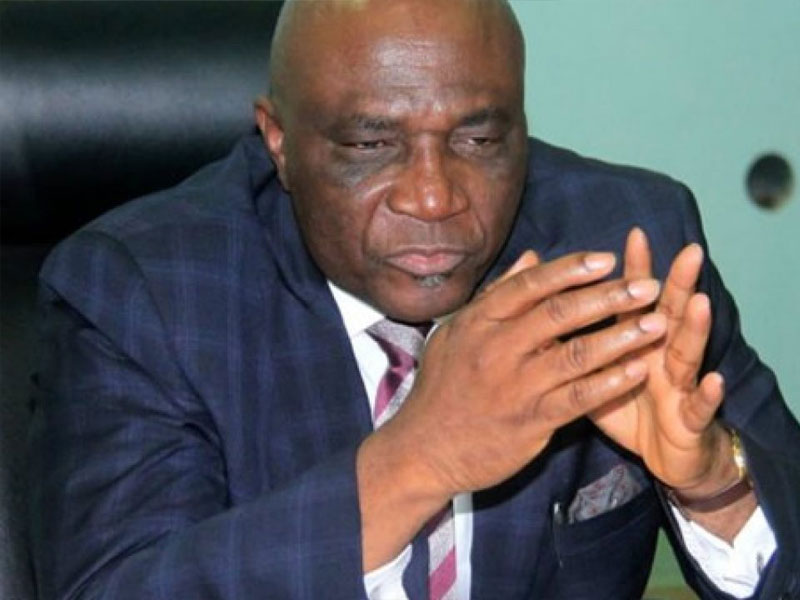
Presidential spokesperson Bayo Onanuga has challenged claims that hunger in Nigeria has reached the alarming levels frequently described by critics of President Bola Tinubu’s administration, insisting that ongoing government reforms are beginning to produce positive results for citizens.
Speaking during a television interview, Onanuga defended the administration’s economic policies and highlighted several government initiatives which he believes are improving living conditions despite the current economic challenges.

According to him, infrastructure development, student loan programmes, and consumer credit schemes are among the measures helping Nigerians cope with the effects of economic reforms.
He recounted a recent trip from Ibadan to Lagos, during which he diverted through Ijebu-Ode after receiving traffic updates. He said he was impressed by the quality of a newly completed concrete road along the route, noting that the project appeared to have significantly improved transportation in the area.

Onanuga stated that residents seemed pleased with the development, suggesting that visible infrastructure projects can positively impact public perception and daily life.
The presidential aide also pointed to the ongoing coastal highway project connecting Lagos and Calabar, saying it has considerably reduced travel time for commuters, including himself. He explained that journeys that previously took more than two hours now require significantly less time because of improved road infrastructure.
Beyond roads, Onanuga argued that government-backed financial support programmes are providing relief to many Nigerians. He cited the student loan initiative, which allows eligible students to access interest-free educational funding, as well as low-interest credit facilities available to workers.

According to him, such programmes are helping families manage expenses and should be considered part of the benefits emerging from the administration’s policies.
He further suggested that public discussions surrounding the economy have become heavily influenced by negative assumptions, making it difficult for some people to acknowledge positive developments taking place across the country.
Referring to a widely circulated social media moment during the early days of the administration, Onanuga said public narratives about hunger gained momentum after a viral video associated with President Tinubu’s visit to Lagos. He argued that since then, the perception of widespread hunger has remained dominant in political discussions.
While admitting that economic hardship exists, he maintained that his personal interactions with workers and ordinary citizens do not reflect the extreme levels of hunger often described in public debates. He said he regularly engages with people around him and observes how they are adapting to current economic realities.

However, food security assessments continue to paint a concerning picture. Reports from international organizations indicate that millions of Nigerians remain vulnerable to food insecurity, particularly in conflict-affected areas of the North-East where insecurity, displacement, and limited access to farming activities have worsened conditions.
Analysts also note that rising food prices continue to place significant pressure on household budgets, with inflation affecting the cost of essential commodities across the country.
The federal government has consistently maintained that key reforms—including the removal of fuel subsidies, foreign exchange adjustments, infrastructure investments, student loans, and consumer credit programmes—are necessary steps aimed at stabilizing the economy and creating long-term growth.
Despite these assurances, many Nigerians remain focused on the immediate impact of the reforms, questioning whether they are leading to lower food prices, stronger purchasing power, and improved living standards quickly enough.
Onanuga’s remarks are expected to fuel further debate between government officials who believe the reforms are beginning to yield results and citizens who argue that the cost-of-living crisis remains a major burden for millions of households nationwide.




