

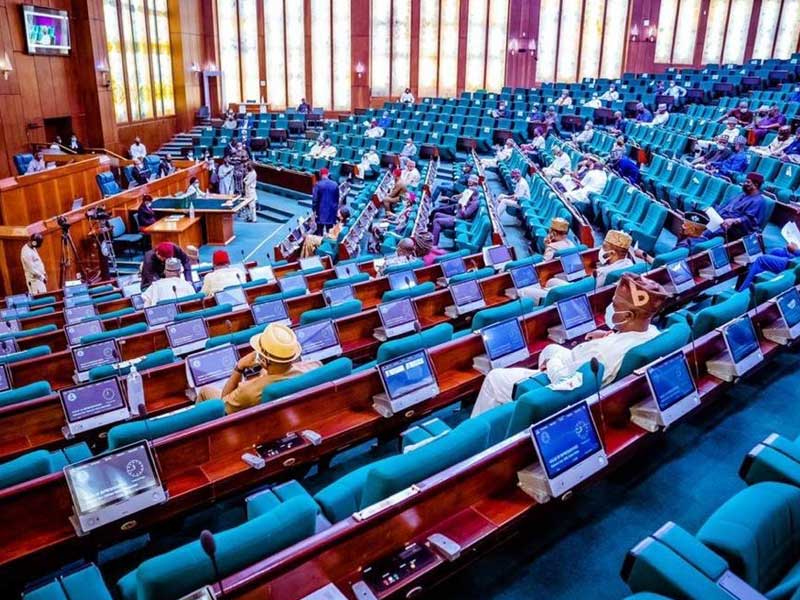
The Chairman of the House of Representatives Ad Hoc Committee on Mineral Exploitation, Security and Anti-Money Laundering, Hon. Sanni Egidi Abdulraheem, has expressed concern over the growing impact of illegal mining, weak law enforcement and money laundering, warning that the challenges continue to deny Nigeria the full economic benefits of its abundant mineral resources.
Speaking at a High-Level Stakeholders Workshop on Extractive Industry Governance held at the National Assembly, Abdulraheem said the House constituted the ad hoc committee to investigate illegal mining activities, track illicit financial flows linked to the sector, assess security around mining communities and recommend reforms to strengthen governance in the extractive industry.

He noted that despite Nigeria’s vast deposits of minerals such as gold, lithium, tin, coal and tantalite, the country has not fully benefited from its natural wealth due to widespread illegal mining operations and poor regulatory enforcement.
According to the lawmaker, criminal activities within the sector have deprived the nation of substantial revenue, weakened economic development and contributed to rising insecurity in many mining communities.
He explained that the committee is examining the scale of illegal mining across the country, identifying financial networks used to conceal proceeds from the activities, evaluating existing security measures and reviewing the effectiveness of current laws and regulatory institutions.

Abdulraheem disclosed that consultations with relevant government agencies have already begun, adding that the committee would ensure full cooperation from stakeholders to obtain accurate information needed for meaningful reforms.
He described illegal mining as a complex challenge that extends beyond the mining sector, affecting national security, financial intelligence, governance and community development. He stressed that collaboration among regulators, security agencies, financial institutions, state governments, traditional rulers, mining operators and civil society organisations is essential to addressing the problem.

The committee chairman called on the Federal Ministry of Solid Minerals Development and the Nigeria Mining Cadastre Office to provide licensing records and regulatory data that would support the committee’s investigation.
He also urged security agencies, particularly the Nigeria Security and Civil Defence Corps (NSCDC) and the Mining Marshals, to identify operational challenges requiring legislative intervention.
In addition, Abdulraheem appealed to the Nigerian Financial Intelligence Unit (NFIU) and the Economic and Financial Crimes Commission (EFCC) to strengthen efforts aimed at tracing and blocking illicit financial transactions connected to illegal mining.

He encouraged state governments and traditional institutions to provide intelligence from mining communities while assuring legitimate mining operators that the committee’s work is intended to protect lawful investments and eliminate unfair competition from illegal miners.
The lawmaker also acknowledged the contributions of civil society organisations and the media in promoting transparency and accountability within the extractive sector, adding that recommendations gathered during the workshop would guide the committee’s final report to the House of Representatives.
Declaring the workshop open, Speaker of the House of Representatives Tajudeen Abbas described illegal mining as a serious threat to Nigeria’s economy and sovereignty. He said the country cannot achieve sustainable economic diversification if the solid minerals sector continues to suffer from illegal activities and poor transparency.
Abbas explained that the workshop was designed to gather expert opinions and practical recommendations that would assist lawmakers in developing effective legislation to reform the mining sector.

Representing the Nigeria Governors’ Forum (NGF), Hajiya Fatima Usman Katsina reaffirmed the forum’s commitment to supporting efforts aimed at improving governance in the solid minerals sector. She revealed that the NGF is already collaborating with the Federal Ministry of Solid Minerals Development to unlock the industry’s economic potential.
Meanwhile, the Commandant General of the NSCDC, Ahmed Abubakar Audi, called for the establishment of a special court dedicated to prosecuting illegal mining offences. Represented by the Commander of Mining Marshals, ACC Attah John Onoja, he disclosed that more than 671 suspects have been arrested since 2024, with 397 already arraigned in court.
He added that enforcement operations have resulted in the closure of several illegal mining sites and contributed to a 337 percent increase in mining revenue. Audi also appealed for increased funding to improve surveillance technology, logistics and manpower to strengthen the fight against illegal mining nationwide.




