

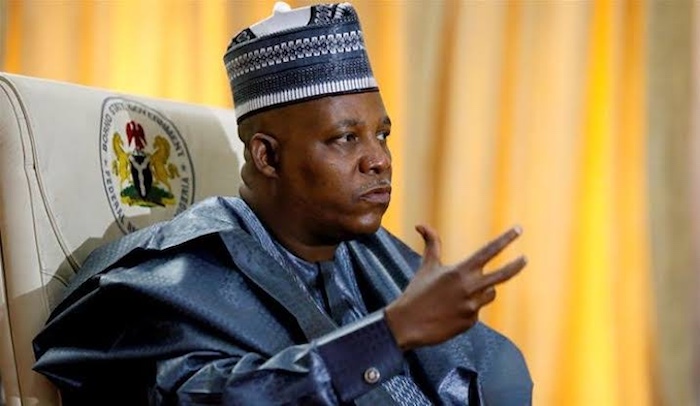
Vice President Kashim Shettima has revealed that Nigeria’s debt service-to-revenue ratio dropped significantly from 120 per cent in December 2022 to 68 per cent in 2025 following ongoing tax reforms introduced by President Bola Tinubu’s administration.

Shettima made the disclosure during the opening of the 2026 Tax Conference organised by the Chartered Institute of Taxation of Nigeria (CITN) in Abuja. The conference was themed “Tax Reforms and Global Relevance: Positioning Nigeria’s Tax System for a Sustainable Future.”
Represented by the President’s Special Adviser on Economic Affairs, Dr Tope Fasua, the Vice President said the reforms have become a key tool for improving government revenue, strengthening fiscal sustainability and supporting the administration’s goal of building a $1 trillion economy by 2030.

According to him, increasing government revenue through effective fiscal reforms remains the best way to reduce pressure from debt servicing obligations.
He explained that the current tax reforms, which officially took effect on January 1, 2026, represent Nigeria’s first major tax overhaul in more than three decades and are aimed at repositioning the economy for sustainable long-term growth.
Shettima stated that the reforms are helping government streamline tax administration, expand the tax base and improve fiscal stability.

He added that the administration is committed to reducing the heavy debt burden that has limited investments in sectors such as education, healthcare, infrastructure and social services.
The Vice President also defended the reforms against criticism, stressing that many Nigerians were still unaware of the “pro-poor” aspects of the policy.
He disclosed that individuals earning N1 million or below annually are exempt from paying tax under the reforms, while small businesses with annual turnover of N100 million and below are also tax exempt.
According to him, the administration remains focused on ensuring that Nigerians and businesses benefit from the reforms rather than suffer under them.

Also speaking at the event, Minister of Finance and Coordinating Minister of the Economy, Taiwo Oyedele, said the reforms were introduced to create a stronger fiscal framework for national development and not merely to increase taxation.
Oyedele explained that Nigeria’s former tax system was weakened by multiple taxation, fragmented administration, poor compliance and unstable revenue generation.
He said the reforms are designed to simplify tax administration, encourage investment, reduce compliance costs and improve trust between citizens and government.

The minister added that low-income earners and minimum wage workers have been exempted from personal income tax as part of efforts to reduce financial pressure on vulnerable groups.
He further noted that the government is working toward a fairer and more transparent tax system that aligns with global best practices while addressing Nigeria’s economic realities.
President of the Chartered Institute of Taxation of Nigeria, Innocent Ohagwa, described taxation as a major pillar in Nigeria’s transition away from dependence on oil revenue.
He urged tax professionals to support the implementation of the reforms through transparency, accountability and compliance.




