

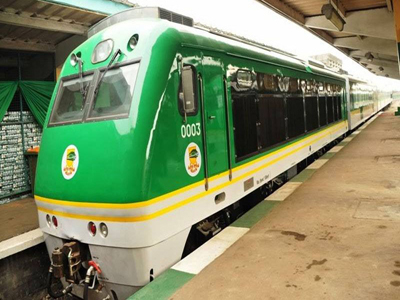
The South West Development Commission (SWDC) has obtained a provisional rail operating and track access licence from the Nigerian Railway Corporation (NRC), a move that will allow it to run passenger and freight services across existing rail corridors in the South West region.

The licence is not for constructing new rail lines but for operating services on already established rail networks that connect key communities, business centres, and industrial hubs across the region. It also permits operations on both narrow and standard gauge systems.
With this approval, the commission is set to launch the South-West Rail, Agro-Industrial & Logistics (SW-RAIL) platform, an initiative designed to improve transportation efficiency, boost agro-industrial activities, strengthen mobility, and support economic growth across Lagos, Ogun, Oyo, Osun, Ondo, and Ekiti states.

Speaking in Ibadan, the Managing Director and CEO of SWDC, Dr. Charles ‘Diji’ Akinola, described the development as a shift from planning to execution, noting that the initiative aims to rebuild the region’s economic backbone through rail infrastructure.
He explained that the SW-RAIL platform will integrate freight systems, agro-logistics, industrial parks, logistics hubs, cold-chain facilities, and improved port connectivity, alongside passenger transport systems and transit-oriented developments.
According to him, the South West remains Nigeria’s largest economic region but continues to struggle with high logistics costs, congestion, and inefficiencies in supply chains. He added that rail transport offers a more sustainable and cost-effective solution to these challenges.
The project is expected to reduce transportation costs, improve freight movement, enhance agricultural distribution, boost export capacity, create jobs, and stimulate industrial expansion across the region.

By leveraging existing NRC corridors, the SWDC plans to offer businesses, farmers, exporters, and logistics operators a more reliable alternative to road transport, easing pressure on highways and improving delivery timelines for goods and services.
The rail system will also strengthen links between major ports such as Apapa and Tin Can and key production and commercial centres across the South West, encouraging investment in warehousing, agro-processing, and small business development.
The initiative will be implemented through partnerships with state governments, private investors, logistics firms, and international infrastructure stakeholders.
It follows the commission’s earlier TransComs programme, a development model aimed at transforming rural communities into integrated economic hubs through agriculture, housing, enterprise, and logistics development.




