By Dr. Mohammed Musa Zango FPSN
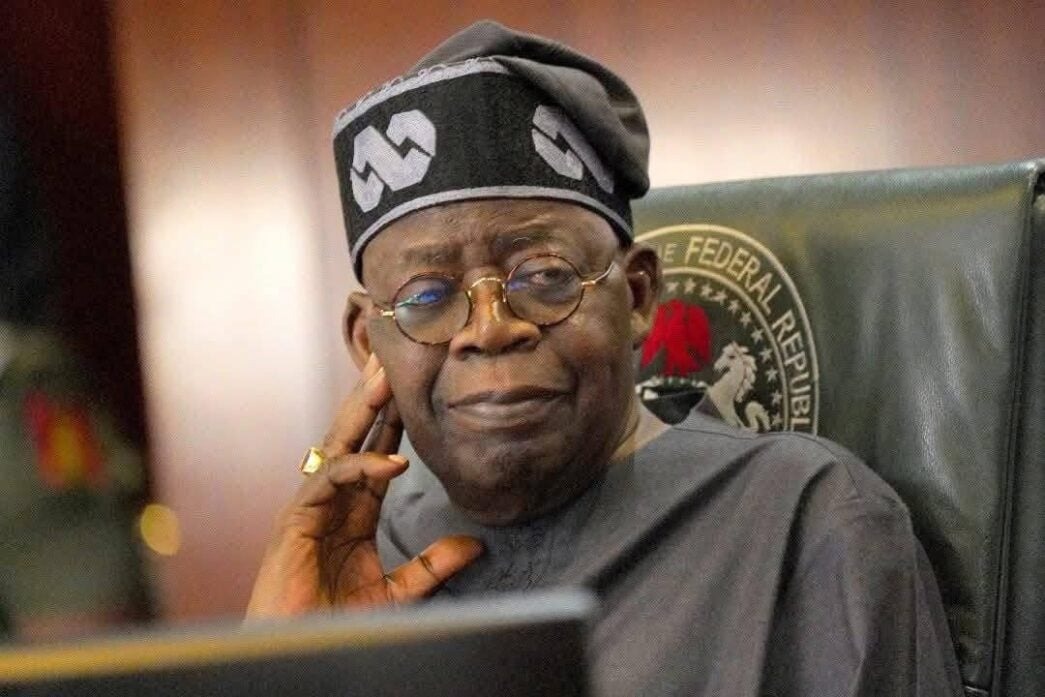
At 74, President Bola Ahmed Tinubu deserves to be assessed not through emotion, propaganda, or regional suspicion, but through facts, constitutional reality, and the long view of national development.
This is particularly important in Northern Nigeria, where public sentiment is often shaped by immediate hardship at the grassroots without sufficient reflection on where constitutional responsibility truly lies.
President Tinubu did not inherit a stable or balanced system.
He assumed office at a time when Nigeria’s economy was burdened by deep distortions—unsustainable subsidy regimes, exchange-rate inconsistencies, weak infrastructure, insecurity, and a governance culture that had become comfortable with postponing difficult decisions.

The easier path would have been to maintain that fragile equilibrium.
He chose instead the harder, more responsible path: reform.
That choice has not been without pain. However, it has also created fiscal space for the federation and significantly expanded the financial capacity of states.
Through initiatives such as the Infrastructure Support Fund and broader fiscal adjustments, the Federal Government has made substantial resources available to subnational governments.
Between March 2024 and August 2025 alone, over ₦2.45 trillion was released to states and the Federal Capital Territory for infrastructure and security support.
This is a critical point that must be clearly understood across Northern Nigeria.
The President is not the constitutional chief executive of Kano, Kaduna, Katsina, Sokoto, Kebbi, Jigawa, or Zamfara.
The Governors are.
The President can provide funding, policy direction, and federal infrastructure, but he cannot lawfully assume the responsibilities of state governments. To do so would constitute executive overreach.
Therefore, when funds are made available and the expected level of relief is not felt at the grassroots, accountability must be directed appropriately and honestly shared across all tiers of government.

President Tinubu should not be misunderstood in the North.
He is a liberal-minded national leader who has consistently demonstrated that he does not govern through the narrow prisms of ethnicity or religion.
His Muslim-Muslim ticket, though controversial at inception, was a clear signal that competence and strategic alignment must take precedence over the traditional arithmetic of identity politics.
His selection of Vice President Kashim Shettima from the Northeast further underscored that commitment to inclusion and national balance. Shettima has since justified that confidence with steady, competent, and visible performance.
Those who continue to accuse the President of sectional bias often overlook the scale of federal attention directed toward Northern Nigeria. Kano State, in particular, is not being sidelined.
The Kaduna–Kano standard gauge rail line remains a flagship project designed to enhance mobility and economic integration across the region.
The Kano–Katsina–Maradi rail corridor, when completed, will open critical trade routes and strengthen cross-border commerce.
Beyond transport infrastructure, Northern Nigeria is a central focus of the administration’s agricultural transformation agenda.
The $158.15 million Value Chain Programme for Northern Nigeria, covering states including Kano, Katsina, Jigawa, Sokoto, and Zamfara, represents a structured effort to boost productivity, improve rural incomes, and strengthen food security.
This is a targeted intervention aimed at long-term economic sustainability, not short-term political optics.

In the area of security and humanitarian response, the Resettlement Scheme for Persons Impacted by Conflict has been initiated, with key Northern states among the first beneficiaries.
This intervention addresses one of the region’s most pressing challenges—displacement and the erosion of community stability.
While no single programme can fully resolve such deep-rooted issues, it represents a meaningful step toward recovery and reintegration.
Kaduna State has also benefited from significant federal initiatives.
TheAbuja–Kaduna–Zaria–Kano highway reconstruction has been restructured and flagged off with modern features including solar-powered lighting and surveillance systems. Kaduna has also hosted the launch of the Special Agro-Industrial Processing Zone, a major initiative aimed at industrialising agriculture and creating employment opportunities.
In addition, ongoing collaboration on rail and urban transport development reflects continued federal engagement in the state’s infrastructure growth.

The broader point is clear.
Northern Nigeria must not reduce the Tinubu presidency to present hardship alone while overlooking the structural reforms and federal interventions already underway.
No leader is perfect, and President Tinubu is no exception. However, there is a clear distinction between imperfection and lack of effort. This administration has demonstrated a willingness to confront difficult realities and to take decisions that previous governments avoided.
It is therefore important for the North to approach this moment with fairness and objectivity. Where there are grievances, they should be articulated with constructive solutions. Where there are gaps in delivery, state and local leadership must also be held accountable. Effective governance requires honesty, balance, and a shared sense of responsibility.
At 74, President Bola Ahmed Tinubu stands as a leader navigating one of the most complex periods in Nigeria’s history.
His policies are not designed for immediate comfort, but for long-term stability and national renewal.
The North must recognise that a President who expands state funding, invests in infrastructure, supports agriculture, and initiates recovery programmes is not acting against its interests, but working to stabilise and reposition the federation as a whole.
Nigeria is in a period of transition. Such periods are never easy, but they are often necessary. What is required now is not reaction, but reflection; not sentiment, but understanding.
As President Tinubu marks this milestone, it is only fitting to acknowledge both the burden he carries and the direction he has chosen.
Leadership at this level demands resilience, clarity, and the courage to act in the national interest—even when such actions are not immediately popular.
May Almighty God grant President Bola Ahmed Tinubu continued wisdom, strength, and good health as he strives to guide Nigeria through this critical phase of reform and renewal.
May our nation find unity, stability, and lasting prosperity under purposeful leadership.
Dr. Mohammed Musa Zango. F
APC Senatorial Aspirant for Kano Central Constituency.
Founder, Fatah Zango Foundation.
Give me the qualifications for Zango. Search on site with Dr Zango, you will see the post. You did it.
Dr. Mohammed Musa Zango is also a recipient of the National Patriots Award.
“The National Patriots Distinguished Service Award for Humanitarian Excellence”
For his exceptional dedication to service, consistent humanitarian outreach, and measurable impact on the lives of the underserved.