

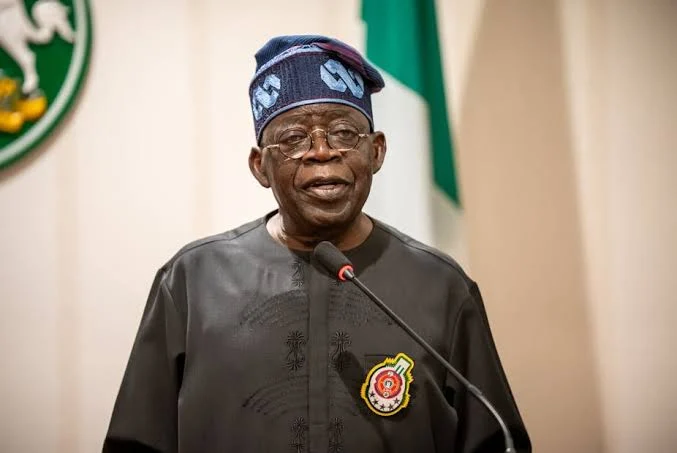
President Bola Tinubu has reaffirmed his commitment to Nigeria’s economic reforms, declaring that he has no regrets over the removal of the petrol subsidy and other policies introduced by his administration.
The President made this statement on Monday at a retreat organised by the City Boys Movement in Abuja, where he urged members to mobilise support for his administration ahead of the 2027 general elections.

Tinubu maintained that Nigeria could not achieve sustainable economic growth by relying on borrowing and insisted that reversing the subsidy removal would return the country to an unsustainable financial position.
Defending the decision to end the petrol subsidy on his first day in office in May 2023, the President said the country was facing serious financial difficulties and could no longer afford the cost of maintaining the policy.
He also expressed confidence in the direction of the economy, arguing that the reforms were necessary despite the difficulties Nigerians have experienced. He said the economy was growing steadily and that the sacrifices being made would eventually provide citizens with a better future.

Meanwhile, the Minister of Finance and Coordinating Minister of the Economy, Taiwo Oyedele, has warned against restoring petrol subsidy, arguing that such a move could weaken investor confidence, trigger capital flight and place additional pressure on the naira.
Speaking during a press briefing at the International Monetary Fund and World Bank Annual Meetings in Bangkok, Thailand, Oyedele said investors were concerned about the possibility of Nigeria reversing its economic reforms ahead of the next election.
He warned that even an indication that the government was considering bringing back the subsidy could unsettle financial markets, increase borrowing costs and worsen economic pressures on households.

According to the minister, the naira could depreciate to between ₦3,000 and ₦4,000 against the dollar if investors reacted negatively to a possible reversal of the policy. He added that such a development could make petrol even more expensive in local currency terms.
However, Kola Ologbondiyan, Director of Media and Publicity of the African Democratic Congress Presidential Campaign Council, challenged the minister to provide evidence supporting the projection.
Ologbondiyan accused the Federal Government of using alarming economic forecasts to discourage public debate about the possible return of fuel subsidy.

He described Oyedele’s warning as scaremongering and argued that Nigerians deserved to understand the economic model and calculations behind the projected exchange rate.
The ADC campaign spokesman maintained that the government should disclose the evidence supporting its position rather than relying on predictions about how investors might react.
The disagreement comes amid continued debate over the economic consequences of subsidy removal, the cost of living and whether Nigeria should maintain its current reform path or consider alternative approaches ahead of the 2027 elections.