


Special Rebuttal Analysis
Re: Mixed Metaphors: A Deformed Democracy by Sonala Olumhense.
Public criticism is essential to democracy. It sharpens governance, strengthens accountability, and gi ves voice to citizens. However, when criticism is driven more by emotion than evidence, it risks distorting reality and misleading the public. The article in question reflects deep frustration—but it also reveals selective interpretation, exaggerated conclusions, and, in some cases, misleading assumptions that deserve to be addressed.
The Premise of “Self-Betrayal”: A Flawed Starting Point
The assertion that voting for the All Progressives Congress (APC) constitutes “self-betrayal” is not analysis—it is opinion presented as fact.
Democracies are built on choice.
Millions of Nigerians voted in 2023 based on their assessment of competing candidates, policies, and political realities.
To dismiss those decisions as irrational or self-destructive is to undermine the very essence of democratic participation.
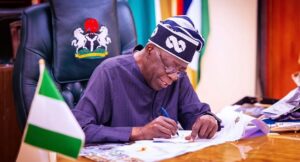
It assumes that voters lack agency, when in reality, Nigerian voters made a complex decision shaped by regional considerations, party structures, candidate viability, and national interest.
Criticism is valid. Blanket condemnation of voters is not.

“Decay Beyond Recognition”: Where Is the Evidence?
The claim that Nigeria has “decayed beyond recognition” since 2023 is sweeping but unsupported by balanced analysis. Nigeria is undergoing difficult reforms—particularly in fuel subsidy removal, exchange rate unification, and fiscal restructuring.
These reforms have undeniably caused short-term hardship. However, they were widely acknowledged—even by critics—as necessary corrections to long-standing economic distortions.
The previous subsidy regime alone cost trillions annually and was widely described as unsustainable.
Globally, economic reforms often come with transitional pain.
From Argentina to Egypt, governments undertaking structural adjustments face similar realities.
The real question is not whether hardship exists—but whether reforms are addressing root problems. On this, the jury is still out, but it is inaccurate to reduce the situation to “deliberate decay.”

Plateau Tragedy: Governance Versus Optics
The Plateau killings are tragic and demand serious response.
However, the criticism of the President’s visit focuses more on optics than substance.
Whether victims were brought to a central location or visited individually does not change the core issue: federal acknowledgment, security mobilisation, and commitment to justice.
In crisis situations, logistics, security considerations, and time constraints often dictate how engagements occur.
More importantly, counterterrorism is not resolved through symbolic gestures.
It requires intelligence coordination, military operations, and long-term strategy. Reducing the issue to a “10-minute visit” risks trivialising a deeply complex security challenge.
The real test is outcomes—not optics.

The $6 Billion Loan: Context Matters
The criticism of the $6 billion loan approval omits critical context.
Nigeria’s borrowing is part of a broader fiscal strategy aimed at funding infrastructure, stabilising the economy, and managing inherited obligations.
Nigeria’s debt-to-GDP ratio remains lower than many comparable economies. The concern is less about borrowing itself and more about revenue generation and debt servicing capacity.
These are legitimate concerns—but they require nuanced discussion, not alarmist framing.
It is also misleading to suggest that legislative approval equates to blind endorsement.
Budgetary and borrowing processes are institutional, not personal transactions.
INEC and ADC: Speculation Versus Proof
Perhaps the most problematic aspect of the article is the suggestion of compromise within the electoral commission based on unverified claims.
Allegations about pre-signed resignation letters and institutional manipulation are serious. However, without formal confirmation or evidence, they remain speculative. Repeating such claims as fact risks undermining public trust in democratic institutions without due cause.
Nigeria’s electoral credibility is too important to be shaped by conjecture.

The Narrative of Total Incompetence
The portrayal of President Tinubu as lacking understanding or commitment is a subjective judgment, not an objective conclusion. Governance outcomes should be assessed through measurable indicators—economic trends, policy implementation, security metrics—not personal impressions of speeches or isolated moments.
It is also important to recognise that Nigeria’s challenges—particularly insecurity—are longstanding and systemic.
They predate the current administration and require sustained, multi-layered solutions.
Simplifying them into a single narrative of failure may be rhetorically powerful, but it is analytically weak.
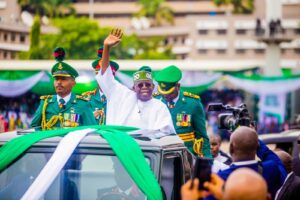
Selective Comparisons and Unrealistic
Expectations.
The comparison with a hypothetical British Prime Minister remaining in London during crisis situations overlooks structural differences between Nigeria and the United Kingdom.
Governance contexts differ. Security dynamics differ.
Institutional capacities differ.
Effective analysis requires comparing like with like—not projecting expectations across fundamentally different systems.
Similarly, the expectation that the President must physically visit every affected community is neither practical nor reflective of how modern governance operates. Delegation through governors, ministers, and security agencies is not neglect—it is standard administrative practice.

The Politics of Absolutism
The article’s broader tone reflects a pattern of absolutism—portraying one political party as entirely irredeemable while offering no viable alternative framework.
This approach may resonate emotionally, but it does not advance constructive political discourse.
Democracies thrive on credible alternatives, not just condemnation.
If both major parties are dismissed outright, the burden shifts to proponents of alternatives to demonstrate not just moral superiority, but structural readiness to govern.
That remains the missing piece.
Accountability Must Be Grounded in Balance
None of this suggests that the current administration should be exempt from criticism. Far from it. Issues of insecurity, economic hardship, and governance efficiency require continuous scrutiny.
However, effective accountability must be grounded in:
verifiable facts,
contextual understanding,
and balanced judgment.
When criticism becomes one-sided, it risks losing credibility—and, more importantly, its ability to influence meaningful change.
Conclusion: Beyond Anger, Towards Clarity
Nigeria stands at a difficult but necessary phase of transition.
Economic reforms, security challenges, and institutional adjustments are unfolding simultaneously.
In such a moment, the country needs clear-eyed analysis—not narratives shaped solely by frustration.
Criticism must continue. But it must also be responsible.
Because in the end, democracy is not strengthened by loud voices alone—it is strengthened by accurate ones.
The National Patriots Submission.
The National Patriots reiterate that while criticism is a vital pillar of democracy, it must be anchored in truth, context, and national responsibility. Nigeria’s challenges are real, but they are not new, nor are they the creation of a single administration. What is required at this critical juncture is not distortion or emotional absolutism, but constructive engagement and collective resolve.
The current reforms, though difficult, reflect long overdue structural corrections that demand patience and oversight—not sabotage through misinformation.
We urge Nigerians to remain discerning, to question narratives that inflame rather than inform, and to support institutional stability.
Nation-building is not a sprint driven by outrage, but a deliberate process guided by facts, discipline, and shared commitment to progress.
Princess Gloria Adebajo-Fraser MFR.
President, The National Patriots.
www.headlinenews.news




