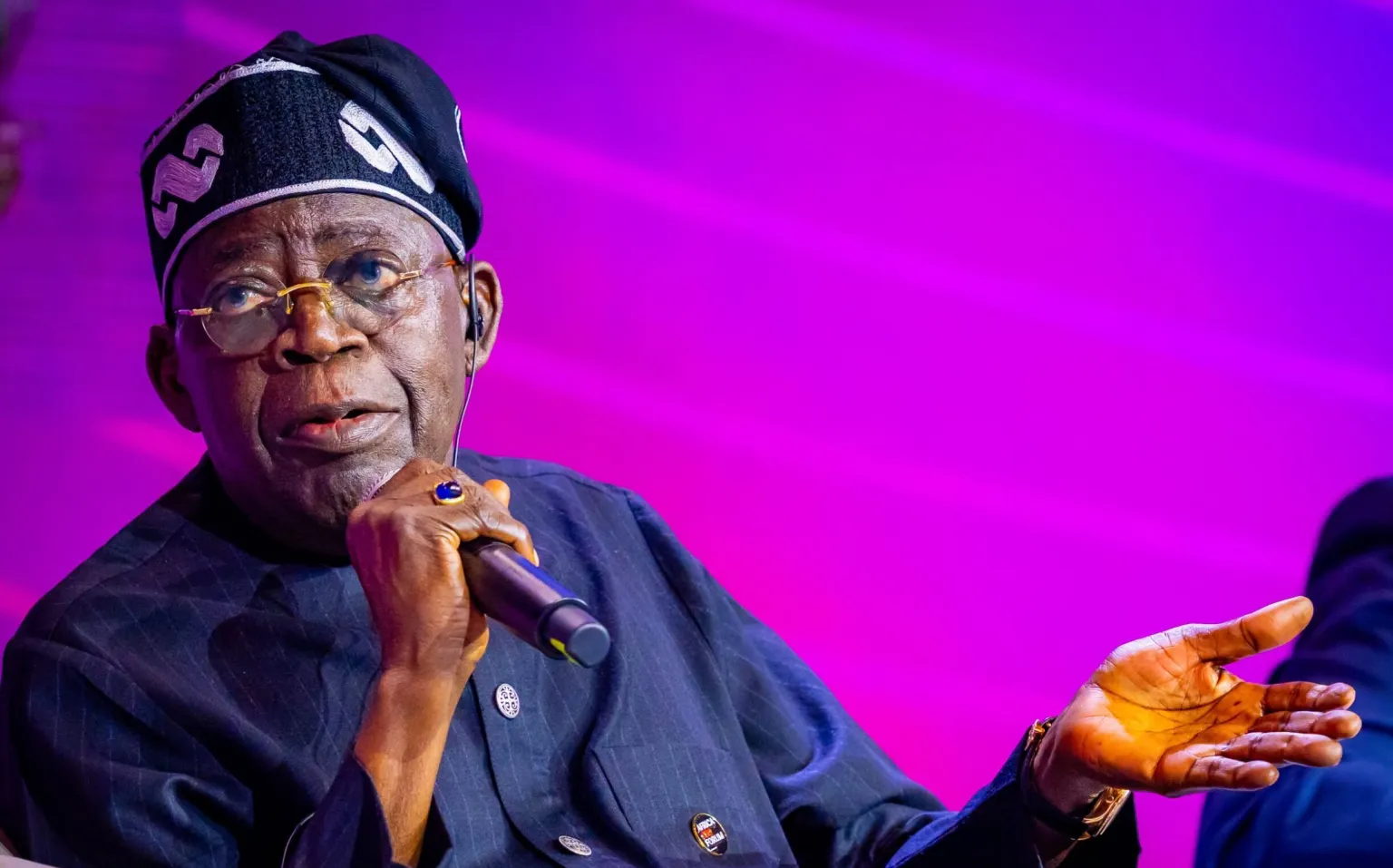
President Bola Tinubu has pledged to expand targeted cash transfer programmes and introduce additional measures to improve living standards following a positive assessment of Nigeria’s economy by the World Bank.
The president welcomed the bank’s October 2026 Nigeria Development Update, saying its findings indicate that the government’s economic reforms are helping to strengthen the country’s financial position and support sustained growth.

The World Bank reported that Nigeria’s economy grew by 4.2 per cent in the first half of 2026, compared with 3.9 per cent during the corresponding period in 2025. It also projected average economic growth of at least 4.4 per cent between 2026 and 2028.
The report noted that inflation declined from 27.6 per cent in January 2025 to 15.2 per cent in December 2025, although higher global fuel prices linked to the Middle East conflict have slowed further progress. Inflation is expected to ease to approximately 12 per cent by 2028.

Since assuming office in 2023, Tinubu’s administration has implemented several economic measures, including the removal of petrol subsidies, the unification of foreign exchange rates and changes to the tax system.
According to the president, these policies have contributed to increased government revenue and created additional resources for federal, state and local governments to invest in development projects.
The report also indicated that federation revenue increased by 69 per cent in real terms between 2023 and 2025. During the same period, state governments significantly increased capital expenditure, directing funds towards infrastructure, agriculture, energy and housing.
Tinubu acknowledged that more work is needed to ensure economic improvements translate into tangible benefits for ordinary Nigerians, particularly through lower food prices and more employment opportunities for young people.
He said the government would extend targeted cash transfers, which he stated had already reached more than 10 million households. His administration also plans to accelerate the adoption of compressed natural gas, improve agricultural productivity and expand access to affordable healthcare and quality education.
The president further urged state governments to manage their increased revenues responsibly and prioritise investments that improve citizens’ welfare, particularly in healthcare, education and essential infrastructure.
Despite improvements in several economic indicators, the government faces the challenge of ensuring that economic growth leads to meaningful and widely shared improvements in household living conditions.