

Brazil, South Africa, Morocco and Egypt demonstrate that responsible borrowing can finance infrastructure, stimulate productivity and strengthen national development.
By Princess Gloria Adebajo-Fraser, MFR
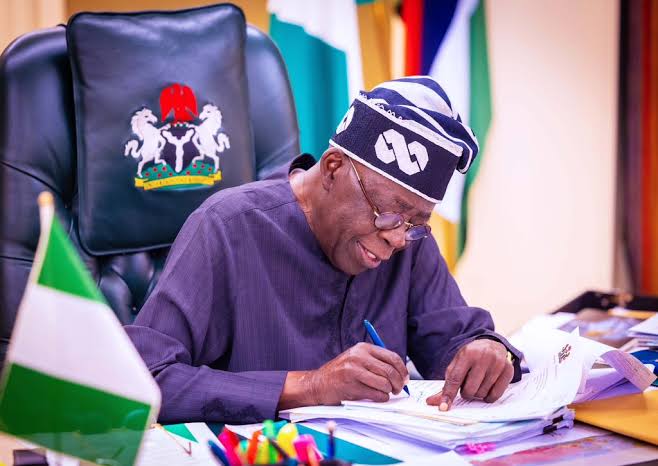
President Bola Ahmed Tinubu has requested National Assembly approval for a supplementary external borrowing plan involving approximately $20.52 billion and €1.05 billion for the 2026–2027 fiscal period.
The proposed financing targets critical infrastructure, electricity, transportation, agriculture, healthcare, education, water supply, security, employment generation and public financial management reforms.

According to the President, the projects were selected following technical and economic assessments, with implementation expected across Nigeria’s 36 states and the Federal Capital Territory. The request has been referred for legislative scrutiny.
The National Patriots considers this proposal a potentially important instrument for accelerating Nigeria’s economic transformation, provided the borrowed funds are invested in productive projects that deliver measurable benefits to Nigerians.
Borrowing is not inherently a sign of economic failure. The critical questions are what the money finances, whether the terms are affordable, and whether the investment generates lasting economic and social returns.
WHY NIGERIA MUST INVEST
A nation cannot build its future by refusing every development loan while allowing its infrastructure deficit to deepen.

Nigeria requires reliable electricity, modern transportation networks, irrigation infrastructure, efficient ports, functional hospitals and competitive industries.
Every year that these deficiencies persist imposes enormous economic costs.
Unreliable electricity increases manufacturing expenses and discourages investment. Poor roads raise transportation costs and contribute to food inflation. Inadequate irrigation limits agricultural production to seasonal rainfall, while insufficient industrial infrastructure restricts employment opportunities.
The greater economic danger is not necessarily borrowing, but borrowing without productive investment—or failing to invest in the infrastructure required for growth.
Strategic borrowing can accelerate projects that might otherwise take decades to finance through annual government revenues.
However, the resulting assets must justify their costs.

LESSONS FROM BRAZIL AND AFRICA
Brazil demonstrates how development financing can complement industrialisation and infrastructure investment.
The country has employed domestic and international financing to support transportation, energy, manufacturing and agricultural development. Recent World Bank-supported investments in clean energy and urban transportation illustrate this continuing approach.
Brazil’s experience demonstrates that development requires sustained investment, sound institutions and productive economic policies—not borrowing alone.
South Africa offers another relevant example.
The country secured a $1.5 billion World Bank development-policy loan in July 2026 to support reforms involving electricity, freight transportation, water and sanitation.
Its experience illustrates how financing can support the restructuring of critical sectors, although South Africa’s continuing economic challenges also demonstrate that loans must be accompanied by effective implementation.
Morocco has utilised international development financing to modernise transportation and energy infrastructure, including World Bank-supported railway and energy-storage projects.
These investments aim to improve connectivity, industrial competitiveness and energy reliability.
Egypt has similarly attracted development financing for renewable energy and infrastructure, including African Development Bank support for solar-power and battery-storage investment.
These examples demonstrate that governments can responsibly employ external financing to address structural development challenges.
Nevertheless, no country achieves prosperity simply by accumulating debt. Economic transformation depends on how effectively borrowed resources are invested and managed.
NIGERIA’S DEBT OBLIGATIONS REQUIRE DISCIPLINE
Nigeria’s public debt reportedly reached approximately ₦166.79 trillion by June 2026, according to Debt Management Office figures.
This substantial obligation demands careful consideration of debt servicing, interest rates, repayment schedules and foreign-exchange exposure.
The National Patriots therefore supports rigorous legislative scrutiny.
The National Assembly should establish precisely which projects will benefit, their economic justification, financing terms, implementation schedules and expected returns.
It should also determine whether proposed facilities overlap previously approved borrowing arrangements.
Projects capable of stimulating economic activity deserve priority, particularly electricity generation and transmission, irrigation, agricultural processing, transportation corridors, healthcare and industrial development.
Where appropriate, concessional financing and public-private partnerships should reduce the burden on government.
Every borrowed dollar must have a clearly identifiable development purpose, transparent expenditure records and measurable results.
BORROWING MUST COMPLEMENT TINUBU’S REFORMS
President Tinubu’s administration has undertaken significant economic reforms intended to strengthen public revenues, improve fiscal management, attract investment and create a more sustainable economic foundation.

The World Bank has recognised improvements in Nigeria’s macroeconomic stability while emphasising the continuing need for infrastructure investment, productivity growth and employment creation.
Development borrowing should complement these reforms rather than substitute for stronger domestic revenue generation.
Importantly, infrastructure investment can create a productive cycle: improved electricity attracts industries; industries generate employment; employment increases household incomes; and expanding economic activity strengthens government revenues.
Irrigation similarly supports year-round cultivation, greater food production, agricultural processing and more stable food supplies.
This is how productive borrowing can contribute to national development and improve Nigeria’s capacity to meet future financial obligations.
THE NATIONAL PATRIOTS POSITION
The National Patriots supports President Tinubu’s determination to address Nigeria’s infrastructure deficit through strategic investment.
We believe that responsible borrowing, accompanied by transparency, prudent financial management and effective implementation, can accelerate Nigeria’s economic transformation.
However, support for borrowing must remain conditional upon demonstrable public benefits.
Nigerians deserve completed infrastructure, reliable electricity, affordable food, functional healthcare, employment opportunities and stronger industries.
The ultimate measure of development borrowing is not how much government secures, but how much productive value it creates for the nation.
Nigeria must borrow wisely, invest strategically and ensure that every dollar borrowed contributes to lasting national prosperity.
President Tinubu’s borrowing proposal deserves serious consideration, responsible legislative approval where justified, and uncompromising implementation oversight.
Princess Gloria Adebajo-Fraser, MFR
President, The National Patriots.