

Trump Threatens More Strikes on Iran as Pezeshkian Vows Defiance
U.S. President Donald Trump on Saturday threatened to intensify military strikes on Iran, while Iranian President Masoud Pezeshkian insisted his country would never surrender despite fresh attacks by U.S. and Israeli forces.
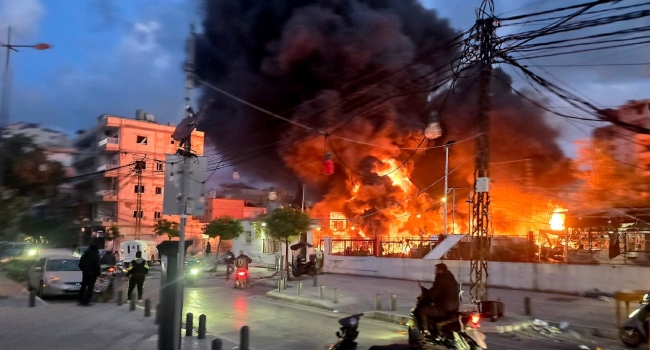
The latest wave of airstrikes targeted several locations in Tehran, including the Mehrabad International Airport, where pre-dawn images showed thick smoke and flames rising from the airport area.

Israel said the raids were among the largest since the aerial bombardment of Iran began last Saturday. According to Israeli officials, the strikes hit a military academy, an underground command centre and a missile storage facility.
Posting on his social media platform Truth Social, Trump warned that Iran could face even heavier attacks.
“Today Iran will be hit very hard,” he wrote, adding that areas and groups previously not considered targets could now face “complete destruction” due to what he described as Iran’s “bad behavior.”
In response, Pezeshkian struck a defiant tone in a televised address, rejecting Trump’s earlier demand for what the U.S. president called “unconditional surrender.”
“Iran’s enemies must take their wish for the unconditional surrender of the Iranian people to their graves,” the Iranian leader said.

Despite sustained attacks on its military infrastructure over the past week, Iran demonstrated it still has the ability to retaliate. Air raid alerts and explosions were reported above Jerusalem and in Gulf cities including Dubai, Manama, and near Riyadh.
Saudi Arabia said it intercepted a ballistic missile fired toward an air base hosting U.S. troops, while the United Arab Emirates reported intercepting 15 ballistic missiles and 119 drones.
However, video footage showed one projectile crashing near Dubai International Airport, the world’s busiest airport for international travel under normal conditions. The footage appeared to show an explosion near an airport building and parked aircraft.
Authorities in Jordan also accused Iran of targeting key facilities with drones and missiles over the past week, according to military spokesman Mustafa Hayari.
The conflict, now entering its second week, was triggered by joint U.S. and Israeli strikes that reportedly killed Iran’s supreme leader Ali Khamenei. Since then, the war has spread across several parts of the Middle East.
Iranian officials said the country’s health ministry has recorded at least 926 civilian deaths and around 6,000 injuries since the fighting began, though the figures have not been independently verified
 .
.
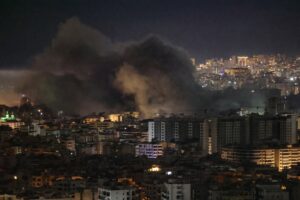
Israel has also stepped up airstrikes in Lebanon, repeatedly targeting the southern suburbs of Beirut, where the Iran-backed group Hezbollah operates.
Israeli Defence Minister Israel Katz warned that Lebanon would pay a “very heavy price” if the government failed to disarm Hezbollah.
Meanwhile, the conflict has had far-reaching global effects. Thousands of flights have been delayed or cancelled, oil prices have surged and stock markets have fallen amid fears that the war could last several weeks.
Despite growing international concern, Trump has ruled out negotiations with Tehran, insisting there will be no agreement unless Iran accepts “unconditional surrender.”
Russia has called for an immediate ceasefire. The Kremlin said Vladimir Putin discussed the conflict with Pezeshkian during a phone call and urged a halt to hostilities.
The war has also claimed American lives. Six U.S. service members have been killed, and Trump was expected to attend a ceremony at Dover Air Force Base in Delaware to receive their remains.




