

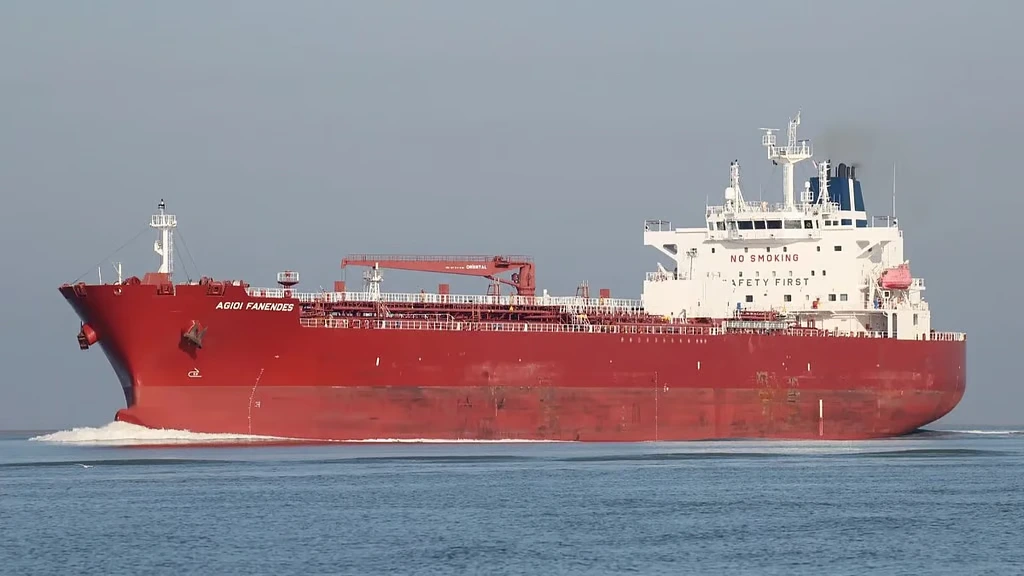
US companies appear increasingly reluctant to import Russian diesel, despite President Donald Trump’s temporary relaxation of some sanctions on Russian fuel exports, as a tanker carrying the product remains stranded off the country’s eastern coastline.
Energy experts and industry analysts say uncertainty over the legality of the proposed transactions, difficulties securing financial support and concerns about reputational damage are making American businesses hesitant to purchase the shipment.

The situation raises fresh questions about Trump’s plan to bring Russian diesel into the US market in an effort to reduce rising fuel prices.
The plan followed a significant increase in diesel prices during the US-Israeli war involving Iran. Under the arrangement, Russia was expected to make an initial 300,000 tonnes, equivalent to approximately 2.25 million barrels, available to the US and international markets.
Further shipments were expected to include 500,000 tonnes in November, followed by another one million tonnes.
However, the first tanker carrying Russian diesel reportedly halted its journey off the US East Coast this week, with shipping data indicating that its final destination had yet to be confirmed.

US Energy Secretary Chris Wright said the shipment could still contribute to global fuel supplies even if it did not reach an American port.
Speaking to journalists at an event in New Orleans, Wright said the administration wanted the diesel to enter the international market.
LEGAL AND FINANCIAL CONCERNS
Although the US Treasury Department issued a temporary general licence allowing certain transactions involving Russian diesel, legal experts have questioned whether the exemption provides sufficient protection for businesses involved in the imports.
Jeremy Paner, a partner at Hughes Hubbard Reed and a former US sanctions official, warned that companies could face legal and reputational consequences despite the temporary authorisation.

He explained that potential savings from purchasing cheaper Russian diesel could be outweighed by legal expenses and the possibility of congressional investigations.
Paner said businesses could therefore decide that participating in the transactions was not worth the associated risks.
Financial institutions are also expected to exercise caution.
David Tannenbaum, director of sanctions consultancy Blackstone Compliance Services and a former US Treasury sanctions specialist, said banks would be reluctant to finance transactions that could expose them to sanctions-related complications in other jurisdictions.

He noted that every company involved in receiving, handling or distributing the fuel could potentially face scrutiny.
POLITICAL OPPOSITION GROWS
The proposed imports have also attracted opposition from American lawmakers and state officials.
New Jersey Governor Mikie Sherrill has warned port authorities and terminal operators against accepting Russian diesel, arguing that such imports would violate federal law.
Several US lawmakers have also challenged the legality of the administration’s decision to temporarily ease restrictions on Russian fuel imports.
The original restrictions were introduced following Russia’s invasion of Ukraine in 2022 and were subsequently backed by Congress.

However, a Trump administration official has maintained that the temporary exemption complies with all applicable laws.
The disagreement has created additional uncertainty for businesses considering whether to accept the shipments.
FUEL REQUIREMENTS PRESENT ANOTHER CHALLENGE
Apart from the legal and political complications, the Russian diesel would require additional processing before it could meet certain US heating oil specifications.
Natalia Losada, an analyst at Energy Aspects, said the need to blend the fuel could discourage potential buyers.
Industry analysts believe the shipment could eventually be redirected to Brazil or other established markets that traditionally purchase Russian diesel.

Janiv Shah, a vice-president at consultancy Rystad Energy, warned that the inability of the first tanker to discharge its cargo at a US port could create further difficulties for subsequent shipments.
Meanwhile, American diesel prices remain significantly higher than their levels before the conflict involving Iran.
According to the American Automobile Association, diesel was selling at an average of $6.13 per gallon on Wednesday, down from $6.33 when Trump announced the temporary sanctions waiver in October.
However, the price remained approximately 63 per cent higher than the $3.76 recorded before the conflict began in late February.
The uncertainty surrounding the first shipment therefore presents a major obstacle to Trump’s efforts to use Russian diesel supplies to ease pressure on the American fuel market.