

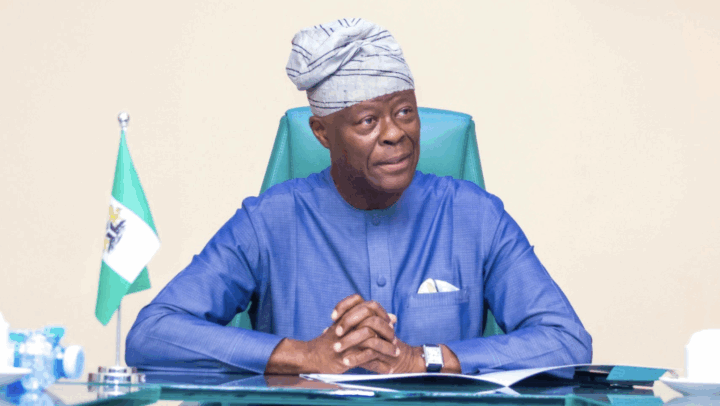
The removal of Nigeria’s Finance Minister, Bola Tinubu’s key economic official, Wale Edun, has gone beyond routine cabinet reshuffling and is now raising deeper questions about truth, trust, and governance in the country’s economic management.

The development follows a clear clash between public fiscal messaging and official economic disclosures. In September 2025, President Tinubu stated during a meeting at the Presidential Villa that Nigeria was no longer borrowing and had already met its annual revenue target ahead of schedule, projecting an image of financial stability.

However, months later, during a presentation before the House of Representatives committees on finance and national planning, Wale Edun presented a contrasting picture. He disclosed that the federal government was likely to fall short of its revenue target by about ₦30 trillion and had already resorted to significant borrowing to cover fiscal gaps.
The sharp difference between both accounts created concern within policy and governance circles, as it reflected two conflicting narratives on the country’s actual financial position.

Shortly after Edun’s briefing, parts of his responsibilities related to revenue coordination and fund management were reportedly reassigned without any formal public explanation. While no official reason was given, the move was widely interpreted as a loss of political backing.

Edun’s tenure, however, included major economic reforms such as subsidy removal adjustments, foreign exchange unification efforts, and improvements in Nigeria’s debt-to-revenue ratio. These policies were widely viewed as technically driven and data-focused.
His approach was consistently described as grounded in economic evidence rather than political messaging, which some analysts believe may have contributed to growing tensions between policy realism and political communication.

The situation has now sparked broader debate about whether economic officials can freely present uncomfortable fiscal truths without political consequences, and what that means for governance credibility moving forward.




