

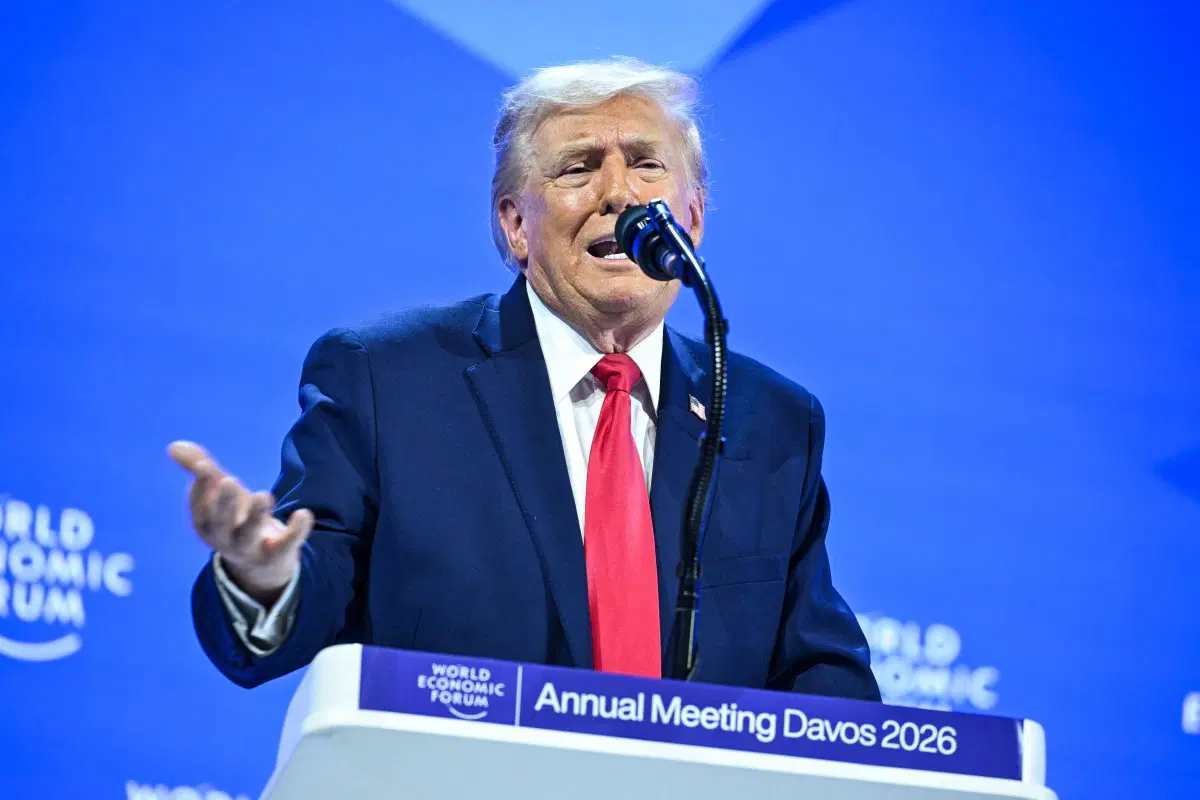
WASHINGTON/TEHRAN — President Donald Trump on Monday indicated that US military operations in Iran would soon conclude, offering reassurance to markets unsettled by escalating conflict in the Middle East.

The war had triggered sharp declines in global stock markets and surging oil prices as Iran, under newly appointed leader Mojtaba Khamenei, launched missiles at Gulf neighbours and signaled the potential closure of the strategic Strait of Hormuz.

Trump described the campaign as a “short-term excursion” and warned that any renewed hostilities would face stronger retaliation. Following his remarks, Wall Street moved into positive territory, while Tokyo and Seoul opened strongly. Oil prices fell by up to five percent after crude briefly surpassed $100 per barrel, its highest since the 2022 Russia-Ukraine conflict.
Iran’s Revolutionary Guards, however, insisted that they would determine the conflict’s conclusion. The country’s missile and drone attacks targeted Saudi Arabia, Bahrain, Qatar, the UAE, Israel, and NATO-member Turkey, with air defences intercepting several projectiles.
Diplomatic attention focused on the Strait of Hormuz, a critical artery for global oil supply, currently blocked for many tankers. French President Emmanuel Macron said France and its allies were planning a “purely defensive” mission to reopen the waterway while minimising risk to naval forces.

The appointment of Mojtaba Khamenei as Iran’s new supreme leader prompted celebrations in Tehran and drew support from the Houthi rebels in Yemen, Hezbollah in Lebanon, and Russia. Experts described the new leader as a hardliner involved in past violent crackdowns, raising concerns over the conflict’s trajectory.

Oil infrastructure in the region remains at risk, with attacks on facilities in Bahrain, Saudi Arabia, and other Gulf states disrupting exports. Shipping companies, including MSC, have suspended some operations in the area. Meanwhile, casualties continue to mount across multiple fronts, with fatalities reported in Israel, Bahrain, and Lebanon, and exchanges of fire between Hezbollah and Israel intensifying regional tensions.
The ongoing conflict continues to pose serious risks to global energy supplies and economic stability, leaving policymakers, traders, and investors closely monitoring developments.




