

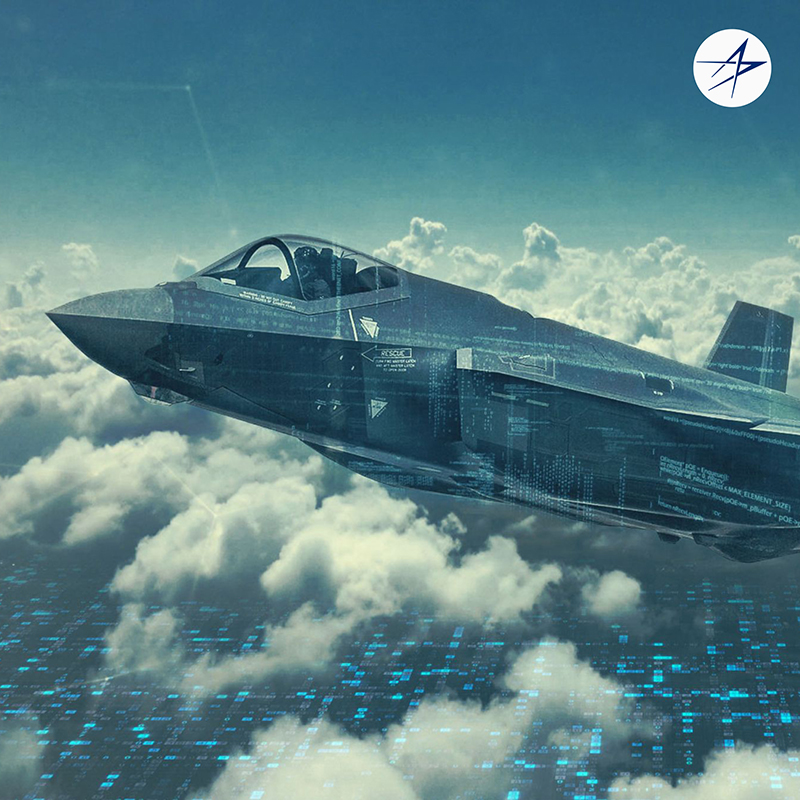
Lockheed Martin’s Skunk Works division has completed a new defence technology exercise with the UK Ministry of Defence called “Babel Fish”, marking another step toward more connected battlefield operations between allied forces.
The exercise builds on earlier work under Project DEIMOS, and focuses on linking advanced fighter jet intelligence directly to ground-based military systems in real time. In this case, data from the F-35 fighter jet was successfully transmitted into the UK’s command-and-control network known as NEXUS Command and Control, and then routed to British Army ground units.
In a simulated environment, targeting information from the F-35 was shared instantly with land forces, allowing commanders to quickly generate operational options and respond faster across different branches of the military. The goal is to reduce delays in decision-making and improve coordination across air, land, and potentially other domains of warfare.
According to the UK Ministry of Defence, the exercise demonstrates how modern forces can “close kill chains” faster—meaning the time between detecting a target and engaging it is significantly shortened.

Wing Commander Phillip Harrild of the Royal Air Force described the outcome as a major step forward, saying the system proved that ground forces can now directly use targeting data from advanced aircraft like the F-35. He noted that this kind of integration increases the value of existing military equipment without needing entirely new platforms.
From the industry side, OJ Sanchez of Skunk Works highlighted the importance of open architecture systems, explaining that the F-35 is designed to communicate seamlessly with allied command networks and ground assets.
He said the exercise shows how these systems can support faster and more coordinated multi-domain operations, where air and land forces operate as a single connected network rather than separate units.
The Babel Fish exercise also expands the F-35’s interoperability beyond air-to-command links, extending it into direct coordination with ground weapons systems operated by allied forces. Officials say this is the first time such a configuration has been tested with non-U.S. systems.
Overall, the results are being seen as a demonstration of how modern military technology is shifting toward highly connected, data-driven warfare—where information moves instantly across platforms, giving commanders faster and more flexible response options on the battlefield.




