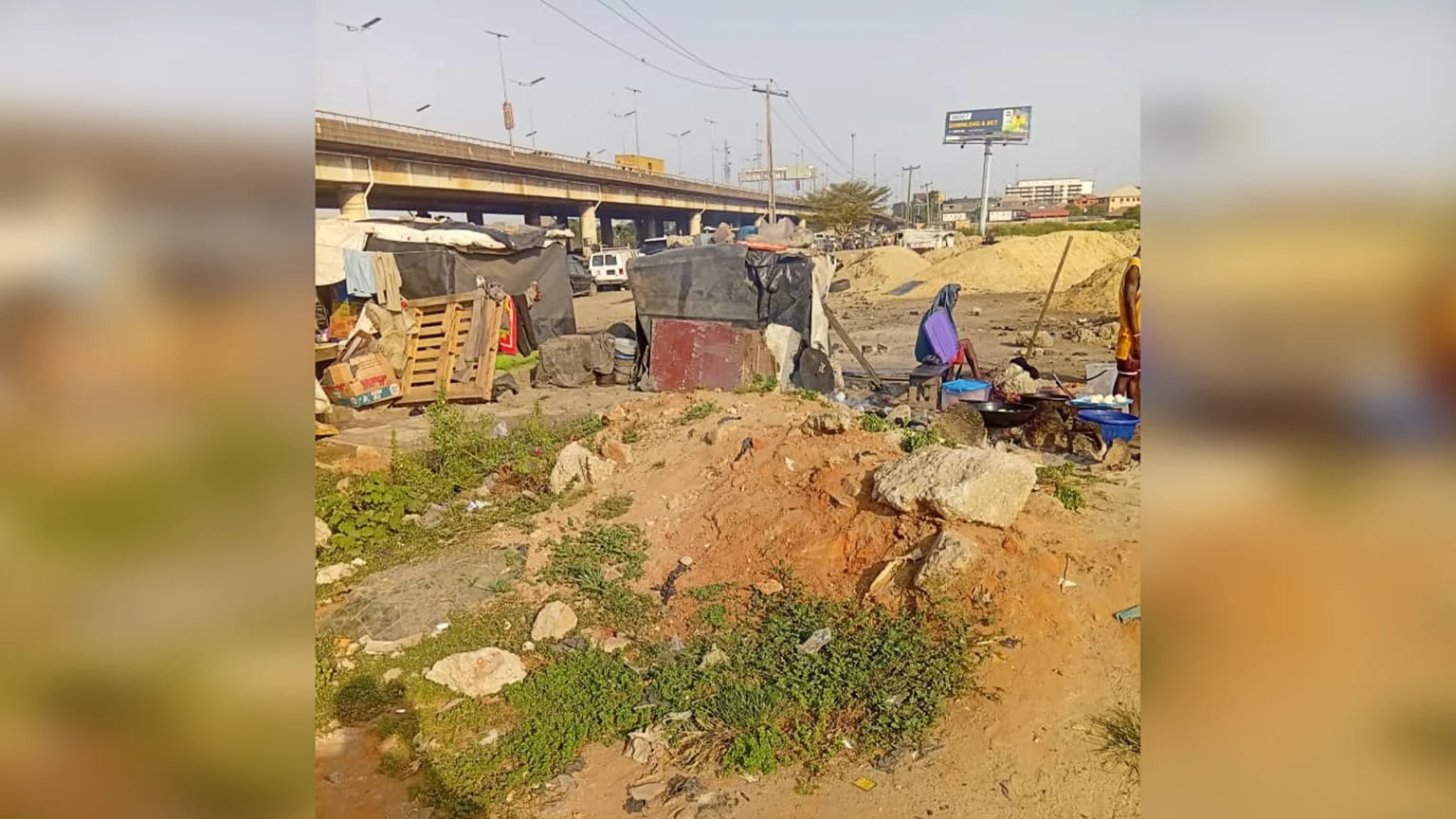
In the heart of Lagos Mainland, the ruins of Otumara and Baba Ijora tell a story that goes beyond demolished buildings. Beneath the broken concrete and scattered debris lies a quieter, more troubling reality — children are disappearing from classrooms and appearing instead on the streets.
For many families, the demolition of homes and schools did not just destroy property; it disrupted education and reshaped childhoods overnight.
Fifteen-year-old Chinonso Nwibo is now one of them. Once a Junior Secondary School 2 student with dreams of becoming an engineer, he now spends his school hours hawking puff puff to survive. His education stopped abruptly on March 7, 2025, when his home in Otumara was demolished.

What began as a rush to salvage belongings turned into a permanent break from school. Since that day, Chinonso has not returned to Ilogbo Junior Secondary School — a school that itself was later pulled down. With his mother relocating to the East and no stable home left in Lagos, he now sleeps in a makeshift shelter in an open field.
“I felt that if I didn’t go home that day, I would lose everything,” he said quietly. “Since then, education will rest for now.”
His story is not isolated.
Across Otumara and Baba Ijora, several public and private schools were demolished in the same exercise, including Ebenezer Nursery and Primary School, Banjo Nursery and Primary School, and multiple private institutions that served low-income families. For many of the displaced children, those classrooms have not been replaced.
Faith Paul, a primary school pupil, now spends her school hours helping her mother cook and sell food beside a temporary shelter made of planks and nylon. Her schooling was suspended after her family lost both their home and access to the nearby school.
“I asked her to stay at home until we settle,” her mother said, pointing to the uncertainty of their living conditions.
For Abdullahi Abdusomod, a Junior Secondary School 3 student, the demolition forced his family to move between Lagos and Ogun State before returning again to Otumara. With no money for school fees, he remains out of class.
“My mother said we should first find food and shelter before school,” he explained.
Even younger children are affected. Eight-year-old Osinachi Nwogbala, once a Nursery 2 pupil, now stays at home caring for his younger sibling while his parents struggle to rebuild their lives. His father says survival has taken priority over schooling.
“What we are thinking now is how to eat and move out of here,” he said.
Beyond individual stories, the wider impact is visible. Several schools that once served as safe learning spaces have been reduced to rubble. One of them, Ayilara Precious Nursery and Primary School, which operated as a free education centre for about 70 pupils, was also demolished. Its head teacher says she has since lost contact with her students.

The African Cities Research Consortium (ACRC) describes the situation as part of a deeper urban governance challenge, where redevelopment efforts often clash with the realities of informal settlements and vulnerable communities.
In Otumara, what was framed as urban renewal has, for many families, translated into displacement, joblessness, and a growing number of out-of-school children — directly contradicting Lagos State’s “Project Zero” initiative aimed at reducing educational exclusion.
Experts warn that the consequences may last far longer than the physical demolition. Psychologists point to trauma, instability, and the risk of long-term social consequences for children suddenly pushed out of school and into survival mode.
Dr. Johnson Ibidapo notes that many of the affected children could grow up carrying emotional scars. “When children are removed from school and stability, the impact does not end there. It affects their future behaviour, opportunities, and mental health,” he said.
Urban development experts also argue that demolishing schools without resettlement or replacement plans undermines inclusive growth. Dr. Olumuyiwa Adegun of the African Cities Research Consortium says such actions contradict the goal of building a “model megacity” where education should remain central.
Despite government programmes aimed at reducing the number of out-of-school children, inconsistencies in reported figures and lack of clear reintegration plans continue to raise concerns.
Efforts to obtain official responses from relevant Lagos State education and urban planning authorities were unsuccessful at the time of filing this report.
For now, in Otumara and Baba Ijora, the reality is visible on the streets — children who should be in classrooms are instead navigating survival, one day at a time.