


For decades, millions of residents across Northwest Nigeria faced a painful healthcare reality: serious illness often meant travelling long distances to Abuja, Lagos or even outside Nigeria in search of specialised medical treatment.
Cancer patients, women with high-risk pregnancies, accident victims requiring intensive care, and families needing advanced diagnostics frequently encountered delayed treatment, overcrowded referral hospitals and crushing medical expenses.
That long-standing healthcare gap is now beginning to narrow with the emergence of the 320-bed Bola Ahmed Tinubu Specialist Hospital in Kaduna State — a facility increasingly viewed as one of the most significant healthcare infrastructure projects in Northern Nigeria in recent years.
Originally initiated in 2009 under former Kaduna State governor and former Vice President Namadi Sambo, the hospital remained unfinished for years before being revived, completed and commissioned under Governor Uba Sani with strong backing from the Federal Government led by President Bola Ahmed Tinubu.
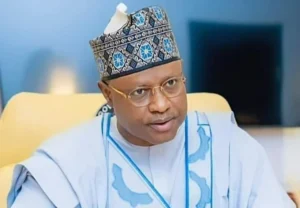

Commissioned during President Tinubu’s June 2025 visit to Kaduna, the hospital is strategically positioned to serve Kaduna, Kano, Katsina, Jigawa, Kebbi, Sokoto and Zamfara states — a region whose combined population exceeds 55 million people.
Healthcare analysts say the significance of the hospital goes far beyond its physical size.

Nigeria continues to battle severe healthcare challenges, including high maternal mortality, rising cancer cases, limited oncology infrastructure and an overstretched tertiary healthcare system.
Northern Nigeria has historically recorded some of the country’s worst maternal and neonatal health indicators due to inadequate access to specialist emergency care and modern referral facilities.
Against that backdrop, the Kaduna specialist hospital is expected to reduce pressure on major institutions such as Ahmadu Bello University Teaching Hospital (ABUTH), Aminu Kano Teaching Hospital (AKTH), and the National Hospital Abuja.
The facility contains multiple specialised units including maternal and child healthcare, radiology and imaging services, intensive care facilities and oncology-related infrastructure.
According to the hospital’s management, more than 3,000 patients have already received treatment since the facility became operational last year, underscoring the enormous demand for advanced healthcare services within Kaduna and neighbouring states.
One of the hospital’s most important strategic advantages is its growing role in cancer diagnosis and treatment.
Nigeria currently has limited radiotherapy and comprehensive oncology centres relative to its population of over 220 million people, forcing many cancer patients into delayed treatment, expensive private care or overseas medical travel.
Medical tourism remains a major challenge for Nigeria, with billions of naira leaving the country annually as citizens seek surgeries, diagnostics and specialist treatment abroad.
Speaking during the commissioning ceremony, Namadi Sambo described the hospital as a major step toward reducing outbound medical tourism and retaining healthcare investment within Nigeria.
Governor Uba Sani also appealed directly to President Tinubu for federal intervention in establishing a comprehensive cancer treatment and screening centre within the hospital complex, describing it as “the only thing missing.”
President Tinubu immediately assured the Kaduna State Government of federal support for the initiative.
That intervention could become one of the most significant oncology projects in Northern Nigeria.
According to available reports, Phase II of the hospital’s expansion already includes plans for a cancer treatment and nuclear medicine centre approved by the Nigerian Nuclear Regulatory Authority.
Healthcare experts say the development could significantly improve early cancer detection, imaging services and specialist treatment across the Northwest where access to advanced oncology care remains limited despite rising cancer cases.
The hospital’s infrastructure also reflects efforts to solve one of Nigeria’s most persistent public healthcare problems — unstable electricity supply.
Hospital management disclosed that the facility operates with solar infrastructure, multiple generators and dedicated arrangements with the Transmission Company of Nigeria to support uninterrupted power supply critical for intensive care, diagnostics and specialised treatment.
Analysts say reliable electricity remains one of the biggest hidden challenges confronting tertiary healthcare delivery because advanced imaging systems, surgical theatres, laboratories and oncology equipment require stable power to function effectively.
Beyond healthcare delivery, the project is expected to stimulate broader economic growth within Kaduna State.

Large specialist hospitals typically generate employment opportunities for doctors, nurses, pharmacists, laboratory scientists, biomedical engineers and support workers while attracting pharmaceutical, research and training partnerships.
Political observers also describe the hospital as a rare example of continuity in governance in Nigeria.
The project was initiated under Namadi Sambo in 2009, left unfinished across multiple administrations, and eventually completed under Governor Uba Sani with federal collaboration from the Tinubu administration.
That continuity is particularly significant in a country where many public infrastructure projects are abandoned after changes in government.
President Tinubu’s Kaduna visit also extended beyond healthcare infrastructure.
During the visit, he commissioned additional development projects including vocational and skills acquisition centres and compressed natural gas (CNG) buses aimed at reducing transportation costs and promoting cleaner urban transportation systems.
Kaduna State officials say the broader federal-state collaboration is gradually repositioning Kaduna as a strategic hub for healthcare, transportation, skills development and institutional infrastructure in Northern Nigeria.

Still, healthcare analysts caution that long-term success will depend on sustained funding, specialist staffing, equipment maintenance, affordability and institutional management.
Modern hospitals require continuous investment in technology, training, power systems and human resources to maintain global standards.
Yet even critics acknowledge that the completion of the Bola Ahmed Tinubu Specialist Hospital marks one of the most consequential healthcare infrastructure interventions seen in Northwest Nigeria in decades.
And for millions of families historically forced to endure long-distance medical referrals, delayed specialist care or expensive foreign treatment, the hospital represents more than a building.
It represents access, hope and the possibility that world-class healthcareg may finally become increasingly available closer to home.

“The National Patriots have commended President Bola Ahmed Tinubu for supporting critical infrastructure and healthcare projects aimed at improving the lives of millions across Northern Nigeria. The organisation described the completion of the Bola Ahmed Tinubu Specialist Hospital in Kaduna as a strategic intervention capable of reducing medical tourism, strengthening specialist healthcare access and stimulating regional development. According to the group, sustained federal-state collaboration in healthcare, transportation and human capital development remains essential to building a stronger, healthier and more economically productive Northern Nigeria.”
Headlinenews.news Special Investigative Report.




