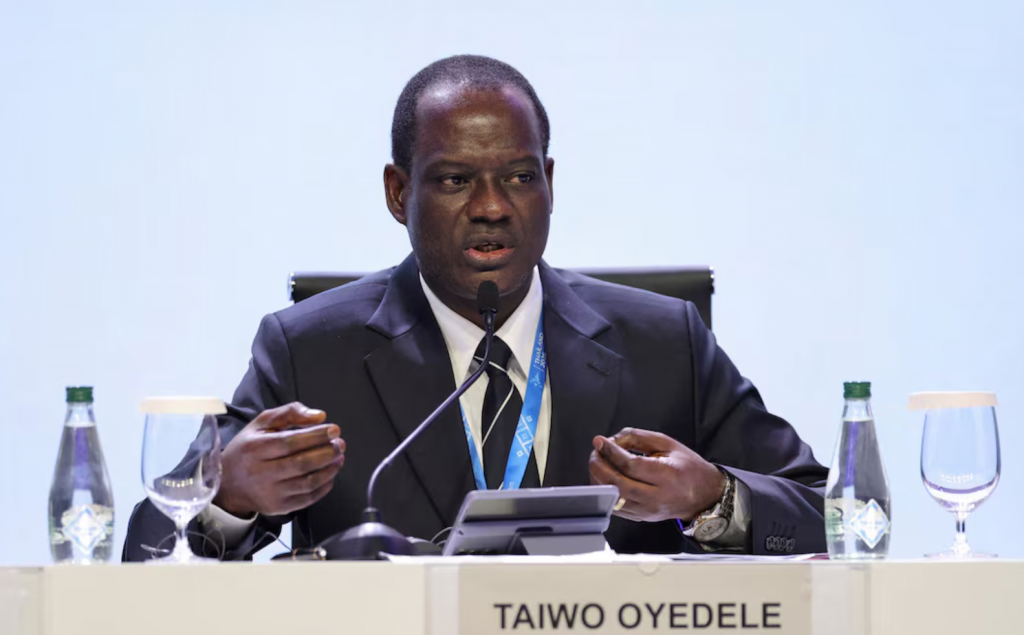
The Federal Government has set a target of seven per cent economic growth for 2027 and ruled out restoring fuel subsidies and multiple exchange rates. Minister of Finance and Coordinating Minister of the Economy, Taiwo Oyedele, disclosed this during the 2026 Annual Meetings of the International Monetary Fund and World Bank Group in Bangkok, Thailand. He said the government remained committed to its economic reform policies despite concerns over rising living costs and petrol prices. 
Oyedele said reversing the removal of fuel subsidies and the foreign exchange market reforms could undermine investor confidence. He also clarified that the Nigerian National Petroleum Company Limited’s temporary reduction in retail profit margins was a commercial decision, not a return to government-funded fuel subsidies. According to him, the government intends to maintain its existing policy direction while exploring ways to ease economic pressures on Nigerians.

The minister said Nigeria’s seven per cent growth ambition was higher than the IMF’s forecast for the country. He argued that stronger economic expansion would require lower inflation, reduced borrowing costs and improvements in the cost of food, energy and transportation. He also stressed the need to translate economic reforms into increased business activity, investment and employment opportunities.

As part of the growth strategy, the Federal Government has outlined an investment pipeline valued at $78.5 billion, covering 65 projects across sectors including energy, transport, industry, mining, agriculture, healthcare and urban services. The projects are intended to attract domestic and foreign investors, expand productive capacity and create jobs. However, the proposed funding requirement does not mean the full amount has already been secured.

Oyedele also highlighted the need to address the high cost of borrowing, which he said was limiting businesses’ ability to expand and employ more workers. He called for efforts to lower inflation and improve the investment environment, while warning that economic growth must generate jobs and deliver broader benefits. The government’s challenge, he said, is to turn improved economic indicators and investor interest into tangible investments and better opportunities for Nigerians.