

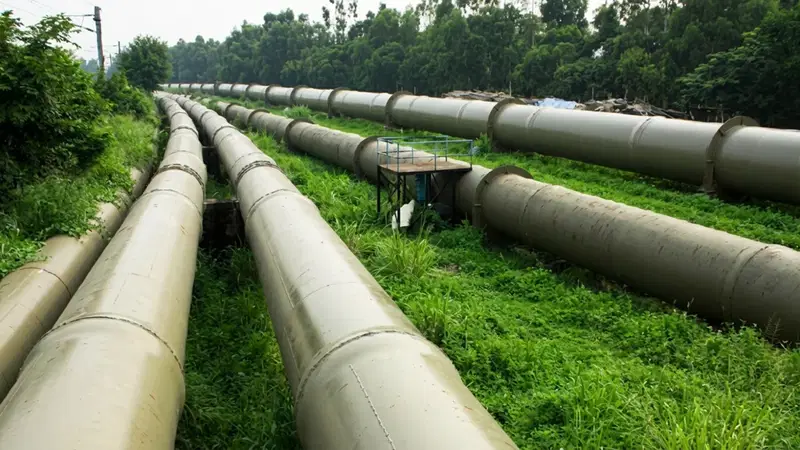
The Amukpe–Escravos Pipeline (AEP), one of Nigeria’s key crude oil evacuation routes in the western Niger Delta, is now at the centre of renewed attention following a major upward revision of its value amid an ongoing transaction dispute.
Originally valued between $200 million and $243 million, the pipeline is now estimated to be worth close to $700 million or even more, a development that has significantly changed discussions around its potential sale and strategic importance to Nigeria’s oil industry.

Industry sources say the sharp increase reflects broader economic and operational realities, including inflation, rising infrastructure replacement costs, tariff adjustments, and the growing importance of reliable crude evacuation systems.
The 67-kilometre pipeline, which has a capacity of about 160,000 barrels per day, serves as a crucial alternative to the Trans-Forcados Pipeline, a route often affected by operational disruptions and sabotage.
With Nigeria’s oil production heavily dependent on stable export channels, experts say pipelines like the AEP have become far more valuable than previously estimated.
According to an industry source, the revised valuation exposes gaps in earlier pricing assumptions that may have guided past attempts to sell or restructure the asset.

“This is not just a price adjustment—it reflects a fundamental shift in how strategic energy infrastructure is valued in today’s environment,” the source said.
The source added that the pipeline is no longer just a transport asset but a critical part of Nigeria’s production stability, helping to reduce losses from shutdowns and improve export efficiency.
The development has also raised concerns about whether such national assets were previously considered at undervalued rates, prompting calls for more updated and transparent valuation frameworks in future transactions.

Analysts say the situation highlights a broader need for Nigeria’s oil and gas sector to adopt more dynamic pricing models that reflect current economic conditions and operational risks.
They also argue that while asset sales may help with debt recovery, they must be carefully managed to avoid shortchanging long-term national value.
For investors, the reassessment presents both opportunity and caution. While it reinforces the attractiveness of Nigeria’s energy infrastructure, it also increases expectations around transparency, governance, and fair valuation processes.
Ultimately, stakeholders say the revised valuation of the Amukpe–Escravos Pipeline signals a shift in how energy assets are viewed in Nigeria—not just as infrastructure, but as high-value national resources whose pricing and management could shape future investor confidence in the sector.




