

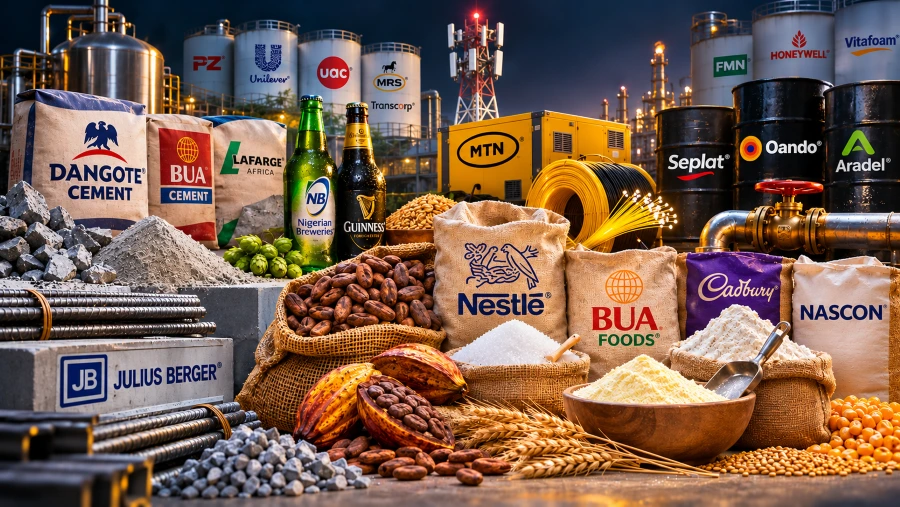
Nigeria’s 22 largest companies spent a combined N13.43 trillion on producing and sourcing the goods and services they sold between January and September 2026, reflecting the enormous cost of doing business across the country.
The expenditure, which represents an average of about N49 billion daily, increased by 22.5 per cent compared with the N10.96 trillion recorded during the corresponding period in 2025.

A review of the companies’ latest financial results by Nairametrics showed that the expenditure, classified as cost of sales, covers the direct costs of producing or purchasing goods and delivering services, including raw materials, energy, transportation and other production-related expenses.
The companies examined include Dangote Cement, MTN Nigeria, Nestlé Nigeria, Nigerian Breweries, Guinness Nigeria, Cadbury Nigeria, BUA Foods, Seplat Energy, Oando and other major players across different sectors.
OIL AND GAS ACCOUNT FOR LARGEST SHARE
The oil and gas sector accounted for the largest portion of the total expenditure, with Oando, Aradel, Seplat and Conoil collectively spending N7.29 trillion on producing, purchasing and transporting crude oil, gas and petroleum products.

This represented a 47 per cent increase compared with the corresponding period in 2025, making the sector the biggest contributor to the overall rise in production costs.
Other sectors also recorded significant expenditure during the nine-month period.
Food and beverage manufacturers spent N2.49 trillion, covering companies involved in the production of beer, beverages, seasoning, chocolate, flour, sugar and salt. However, this represented a 10 per cent decline from the previous year.
The cement industry, comprising Dangote Cement, BUA Cement and Lafarge Africa, recorded N2.23 trillion in production costs, representing a nine per cent increase.
MTN Nigeria spent N566.5 billion on the direct costs of providing telecommunications services, including voice calls and data, marking a 13 per cent rise.

Julius Berger and other construction-related activities accounted for N551.9 billion, while businesses in other sectors, including palm oil, pharmaceuticals, glass manufacturing, paint, information technology and property, recorded a combined N302.4 billion.
Overall, the expenditure consumed approximately half of the companies’ revenue from sales, leaving the remaining portion to cover administrative expenses, staff salaries, advertising, financing costs, taxes and profits.
STRONGER NAIRA PROVIDES RELIEF FOR MANUFACTURERS
Despite rising production costs across several industries, some consumer goods manufacturers recorded reductions in their expenditure during the period.
The improvement was partly linked to the relative strengthening of the naira, which reduced the local currency cost of importing essential production materials such as wheat, sugar, malt, cocoa and packaging materials.

The naira averaged approximately N1,366 to the dollar between January and September 2026, compared with N1,528 during the corresponding period in 2025.
This represented a reduction of about N162 in the naira cost of every dollar spent on imported materials.
BUA Foods recorded one of the most significant reductions, cutting its cost of sales by approximately one-third, from N900.1 billion to N592.9 billion.
The company attributed the improvement to lower raw material and energy costs, alongside greater exchange rate stability.
Nigerian Breweries, International Breweries, Cadbury Nigeria and NASCON Allied Industries also recorded lower production-related expenditure.

COMPANIES INCREASE SPENDING ON ADVERTISING AND DISTRIBUTION
Although some manufacturers benefited from reduced input costs, part of their savings was channelled into marketing, distribution and promotional activities as businesses competed to retain customers.
Nestlé Nigeria increased its consumer promotion expenditure by 64 per cent to N60.8 billion.
Nigerian Breweries also recorded a 29 per cent increase in distribution expenses and an 18 per cent rise in advertising costs.
Cadbury Nigeria more than doubled its selling and distribution expenditure during the period.
The increased spending suggests that manufacturers are placing greater emphasis on promotions, product visibility and distribution as consumers continue to face pressure from rising living costs.

HOW THE EXPENDITURE AFFECTS OTHER BUSINESSES
The N13.43 trillion expenditure extends beyond the companies themselves, with significant implications for suppliers, financial institutions and government revenue.
Farmers, transport operators, packaging manufacturers, contractors and other suppliers depend on payments from large companies for their businesses to remain operational.
Delays in payments by major manufacturers and industrial operators can also create financial pressure for smaller businesses within their supply chains.
Access to short-term financing remains another important factor, as companies often need to purchase raw materials and settle operational expenses months before receiving payment for finished products.

In the third quarter of 2026 alone, 23 companies reportedly raised N446.1 billion through commercial paper, a short-term debt instrument used to finance business operations.
Dangote Cement had earlier recorded a significant milestone in February when its N119.87 billion commercial paper became the first of its kind to be listed on the Nigerian Exchange.
Government tax policies have also influenced operating costs. Under Nigeria’s new tax framework, which took effect in January 2026, businesses can recover more of the value-added tax paid on eligible services and equipment.
MTN Nigeria disclosed that VAT recovery helped the company manage increased diesel expenses associated with powering its telecommunications infrastructure.

RISING COSTS COULD PUT PRESSURE ON CONSUMERS
Although the stronger naira provided some relief earlier in the year, recent financial results suggest that the improvement may be losing momentum.
Between July and September 2026, BUA Cement’s cost of sales increased by 22 per cent compared with the corresponding period in 2025.
Guinness Nigeria recorded a 37 per cent increase, while Okomu Oil Palm saw its cost of sales more than double.
Rising diesel prices have also become a concern for telecommunications operators, including MTN Nigeria and Airtel Africa, while the naira has stopped making the same level of gains recorded earlier in the year.
Further increases in production costs could leave businesses with difficult decisions: absorb the additional expenses and accept lower profit margins or transfer some of the costs to consumers through higher prices.
Such adjustments could affect everyday products and services, including cement, beer, pasta, food products and mobile data.
The companies’ full-year financial results, expected in early 2027, are likely to provide a clearer picture of how businesses managed the changing cost environment and whether higher production expenses ultimately translated into increased consumer prices.