

Saudi Arabia has come under intense criticism following the collapse of negotiations at the COP31 climate summit in Antalya, Türkiye, after countries failed to reach an overarching political agreement for the first time in 17 years.
The disagreement centred on the future of fossil fuels and demands for stronger international commitments to reduce dependence on oil, gas and coal.

A coalition of approximately 130 countries, including several African nations, opposed the removal of explicit commitments to transition away from fossil fuels from the revised negotiating document.
According to reports, representatives from Africa, Europe, Asia, Latin America and small island nations accused Saudi Arabia of exercising disproportionate influence over the negotiations.
They alleged that Saudi officials had greater access to the conference presidency, while other delegations struggled to secure meetings and present their positions.

Saudi Arabia, alongside other members of the Organisation of the Petroleum Exporting Countries (OPEC), has consistently resisted proposals that explicitly target fossil fuels, arguing that oil, gas and coal will remain essential to meeting global energy demands.
Ireland’s Climate Minister, Darragh O’Brien, speaking on behalf of the European Union, accused some oil-producing countries of dominating the discussions.
He said the summit had been hijacked by certain oil-producing states.
However, the Turkish COP31 presidency rejected allegations of preferential treatment, insisting that no country or negotiating group received special access during the negotiations.
The disagreement marked a significant setback for international climate diplomacy, particularly as previous agreements reached in Glasgow in 2021 and Dubai in 2023 had included explicit references to transitioning away from fossil fuels.

AFRICAN COUNTRIES’ $120BN CLIMATE FINANCING DEMAND REMAINS UNRESOLVED
Beyond the dispute over fossil fuels, the collapse of the negotiations has left African countries without a clear financial framework to support their response to climate change.
African representatives had called on developed nations to provide more predictable funding for climate adaptation, including a proposed target of at least $120bn annually by 2035 for developing countries.
The proposed figure appeared in an earlier negotiating draft but was subsequently removed from the revised document released before the summit concluded.
The funding was expected to support developing countries in strengthening infrastructure, protecting agricultural production, improving water management and preparing for increasingly severe weather conditions.
Environment ministers from Ghana, Zambia, Senegal, Sierra Leone and Kenya reportedly demanded a financing framework with clear timelines, accountability measures and measurable commitments.
Ghana’s Environment Minister, Zanetor Agyeman-Rawlings, warned that announcing financial targets without explaining how the money would be delivered would not adequately address Africa’s climate challenges.
She stressed that setting a financial target alone did not amount to a genuine commitment.
The African Group of Negotiators also called for climate financing to be provided mainly through grants and highly concessional arrangements rather than loans that could worsen the debt burden of vulnerable economies.
The funding gap remains substantial.
The United Nations Environment Programme’s 2026 Adaptation Gap Report estimated that international public adaptation financing for developing countries stood between $28.2bn and $31.7bn in 2024.

However, developing countries could require approximately $305bn annually by 2035 to adequately respond to climate change.
This means the proposed $120bn annual target would have covered only part of the estimated financial requirement.
African countries have also maintained that international climate policies must recognise the continent’s industrialisation ambitions, energy access requirements and limited financial resources.
Although the collapse of COP31 did not cancel existing international climate financing commitments, it left major questions unanswered regarding funding baselines, delivery timelines and accountability mechanisms.

130 COUNTRIES DEMAND STRONGER FOSSIL FUEL COMMITMENTS
The dispute over fossil fuels became one of the most significant obstacles to reaching an agreement at the summit.
Germany helped coordinate discussions involving climate-vulnerable countries and members of the High Ambition Coalition, including African nations, Singapore and Canada.
The coalition submitted a letter supported by approximately 130 countries, urging negotiators to ensure that the final agreement reaffirmed the global transition away from fossil fuels.
However, the revised negotiating document largely excluded the demand while retaining references to carbon capture technologies.
Saudi Arabia was not the only country resistant to compromise, as European negotiators also hardened their positions, maintaining that any agreement without meaningful commitments on fossil fuels would be unacceptable.

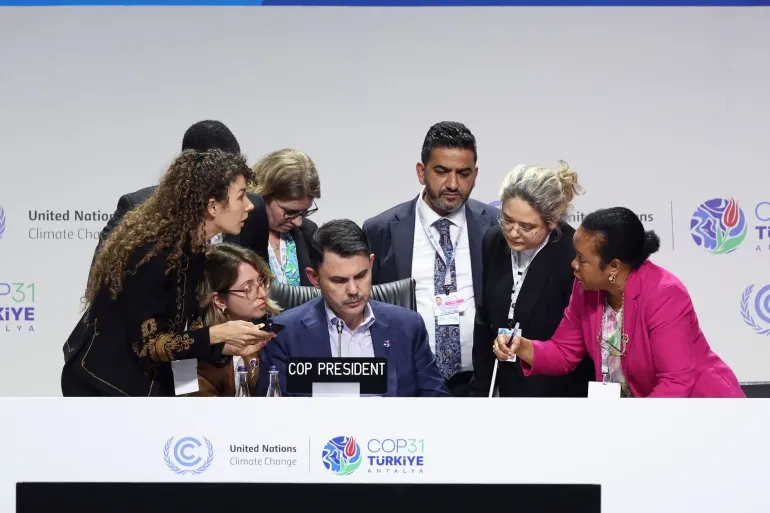
The negotiations continued beyond their scheduled conclusion before COP31 President Murat Kurum acknowledged that participating countries had failed to reach a consensus.
The summit eventually closed on 22 November without an overarching political agreement, marking the first such breakdown since the Copenhagen climate conference in 2009.
The unresolved disagreements over fossil fuel transition commitments and financial support for vulnerable countries are expected to return to the negotiating table at COP32, scheduled to take place in Addis Ababa, Ethiopia, in 2027.