

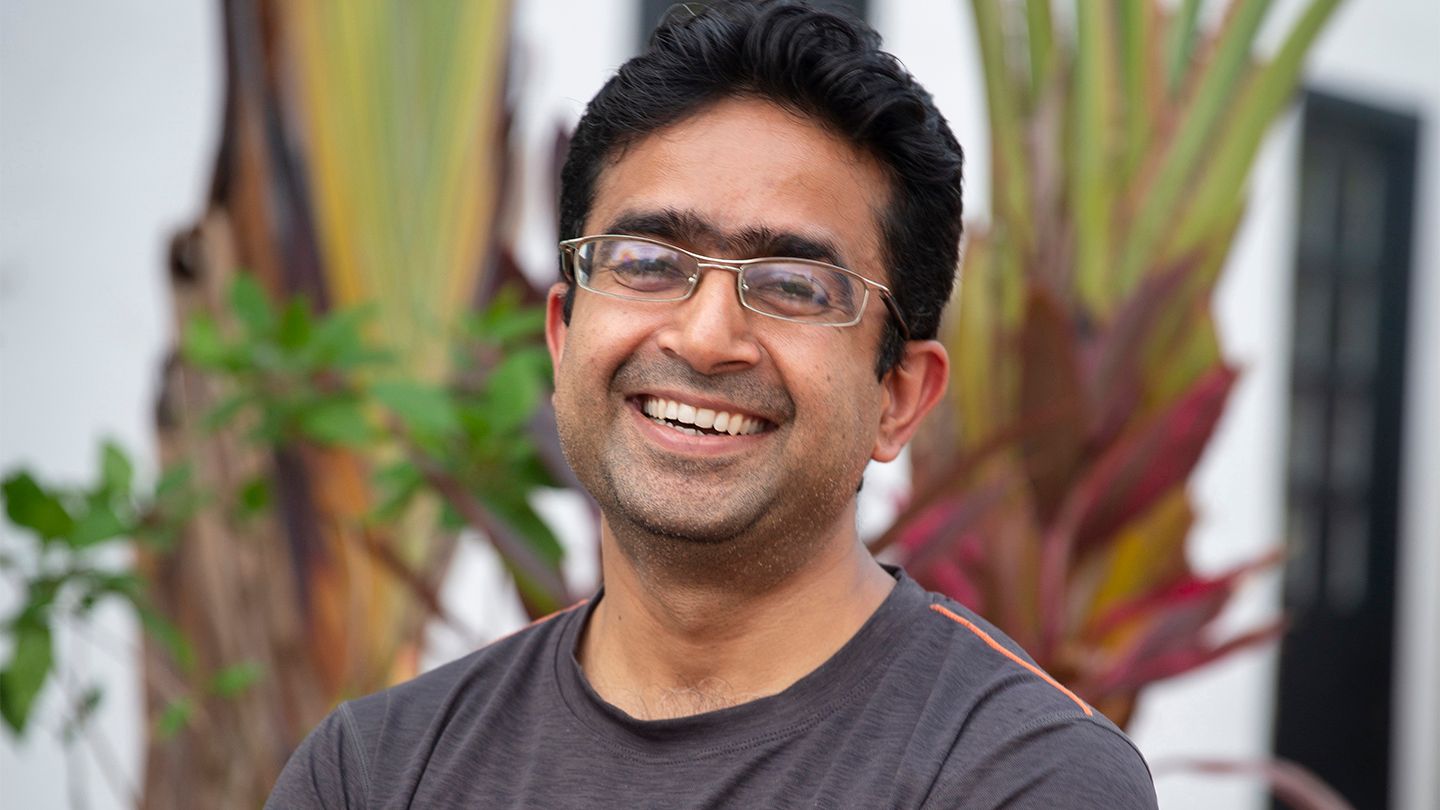
The Chief Executive Officer of Husk Power, Manoj Sinha, says Nigeria’s biggest energy challenge is not just generation, but affordability, access, and building systems that can unlock economic activity in underserved communities.
Speaking on the sidelines of the World Bank/IMF Spring Meetings in Washington DC, Sinha said the company was originally founded with a simple goal: to make electricity affordable and reliable for rural communities that have long been left out of national grids.
According to him, the economics of power have changed significantly in recent years, especially with the rise in diesel prices, which has made renewable energy solutions more competitive.

“We used to be about 50 per cent cheaper than diesel when diesel was around N1,000 per litre. Now diesel is about N2,000, and we are roughly 70 per cent cheaper,” he said. “But affordability is only part of the story.”
Sinha explained that access to electricity often triggers a wider chain of economic activity in rural areas, beyond just lighting homes.
“When we bring power into a community, we are also bringing opportunity,” he said. “You start seeing rice mills, cold storage facilities, small businesses—things that didn’t exist before—because energy becomes reliable and affordable.”
He added that Husk Power currently operates hundreds of rural jobs in Nigeria, with most staff based in the communities they serve, describing this as part of a broader effort to stimulate local economies rather than just supply electricity.
On its operational model, Sinha broke it into three segments: isolated mini-grids for off-grid communities, hybrid systems for semi-urban areas, and partnerships with distribution companies to strengthen weak grid networks.

He noted that nearly 90 million Nigerians still lack access to reliable electricity, making decentralised energy systems essential.
“We are not trying to replace the national grid,” he said. “We are filling the gap where the grid does not exist, and strengthening it where it is weak.”
Sinha also pointed to falling costs of solar panels and batteries as a key driver of expansion, adding that support from institutions like the World Bank has helped scale rural electrification projects.
However, he stressed that funding remains the biggest constraint to scaling operations to thousands of communities.
On Nigeria’s policy environment, he described reforms as generally positive and forward-looking, but said implementation remains slow.
“There is policy clarity for the long term, and that is good for investors,” he said. “But execution needs to move faster if the country wants to close its energy gap.”
He also noted that attracting global capital will require stronger participation from local institutions, improved lending frameworks, and clearer guarantees for investors.
According to him, Nigeria’s power sector needs “hundreds of billions of dollars” in investment over the next decade, but investor confidence will depend on stable policies, easier access to finance, and reforms that encourage both foreign and local participation.
Sinha further called for incentives to boost local manufacturing of solar components, arguing that Africa has the raw materials needed to reduce dependence on imports while creating jobs.

He also emphasized that Nigeria’s energy future will likely be a mix of fossil fuels and renewables, rather than a complete shift away from gas.
“Gas will still play a major role,” he said. “But solar and battery systems can scale faster and work alongside traditional sources to deliver more reliable power.”
Looking ahead, Husk Power plans to significantly expand its footprint in Nigeria, with ambitions to deploy gigawatts of renewable energy capacity and thousands of mini-grid systems over the coming years.
Sinha said the long-term vision is a decentralised energy ecosystem powered by technology, where artificial intelligence helps manage distributed power systems more efficiently and at lower cost.
“Technology is what makes this scalable,” he said. “Without it, electrifying millions of people would be far more expensive and slower.”
He concluded that Nigeria, like much of Africa, has the opportunity to build a cleaner and more flexible energy system if investment, policy, and technology move in the same direction.




