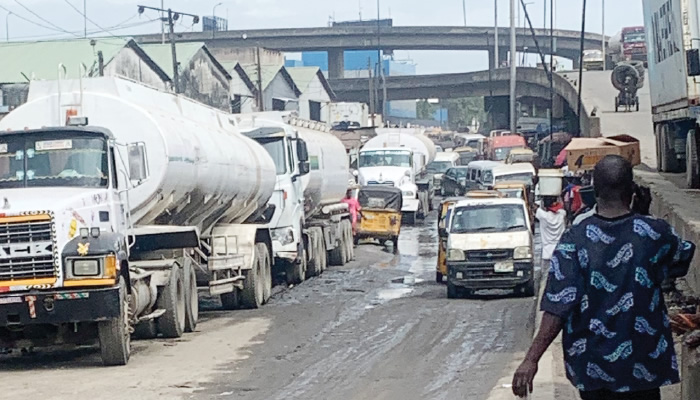
Lagos Registers Over 28,000 Trucks Under Lekki-Epe Electronic Call-Up System
The Lagos State Government has announced that more than 28,000 trucks have been registered under the Lekki-Epe electronic call-up system, introduced to regulate truck movement around key industrial and economic hubs in the state.
The system, which covers the Dangote Petroleum Refinery, Lekki Deep Sea Port, and the Lekki Free Zone corridor, is part of efforts to prevent traffic congestion and restore order along the busy axis.
According to a statement released on Thursday by the Public Relations Officer of the Ministry of Transportation, Bolanle Ogunlola, about 11,000 transport operators have also signed up for the initiative.
The update followed a review meeting held at the Ministry of Transportation in Lagos, led by Commissioner for Transportation, Oluwaseun Osiyemi, and the Permanent Secretary, Olawale Musa. The meeting brought together representatives of NUPENG, terminal operators, and other key stakeholders in the transport sector.

During the session, the Managing Director of E-Call Up Technology, Timi Koleolu, said compliance with the system has continued to improve since its introduction.
He disclosed that the growing number of registrations reflects increasing acceptance of the digital platform among truck operators and logistics stakeholders.
“About 11,000 transporters have registered with over 28,000 trucks under the system,” he said.
Koleolu explained that the aim of the initiative is to streamline truck scheduling, reduce waiting times, and avoid the kind of gridlock previously experienced in Apapa.
Reacting to concerns about some trucks allegedly bypassing the system, Commissioner Osiyemi assured that enforcement would soon be strengthened along the corridor.
“Sustainable enforcement will be deployed very soon to ensure seamless movement. We are determined to make this system work effectively for all stakeholders,” he said.
He added that the government is determined to prevent a repeat of the Apapa traffic crisis in the Lekki axis, stressing that proactive management is key to sustaining industrial growth in the area.
Stakeholders at the meeting emphasised the importance of continued collaboration between government agencies, transport unions, terminal operators, and private sector players to ensure full compliance and long-term success of the system.
Also present were officials from LASTMA, directors from the Ministry of Transportation, representatives of NUPENG, and various terminal operators.