

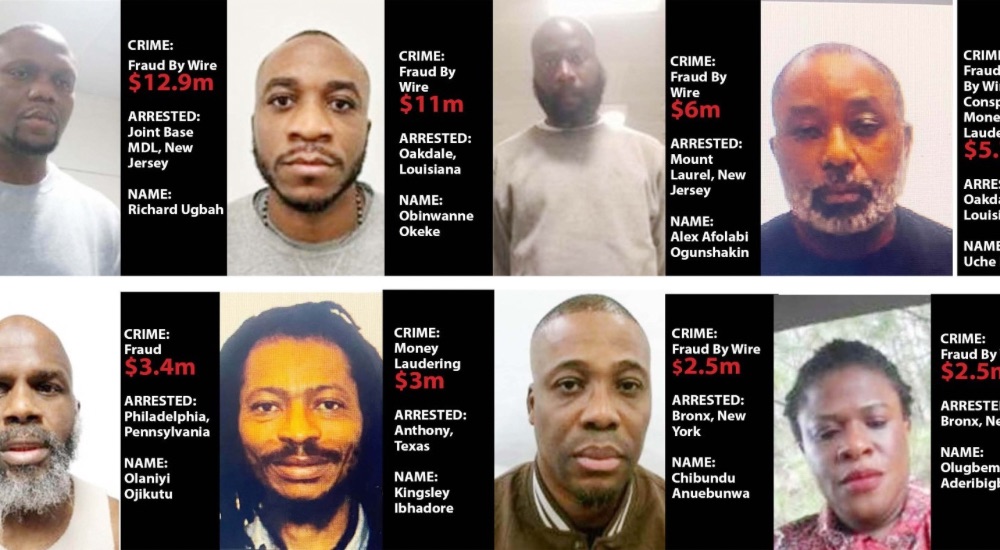
At least 30 Nigerians listed on a United States Department of Homeland Security deportation database have been linked to an estimated $62 million (over N86.8 billion) in fraud-related losses, restitution orders, and attempted financial crimes.

The individuals are part of a wider group of 124 Nigerians appearing on the DHS “Worst of the Worst” deportation portal, a public list used to flag foreign nationals facing removal from the United States.
According to available court records, financial crimes make up the majority of the cases, accounting for more than 60 percent of the entries. However, records for several listed individuals were not accessible.

One of the most significant cases involves a man sentenced to 12 years in prison for romance fraud and business email compromise schemes, with intended losses estimated at $12.9 million. In another case, a Nigerian national received a 10-year sentence for an $11 million cyber fraud operation, while another individual was convicted after being on an FBI cyber watch list for years, with confirmed losses and attempted fraud exceeding $30 million combined.
Other cases include convictions for business email compromise schemes, romance scams, COVID-19 relief fraud, identity theft, and money laundering. Several defendants were described as operating coordinated networks that moved illicit funds through multiple accounts to conceal their origin.

A number of individuals on the list were also linked to violent crimes, drug trafficking, kidnapping, sexual offences, and firearm-related charges. Some cases involve people already serving federal sentences who were later processed for immigration removal.
The DHS database, launched in late 2025, has continued to expand, with Nigerian entries increasing steadily over time. Recent enforcement actions across multiple U.S. states have also added more Nigerians to deportation proceedings, with Texas recording the highest number of arrests among them.

U.S. immigration enforcement authorities say the system is designed to track individuals convicted of serious offences and coordinate removal efforts, particularly for foreign nationals involved in transnational crime networks.
The Nigerian government has acknowledged ongoing deportation discussions and emphasized that returning citizens must be handled in a dignified manner, while also noting broader concerns about migration arrangements involving West African countries.




