Guterres added that “safe, unimpeded passage is an economic & humanitarian imperative,” underscoring the global implications of any disruption to maritime traffic through the critical waterway.

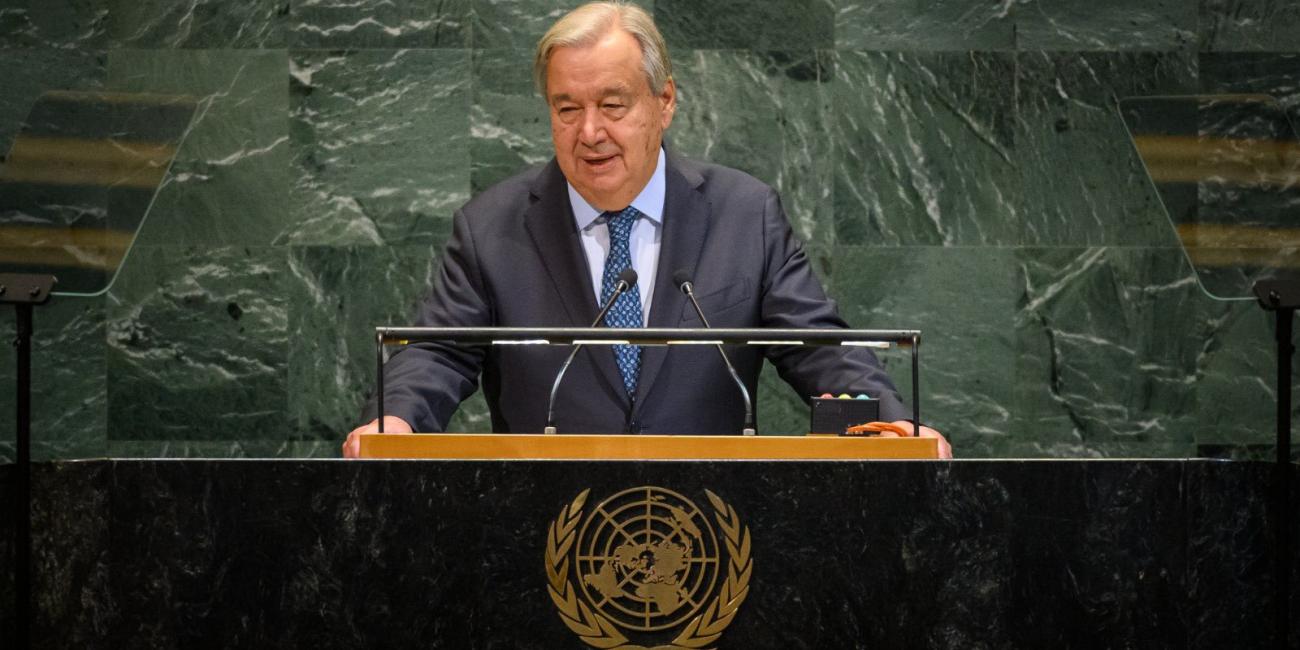
The United Nations Secretary-General, António Guterres, has issued an urgent appeal to Iran and the United States to de-escalate tensions surrounding the Strait of Hormuz, warning that continued disruption of maritime activity could deepen global economic strain.
In a statement shared via his X (formerly Twitter) handle on Monday, April 27, 2026, Guterres stressed the importance of keeping one of the world’s most strategic shipping lanes open and free of obstruction.
He stated that “navigational rights & freedoms through the Strait of Hormuz must be respected.”

He further appealed directly to the parties, saying: “I appeal to the parties: Open the Strait. Let ships pass. No tolls. No discrimination. Let trade resume. Let the global economy breathe.”
Guterres added that “safe, unimpeded passage is an economic & humanitarian imperative,” underscoring the global implications of any disruption to maritime traffic through the critical waterway.
The appeal comes amid growing diplomatic activity and behind-the-scenes negotiations involving Iran, the United States, and regional mediators, as tensions linked to maritime access and nuclear disagreements continue to escalate.
According to earlier reporting by SaharaReporters, Iran has reportedly sent a fresh proposal to the United States through Pakistani intermediaries, seeking to end hostilities and restore full maritime access through the Strait of Hormuz.

The proposal, first reported by Axios, is said to aim at “reopen[ing] the Strait of Hormuz and end[ing] the war,” potentially creating a diplomatic opening after weeks of heightened tension between Tehran and Washington.
Further details reported by ABP News indicate that the proposal includes what sources describe as a “two-stage plan.” The first stage prioritises restoring maritime access and lifting what Iran describes as a US naval blockade, while the second stage would shift focus toward broader nuclear negotiations.
Under the reported framework, the plan also suggests either a “prolonged period” of ceasefire extension or a “permanent end to the war.” Nuclear talks would “begin only at a later stage,” once shipping routes are reopened and restrictions lifted.
The White House has acknowledged receiving the proposal but has said it remains “unclear whether the United States is willing to explore it.”
US President Donald Trump has recently stated that Tehran could “call” Washington if it wished to negotiate, while insisting Iran must not develop nuclear weapons.

However, diplomatic momentum appears fragile following the cancellation of a planned visit to Islamabad by US envoys Steve Witkoff and Jared Kushner. The decision was widely interpreted as showing “dissatisfaction with Tehran’s earlier offer.”
A key sticking point remains Washington’s demand that Iran halt uranium enrichment for at least ten years and transfer its nuclear stockpile abroad.
The Axios report also noted that Iranian Foreign Minister Abbas Araghchi told mediators there is currently “no consensus within the Iranian leadership” on how to respond to those conditions.
Araghchi has since travelled between Pakistan and Oman as part of ongoing diplomatic engagement and is expected in Moscow for talks with Russian President Vladimir Putin, as Tehran seeks external backing while negotiations remain unresolved.
The unfolding developments highlight growing international concern over the Strait of Hormuz, a critical global energy route, with fears that continued tensions could have wide-ranging consequences for global trade and economic stability.