

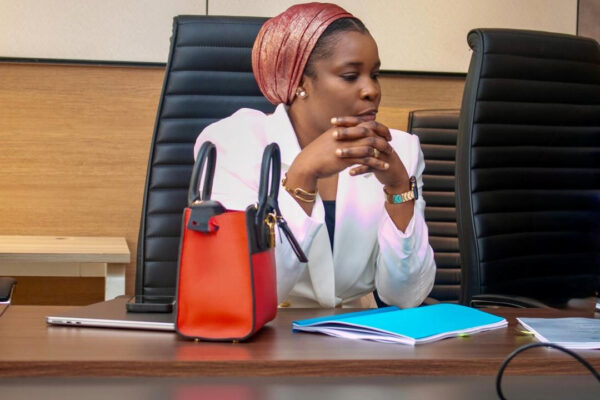
What began as years of academic research into Nigeria’s energy challenges has evolved into a mission to deliver practical solutions for underserved communities across the country.
Dr Nabilah Sani Mohammed, a renewable energy policy expert and co-owner of Alfuttaim Nigeria Limited, is leading major solar power projects aimed at expanding electricity access in Kano State through decentralised energy systems.

Armed with a doctorate in Public Policy from Universiti Brunei Darussalam and specialised knowledge in renewable energy, Mohammed transitioned from academia into the private sector after deciding that research alone could not solve Nigeria’s persistent power crisis.
Her company recently secured a $6.4 million grant under the World Bank-backed Distributed Access through Renewable Energy Scale-up (DARES) programme, implemented by the Rural Electrification Agency. The funding will support the development of solar mini-grids across ten underserved communities in Kano State with a projected generation capacity of about 1.2 megawatts.

Alfuttaim Nigeria Limited also attracted an additional $4.6 million in financing from Bank of Africa UK and Impacta Global, bringing the total investment in the project to $11 million.
Despite operating in one of Africa’s most difficult energy markets, Mohammed has continued to push forward in an industry often dominated by men and constrained by regulatory uncertainty, financing difficulties, and infrastructure challenges.
She acknowledged facing skepticism in several professional spaces but said consistent execution, technical knowledge, and strategic direction helped establish her credibility within the sector.

The company’s success in winning the highly competitive DARES grant demonstrated its technical strength, financial planning, and operational capability among numerous competing developers.
Installation work is already progressing across various communities in Kano, where many residents have long depended on diesel generators and kerosene lamps for power.

For Mohammed, access to electricity goes beyond infrastructure, viewing it as a tool capable of transforming healthcare, businesses, and economic opportunities for ordinary families.
Alongside her energy work, she also serves as Secretary General of the Baze University Alumni Association, maintaining her commitment to education and institutional development.

As Nigeria continues to battle one of the world’s largest electricity access gaps, Mohammed’s growing influence in renewable energy reflects a broader push toward sustainable power solutions driven by private investment and local innovation.




