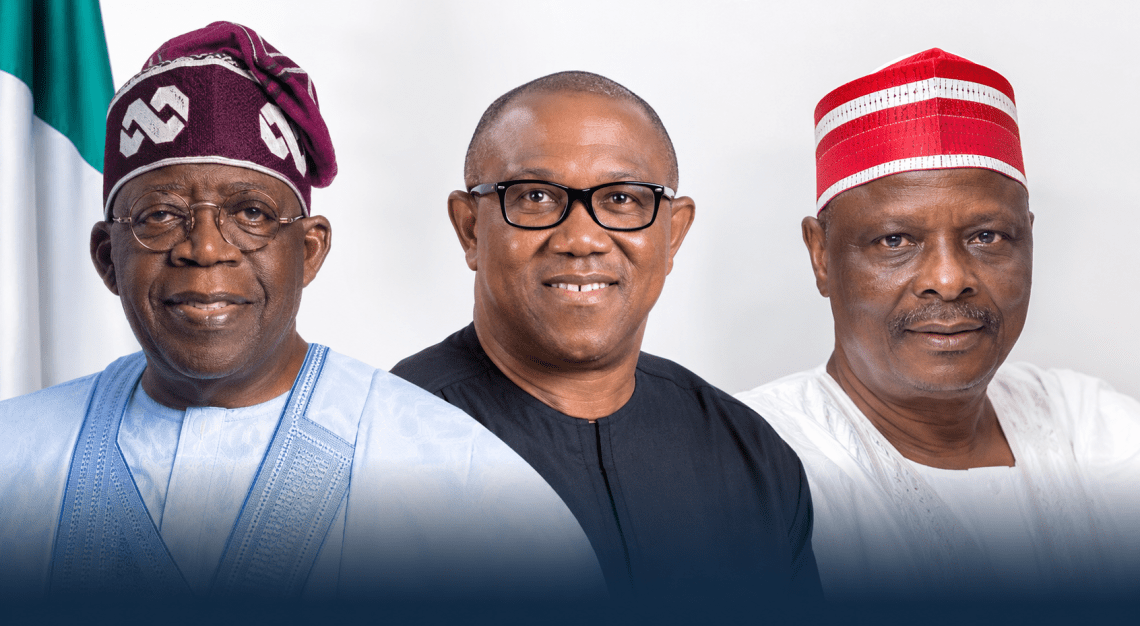
2027 Politics: Southern Bloc Realignment Puts Tinubu’s Stronghold Under Fresh Pressure
Nigeria’s 17 southern states, long seen as President Bola Tinubu’s core political base, are gradually becoming the centre of a shifting opposition strategy ahead of the 2027 general elections.
For the first time since the 2023 polls, a major opposition formation appears to be reorganising around a southern presidential ambition capable of challenging Tinubu directly in regions he previously dominated.
The development is unfolding amid ongoing leadership crises within major opposition parties, including the Peoples Democratic Party (PDP) and the African Democratic Congress (ADC), creating space for a new coalition force, the Nigeria Democratic Congress (NDC), to gain ground.

Southern Nigeria and the 2023 political map
The South is made up of 17 states across the South-west, South-east, and South-south zones — Lagos, Ogun, Oyo, Osun, Ondo, Ekiti; Abia, Anambra, Ebonyi, Enugu, Imo; and Akwa Ibom, Bayelsa, Cross River, Delta, Edo, and Rivers.
In 2023, Tinubu performed strongly in the South-west but struggled in the South-east and parts of the South-south, where Labour Party’s Peter Obi enjoyed massive youth and urban support.
While he secured wins in states like Ogun, Oyo, Ekiti, Ondo, Edo, Rivers and Cross River, he lost Lagos and most of the South-east states, exposing cracks even within his traditional base.
Overall, Tinubu gathered an estimated 3.2 million votes from the South — about 36 per cent of his national total — a figure analysts say could be tested again in 2027.
Why 2027 may look different
Unlike 2023, when opposition votes were split among several candidates, the emerging NDC structure is attempting to unify discontented political blocs, particularly in the South.
Its reported zoning of the presidential ticket to the South is seen as a strategic move to neutralise Tinubu’s “southern candidate” advantage while appealing to northern voters with a one-term rotation promise.

Political observers say this could reshape southern voting dynamics, especially if other southern aspirants also emerge from different opposition platforms.
Already, names such as Oyo State Governor Seyi Makinde (APM) and SDP’s Adewole Adebayo are expected to contest, raising the possibility of a crowded southern field.
The real battleground: South-south and South-east
Analysts believe the South-south and South-east will be decisive in 2027.
The South-east remains largely resistant to the APC, while the South-south continues to swing based on economic grievances, resource control sentiments, and local political alignments.
If the NDC succeeds in building a credible southern coalition, it could significantly weaken Tinubu’s numbers in these regions.
However, a divided opposition could also work in the president’s favour, as it did in 2023.
Tinubu’s remaining advantage
Despite emerging challenges, Tinubu still retains major structural advantages — incumbency, APC’s nationwide network, strong South-west influence, and control of key political alliances.
The South-west remains his strongest base, with the APC maintaining deep-rooted structures across all six states in the region.
But analysts warn that economic pressures, including subsidy removal and currency devaluation, may influence voter sentiment more than party loyalty in 2027.
Opposition strategy still fragile
While the NDC is positioning itself as a new opposition hub, political analysts say internal unity remains its biggest challenge.
Nigeria’s opposition history is marked by repeated fragmentation, with competing ambitions and regional calculations often weakening coalition efforts.
Even so, recent defections into the NDC from other opposition parties have strengthened its visibility, particularly in the National Assembly, where several lawmakers have reportedly joined its ranks.
What it means going forward
For Tinubu, the 2027 race may no longer be a straightforward southern stronghold contest.
Instead, he is likely to face multiple southern challengers competing for the same voter base, alongside renewed opposition coordination efforts.
Whether this translates into a serious electoral threat will depend on two key factors: opposition unity and the president’s performance in office.
For now, the southern political landscape is no longer predictable — and 2027 is shaping up to be a far more competitive race than 2023.