

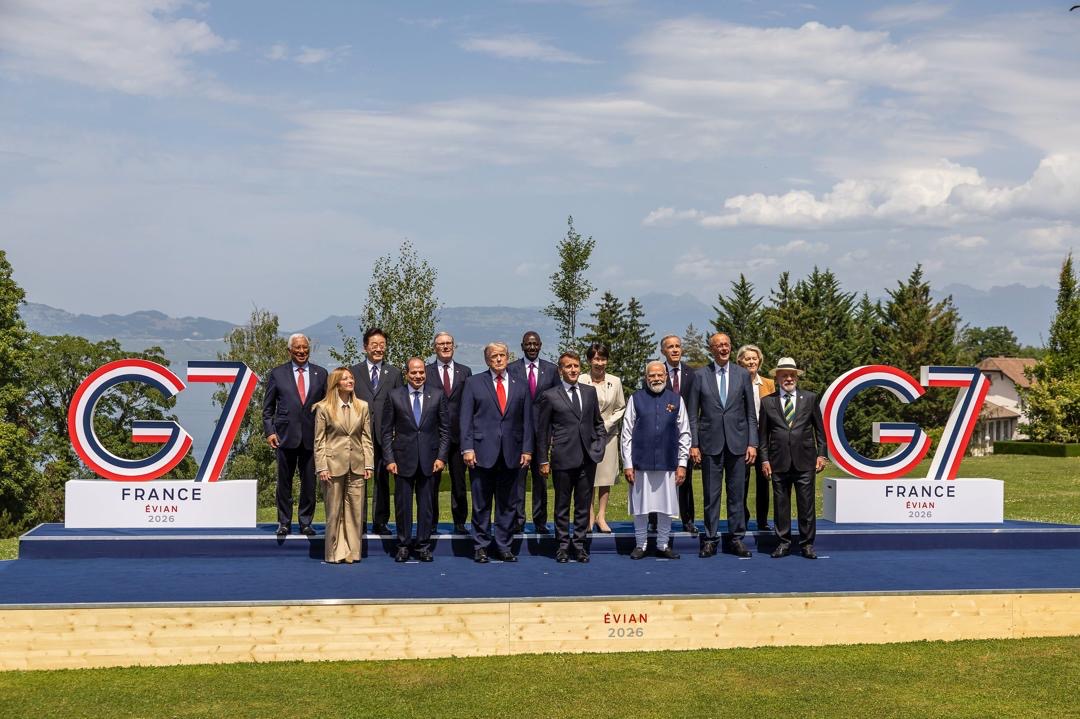
Leaders of the Group of Seven (G7) at a meeting in Evian, France, on June 17, 2026, agreed to strengthen coordination on investment and supply chains for critical minerals such as rare earths, lithium, nickel, cobalt, and graphite, as part of efforts to secure global industrial and energy transitions.

In a joint declaration, the leaders committed to building and expanding processing and industrial capacity within G7 countries and partner nations, with a focus on diversifying global critical mineral value chains beyond raw material exports.
The agreement has significant implications for Africa, which holds some of the world’s largest reserves of strategic minerals but continues to export much of its output in unprocessed form due to limited refining and industrial capacity.

Countries such as the Democratic Republic of Congo, Zambia, Kenya, Nigeria, Zimbabwe, and Namibia are expected to benefit if the new framework attracts investment in mining infrastructure, energy, transport, and local processing industries.
While South Africa was not represented at the summit, it remains a key player in global mineral supply chains due to its reserves of manganese, platinum group metals, and rare earth-related resources, as well as its relatively developed industrial base.
Kenya used the platform to push for agreements that support local processing of minerals rather than raw exports. President William Ruto said discussions with the United States are advancing on a deal that would ensure minerals mined in Kenya are processed domestically, in line with Africa’s growing demand for value addition and industrialisation.
Nigeria is also advancing its own rare earth ambitions, with plans for a $400 million processing facility in its North Central region expected to significantly increase domestic refining capacity and support broader participation in global supply chains.
The Democratic Republic of Congo continues to play a central role in the global minerals market, particularly due to its cobalt reserves, while also pursuing efforts to digitise colonial-era geological data to identify new deposits.
Egypt’s participation in the summit further highlighted Africa’s growing diplomatic engagement in critical mineral discussions, leveraging its strategic location and industrial base to remain relevant in global supply chain planning.

However, financing remains a major challenge for African countries seeking to move up the value chain. While the G7 announced billions of euros in planned investments for critical minerals projects, African leaders stressed the need for better access to capital, guarantees, and risk-sharing mechanisms.
African leaders argued that the continent is not short of resources but requires stronger financial frameworks to unlock its full industrial potential in the global minerals economy.




