

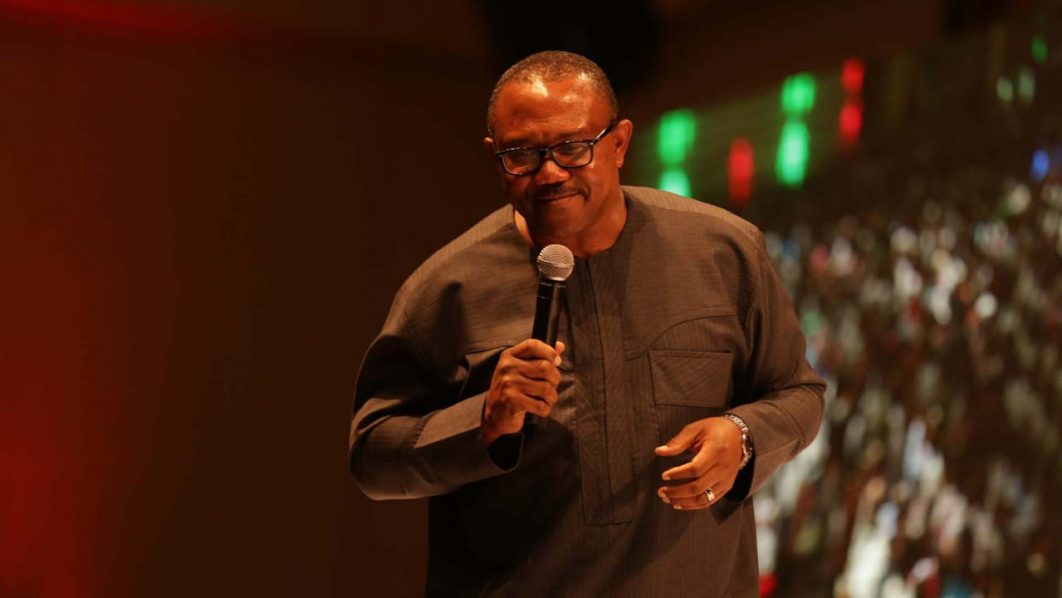
The resurgence of an old list of prominent Nigerians allegedly kidnapped during the administration of former Anambra State Governor Peter Obi has reignited political debate, particularly following recent exchanges over insecurity in Nigeria.
The viral list, widely circulated across social media, names more than twenty prominent individuals—including traditional rulers, politicians, businessmen, senior government officials and actor Pete Edochie—as victims of kidnapping during Obi’s tenure between 2006 and 2014.

A careful review, however, suggests a more nuanced picture.
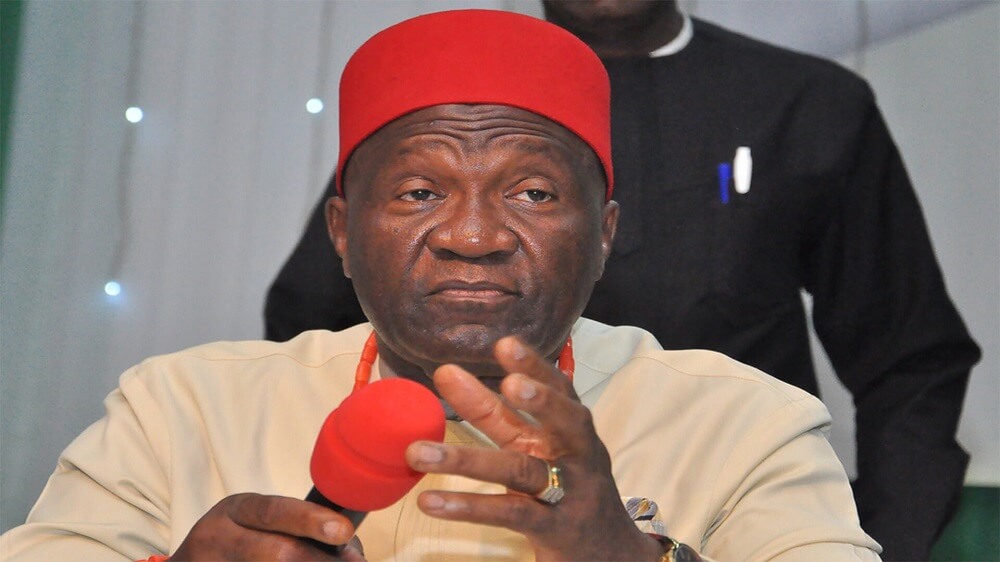
Several of the most prominent incidents are supported by contemporaneous reports and public records. These include the abduction of veteran Nollywood actor Pete Edochie in August 2009, the kidnapping of the father of Professor Charles Soludo in 2009, the abduction of former Anambra Deputy Governor Dr. Chudi Nwike in 2013, who was later killed by his captors, the kidnapping of traditional ruler Igwe Robert Eze of Ukpo, and the abduction of former PDP Chairman Ken Emeakayi. These incidents formed part of the broader security challenges confronting Anambra during that period.
However, while many names on the circulating list appear consistent with historical reports, numerous ransom figures attached to individual cases remain difficult to verify through reliable public records. Some claims appear to have been amplified through repeated social media circulation rather than contemporaneous documentation.

This distinction is important.
Historical events should not be rewritten to suit present political arguments, nor should unverified claims be accepted simply because they support one side of a political debate.
What cannot reasonably be disputed is that kidnapping posed a serious security challenge in Anambra during the late 2000s and early 2010s. Wealthy businessmen, traditional rulers, politicians and professionals increasingly became targets of organised criminal gangs. The period witnessed widespread public concern over insecurity before subsequent security operations and legislative measures helped reduce the frequency of high-profile abductions.

The renewed circulation of these historical incidents also reflects a broader issue in Nigerian political discourse.
Security challenges have unfortunately confronted successive administrations at both state and federal levels. Governors and Presidents alike have, at different times, faced criticism over rising insecurity. The existence of kidnappings during one administration does not automatically absolve another administration of responsibility for present-day security challenges, nor does contemporary insecurity erase historical realities.
Comparative experience across Nigeria demonstrates that kidnapping has evolved beyond a state-specific problem into a national criminal enterprise. What began as isolated criminal activity in parts of the South-South and South-East eventually spread across virtually every geopolitical zone, with banditry, terrorism, ransom kidnapping and organised criminal networks becoming major national security concerns.

Consequently, the more productive national conversation should move beyond political point-scoring towards institutional reforms capable of strengthening intelligence gathering, policing, border security, criminal justice administration and inter-agency coordination.
The viral Anambra list therefore serves as an important reminder of Nigeria’s security history, but it should equally remind Nigerians that historical claims deserve careful verification.
Several of the prominent kidnapping cases listed are supported by historical records. Others remain insufficiently documented in the public domain, particularly the specific ransom figures attached to them. Responsible public discourse demands that verified facts be distinguished from unverified social media claims.
As Nigeria continues to battle kidnapping nationwide, history should be used to inform better policy—not merely to fuel partisan arguments.
The lesson is clear: insecurity did not begin with one administration, and it will not end through political rhetoric alone. It requires sustained institutional reform, professional policing, intelligence-led operations and bipartisan commitment to national security.

The National Patriots’ Position
The National Patriots believes that Nigeria’s worsening insecurity should unite political leaders around solutions rather than deepen partisan divisions through statements that may oversimplify a complex national challenge.
Those who have occupied executive office understand that kidnapping, banditry, terrorism and organised criminality are among the most difficult governance challenges confronting any administration. They are driven by multiple factors, including porous borders, the proliferation of illicit arms, organised criminal networks, weak intelligence coordination, unemployment, illegal mining, ransom economies and transnational criminal syndicates. No responsible leader should underestimate this reality.
Historical records show that Anambra State experienced several high-profile kidnappings during Mr. Peter Obi’s tenure as Governor. Like many governors across Nigeria, his administration faced enormous security pressures and undertook measures to respond. Yet, despite those efforts, kidnapping incidents still occurred. Mr. Obi did not resign because of those tragic events, just as other governors confronting similar security challenges did not resign.

Against that background, the National Patriots believes it is neither fair nor constructive to demand the resignation of President Bola Ahmed Tinubu solely on account of Nigeria’s current security challenges. While every administration must be held accountable for improving security, criticism should be accompanied by practical solutions and an appreciation of the complexity of governance.
National security should never become a tool for political point-scoring. Every life lost is a national tragedy that transcends party affiliation. The expectation of Nigerians is not an exchange of accusations but stronger leadership, enhanced intelligence gathering, better funding and welfare for security agencies, improved border management, accelerated judicial processes, greater community participation and sustained bipartisan support for reforms that will permanently weaken criminal networks.
The National Patriots therefore calls on all political leaders—past and present—to elevate the national conversation above partisan rhetoric. Leadership is measured not only by criticism of those in office, but by the willingness to contribute ideas, experience and constructive support in the collective effort to make Nigeria safer for every citizen.
SHARED LIST OF RICH PEOPLE KIDNAPPED DURING PETER OBI’S TENURE IN ANAMBRA.
The names of the people kidnapped during Peter Obi’s Administration and the ransom fee some of them paid are below.
Please can someone confirm some of them?
I know of some but don’t know about the rest.
1. Engr. Malcolm Nweke of Alor – 25million naira.
2. Traditional Ruler of Ukpo – Igwe Robert Eze paid N100m
3. Chief Donatus Ugorji of Ogbunike , Orjitechs Eletronics – 30million
4. Traditional Ruler of Abagana – Igwe Patrick Okeke
5. Traditional Ruler of Adazi Nnukwu – Igwe Lawrence Oragwu
6. Traditional Ruler of Ihembosi – Igwe Jerome Udechukwu Chike
7. Commissioner of Science and Technology – C. Okoli .
8. Charles Chukwuma Soludo’s father
9. Dr. Chidi Nweke – former deputy governor of Anambra. 5milion naira and he was killed even after collecting the ransom.
10. Ken Emeakayi – factional PDP State Chairman
11. Ernest Obiora – Anambra Iroko Nnewi Auto parts dealers,
12. Dr. Emeka Aniebonam – Nnewi North LGA Chairman
13. Tony Obi – Anambra State House of Assembly member – 8milion naira
14. Chief Ekenna – Chairman Emeka Offor Foundation , sister to Orange Drugs CEO – N50m ransom.
15. Brother to G.U.O. Okeke – paid N35m
16. Chief James Iloenyisi [80yrs] father of Super Eagles player , Chikeluo Iloenyisi – 5milion naira.
17. Mrs Adafor Madueke 89yrs– 8milion naira.
18. Ndubusi Nwobu from Adazi Ani – former Action Congress State Chairman Anambra Chapter – 12milion naira.
19. Chief Leonard Uchendu – gubernatorial candidate NNPP – 10milion naira.
20. Pete Edochie – nollywood legend.
21. Dr. Ozor Nwanya from Ezinifite – 20milion.
22 . Dr Alex Okonkwo from Okoh – 10 million.
23. Chief Obi Charles Charleston from Aghaemelum – 13million.
*So if all of these happened under Peter Obi and he didn’t resign, why should he ask Asiwaju Bola Ahmed Tinubu to resign?*
#getsense!🕵️♂️
Dr. Imran Khazaly.
Headlinenews.News Special Report.




