

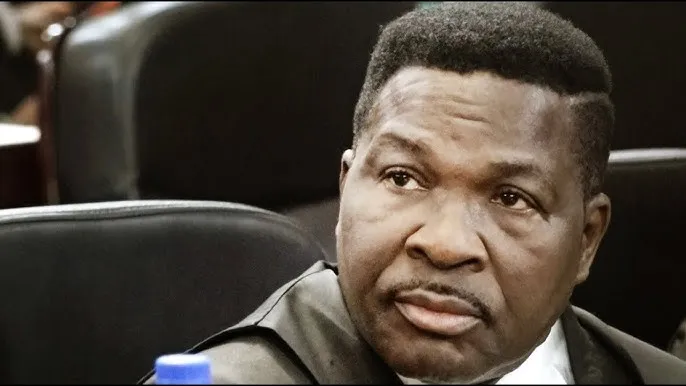
Proceedings continued at the Federal High Court in Abuja as the defence team representing senior lawyer Mike Ozekhome questioned a forensic expert presented by the Economic and Financial Crimes Commission (EFCC) in an alleged forgery and impersonation case.
The prosecution’s second witness, Bamaiyi Mairiga, a forensic examiner with the EFCC, defended his findings during cross-examination, insisting that his analysis of a disputed Nigerian passport was conducted in line with internationally accepted standards.

The case centres on allegations that a Nigerian passport bearing the name Tali Shani was forged and used in an attempt to support Ozekhome’s claim to a property in London. Ozekhome and his co-defendant, Ponfa Useni, have pleaded not guilty to the charges.
During the hearing, defence counsel Tayo Oyetibo (SAN) challenged the credibility of the forensic report, arguing that another expert had described the findings as speculative.
Responding, Mairiga maintained that his conclusions were based on standards established by the International Civil Aviation Organisation (ICAO) for verifying passport authenticity. He explained that the passport failed mandatory check-digit verification, indicating that its data page did not meet international requirements for a valid travel document.
The witness said he relied on several forensic tools and methods, including Keesing Technologies Document Checker (KTDC), VSC 8000 ICAO Optical Character Recognition (OCR) E-Passport Checker, and manual calculations, all of which produced consistent results.

During questioning, Mairiga acknowledged that he did not examine the passport for page substitution, photo replacement or erasures, explaining that those checks were unnecessary for the specific forensic request he received.
He also noted that some security features, including holograms, ultraviolet markings and micro-printing, could not be fully examined because the document submitted for analysis was a photocopy rather than the original passport.
However, he said the copy was clear enough for infrared examination and verification of the encoded data on the passport’s machine-readable zone.
The witness further explained that passport details such as the date of birth, date of expiry and passport number contain mathematically generated check digits used worldwide to verify authenticity, adding that the disputed passport failed those verification tests.

Under further questioning, Mairiga confirmed that although he previously served with the Nigeria Immigration Service (NIS) and received specialised training in passport examination and forgery detection, he did not have access to the NIS database during the investigation.
He also stated that he did not interview officials at the NIS office where the passport was reportedly issued because that was outside the scope of his assignment.
The court subsequently adjourned the matter to consider an application by Ozekhome seeking permission to travel abroad for medical treatment.
The case follows allegations by the Office of the Attorney-General of the Federation that Ozekhome and Ponfa Useni conspired to create forged identity documents, including a Nigerian passport, to support a claim over a property in the United Kingdom. Both defendants have denied all the allegations.




