

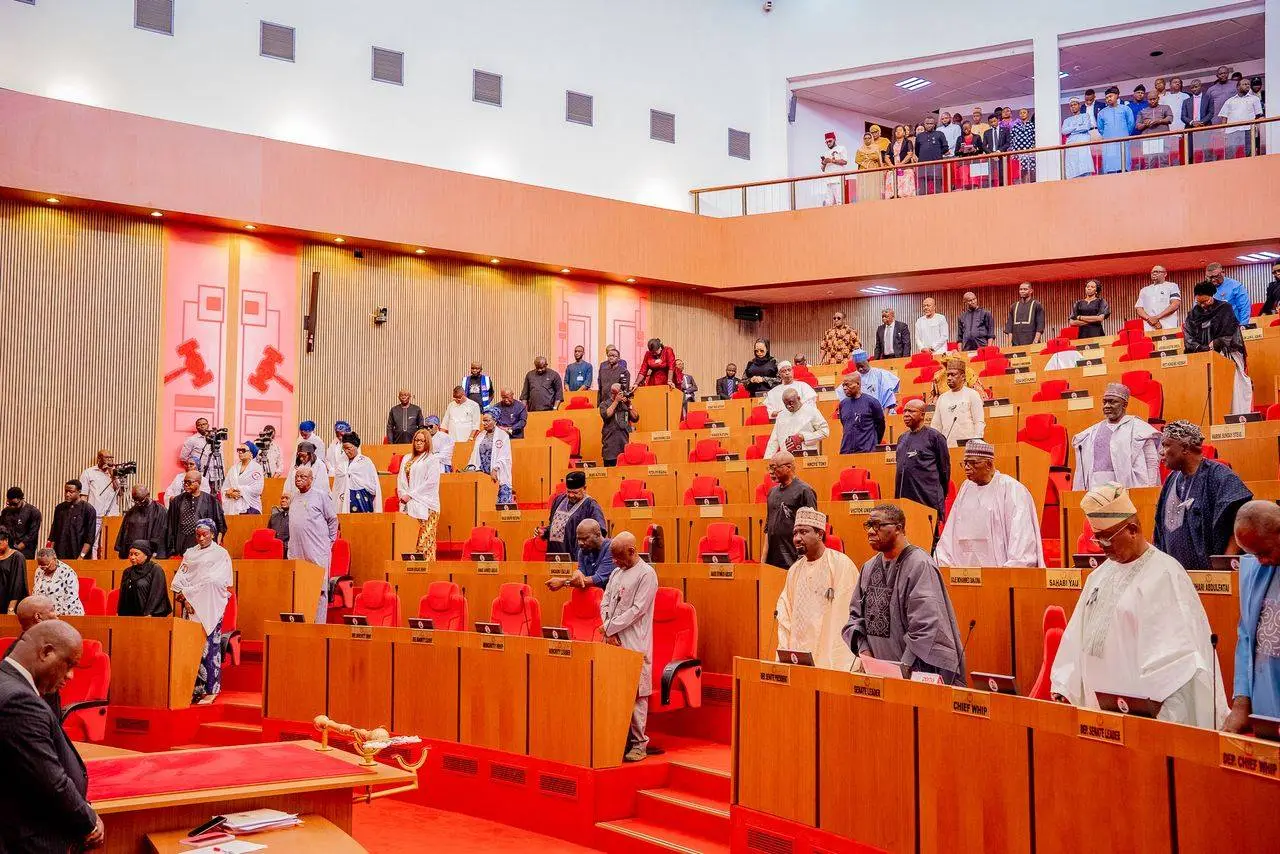
Senate Minority Leader Abba Moro has expressed strong opposition to the proposed creation of state police, arguing that it may not be the solution to Nigeria’s growing security challenges.
Speaking with journalists at the National Assembly after Wednesday’s plenary session, the Benue South senator said many governors backing the initiative appear to be pursuing personal political interests rather than seeking genuine solutions to insecurity.

Moro raised concerns that state police could eventually be manipulated in a similar manner to some state independent electoral commissions, warning that such a development could pose a threat to democratic governance.
Using Benue State as an example, the lawmaker noted that the government has reportedly struggled to adequately support existing community security outfits. He claimed that some personnel had not received their monthly ₦15,000 stipends and that security volunteers lacked the equipment needed to tackle armed attacks effectively.
He questioned how state governments that face challenges funding local security organisations would be able to sustain the financial demands of running a state police force.

According to him, before creating another security institution, governments should demonstrate their ability to properly equip and finance the structures already in place.
His remarks come after the Senate approved the State Police Bill in June with the required two-thirds majority. The House of Representatives has also begun considering the Senate’s version after withdrawing its earlier draft.
For the bill to become law, it must secure approval from at least 24 of the 36 state Houses of Assembly before being forwarded to the President for assent.

If enacted, the legislation would establish state police services headed by Commissioners of Police appointed by state governors, subject to confirmation by the respective state Houses of Assembly. It also gives governors authority to issue lawful policy directives on public safety matters, while a State Police Service Commission would oversee recruitment, promotions and disciplinary actions.

Supporters of the proposal argue that state policing would strengthen grassroots security, improve intelligence gathering and enable quicker responses to crime. However, critics remain concerned about funding challenges and the possibility of political interference in the operations of the new security structure.




