THE ₦195 ILLUSION: WHY NIGERIA CANNOT JUDGE TINUBU’S REFORMS WITH BUHARI-ERA ACCOUNTING
By Gloria Fraser, MFR
Nigeria did not suddenly become expensive on May 29, 2023. What changed was that some of the enormous costs the country had spent years hiding finally appeared on the bill.
That is the inconvenient truth missing from the argument that Buhari left petrol at ₦195 per litre, debt at ₦87.38 trillion and smaller federal budgets, while Tinubu has delivered petrol above ₦1,000, debt above ₦150 trillion and vastly larger appropriations.
The figures sound devastating when placed side by side. But economics cannot be reduced to a before-and-after photograph of pump prices and nominal naira figures.
A government can make petrol appear cheap by paying part of the price for you. It can make the naira appear strong by administratively fixing its exchange rate. It can keep trillions of naira in liabilities outside the conventional debt stock until they are eventually recognised. And inflation can make a ₦50 trillion budget today command less real purchasing power than a far smaller budget commanded years earlier.
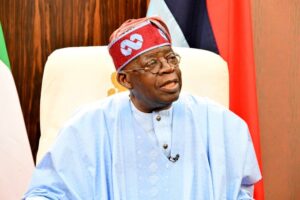
None of this makes the suffering of Nigerians imaginary. Food is expensive. Transport costs have risen painfully. Household incomes have been squeezed. Millions of Nigerians have every right to demand faster and better results from President Bola Ahmed Tinubu.
But hardship does not make bad arithmetic good economics.
If we are going to compare Buhari and Tinubu, then let us compare the whole economic bill—not simply the portion Nigerians were allowed to see at the filling station.
₦195 Was the Pump Price, Not the True Cost
Buhari did not leave petrol actually costing ₦195 per litre. He left motorists paying ₦195 while government absorbed the difference between the regulated pump price and the actual cost of supplying petrol.
That difference was subsidy.
The World Bank estimated in late 2023 that petrol subsidy had been costing government roughly ₦300 billion to ₦400 billion every month—potentially ₦3.6 trillion to ₦4.8 trillion annually.
Who ultimately paid the difference?
Nigerians did.
They paid through public revenue that could otherwise have financed roads, hospitals, education, security and infrastructure. Government also faced borrowing pressures while artificially cheap petrol encouraged arbitrage and cross-border smuggling.
A subsidised price does not eliminate a cost. It merely moves that cost somewhere less visible.
That does not excuse the severity of Tinubu’s implementation. Subsidy removal should have been accompanied by faster mass-transit expansion, stronger social protection and more effective measures to protect household purchasing power.

But poor implementation does not make the old subsidy system sustainable.
Nor should ending chronic queues be dismissed. Availability does not automatically mean affordability. But scarcity does not constitute affordability either. Nigerians repeatedly experienced the contradiction of officially cheap petrol that could not always be readily bought at the official price.
Debt: ₦87 Trillion Versus ₦159 Trillion
This is perhaps the most misleading comparison.
Nigeria’s public debt stood at ₦87.38 trillion in June 2023 and subsequently climbed dramatically in naira terms. That deserves scrutiny.
But it does not mean Tinubu simply borrowed the entire difference.
First, the ₦87.38 trillion figure already incorporated the securitisation of approximately ₦22.72 trillion in Ways and Means advances accumulated through Central Bank financing of government deficits. The Debt Management Office reported that this accounted for most of the extraordinary increase in public debt between March and June 2023.
That liability did not originate with Tinubu.
Second is exchange-rate revaluation.
Nigeria carries substantial dollar-denominated debt. Once the naira depreciates, the naira value of exactly the same dollar debt rises automatically.
In June 2023, Nigeria’s ₦87.38 trillion public debt represented approximately $113.42 billion. By December 2025, the much larger ₦159.28 trillion figure represented roughly $110.97 billion.
That comparison is revealing: measured in naira, debt had exploded; measured in dollars, the total was actually slightly lower.
This does not mean Nigeria has no debt problem. Debt-service costs remain extremely burdensome and every new loan must be justified.
It means presenting the additional ₦71.9 trillion as though it were entirely fresh Tinubu borrowing is mathematically wrong.
You cannot devalue the currency, translate dollar debt into the weaker naira and then describe every additional naira as new borrowing.

Removing Subsidy Does Not Abolish Borrowing
Another misconception is that because petrol subsidy was removed, government should suddenly stop borrowing.
Subsidy removal eliminates one major fiscal burden. It does not eliminate salaries, pensions, debt service, defence, infrastructure, inherited contracts or capital investment.
The more relevant question is whether fiscal reform has improved government finances.
Evidence suggests government revenues have risen substantially following subsidy and foreign-exchange reforms, improved tax administration and stronger revenue mobilisation.
That matters because Nigeria historically suffered from an exceptionally weak revenue base relative to the size of its economy.
But higher government revenue creates an equally important obligation: Nigerians must increasingly see that money converted into infrastructure, security, education, healthcare and economic opportunity.
That is where the Tinubu administration must be held relentlessly accountable.
₦153 Trillion in Three Budgets? Not Quite
The claim that Tinubu has already “spent” approximately ₦153 trillion from the 2024, 2025 and 2026 budgets confuses appropriation with expenditure.
The approved budgets were approximately ₦28.78 trillion in 2024, ₦54.99 trillion in 2025 and ₦68.32 trillion in 2026.
But an approved budget is authority to spend. It is not evidence that every naira has actually been released or spent.
Indeed, one criticism of the administration has been poor capital-budget implementation. It is contradictory to complain that government failed to implement substantial portions of its capital budgets while simultaneously treating the entire appropriated amount as money already spent.
There is an even bigger statistical problem.
Comparing nominal budgets between 1999 and 2023 with budgets in 2024–2026 without adjusting for inflation, population, currency depreciation and economic size is economically misleading.
Consider a simple example.
₦1 trillion at ₦100 to the dollar represents approximately $10 billion.
₦1 trillion at ₦1,500 to the dollar represents approximately $667 million.
Same trillion naira. Radically different purchasing power.
Therefore, saying Obasanjo, Yar’Adua, Jonathan and Buhari collectively budgeted roughly ₦135 trillion over 24 years while Tinubu budgeted more than that in three budgets creates a dramatic headline but tells us surprisingly little about the real resources available to those governments.

Buhari Deserves Credit for Infrastructure
A serious rebuttal should not rewrite history in the opposite direction.
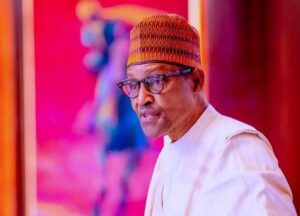
Buhari deserves credit for completing the Second Niger Bridge and delivering or advancing significant road, rail and infrastructure projects.
But the Second Niger Bridge itself illustrates continuity in government. Its history crossed several administrations before completion.
Tinubu similarly inherited projects from Buhari. He should ultimately be judged by what he completes, expands, abandons or initiates.
Infrastructure is national property, not partisan property.
Buhari’s achievements therefore deserve recognition. They do not erase the structural problems inherited in 2023: petrol subsidy liabilities, multiple exchange rates, substantial Central Bank financing of fiscal deficits and severe revenue constraints.
Defence: Bigger Naira Numbers Do Not Mean Twice the Firepower
The comparison between roughly ₦2.98 trillion for defence in 2023 and ₦5.41 trillion in 2026 suffers from the same nominal-value problem.
Nigeria imports sophisticated military equipment, spare parts, surveillance technology and other security assets.
If the naira loses substantial value, a defence budget can almost double in naira while purchasing nowhere near twice as much equipment internationally.
More importantly, security outcomes cannot be measured by budget size alone.
Intelligence, procurement, policing, border security, military leadership, technology, prosecution and operational effectiveness matter enormously.
Nigeria’s insecurity remains unacceptable. Kidnapping, terrorism, banditry and organised violence continue to destroy lives and economic activity. A larger security allocation therefore increases—not reduces—the administration’s responsibility to produce measurable results.
But nominal budget comparisons alone cannot establish that security spending has doubled in real terms.
What Are Tinubu’s Supporters Seeing?
Not cheap petrol. Not cheap rice. And certainly not an economy in which ordinary Nigerians are already comfortable.
They are looking instead at whether painful structural corrections are beginning to stabilise an economy that was approaching serious fiscal difficulty.
Foreign reserves have recovered from earlier pressures. Government revenues have strengthened. The foreign-exchange backlog has been substantially cleared. Economic growth has improved, while fiscal indicators have shown signs of stabilisation.
Yet the most important qualification remains: macroeconomic improvement has not translated sufficiently into household prosperity.
That is Tinubu’s biggest political and economic challenge.
Economic reform cannot survive indefinitely as statistics on government spreadsheets. Eventually, Nigerians must experience it through food affordability, employment, reliable electricity, transportation, housing, stronger wages and greater disposable income.
A government cannot simply tell hungry citizens that macroeconomic indicators are improving.
The Honest Verdict
The original argument captures genuine Nigerian frustration. Where it fails is in converting that frustration into misleading economic comparisons.

It treats a subsidised petrol price as the true cost of petrol. It presents exchange-rate revaluation largely as fresh borrowing. It treats appropriated budgets as money already spent. It compares nominal naira budgets across nearly three decades without adjusting for inflation or exchange-rate depreciation. And it overlooks the enormous Ways and Means liabilities accumulated before Tinubu assumed office.
None of this absolves President Tinubu.
His administration removed subsidy without adequate protection against the immediate cost-of-living shock. Nigerians have endured painful inflation. Questions about government spending, borrowing, security and the cost of governance are legitimate and necessary.
President Tinubu cannot ask Nigerians to endure economic pain indefinitely on the promise that reform will eventually work. The reforms must produce results people can touch: affordable food, stronger incomes, jobs, electricity, security, infrastructure and an economy in which working families can breathe again.
That is the standard by which his presidency should ultimately be judged.
But Buhari’s ₦195 petrol cannot honestly be presented as evidence that Nigeria was economically better managed simply because government prevented motorists from seeing the full price at the pump. A subsidy does not destroy a bill. It changes who pays it, where it is recorded and when its consequences arrive.
Tinubu inherited some of those consequences. He has also made decisions of his own for which he must accept full responsibility.
The fair argument, therefore, is neither that Buhari destroyed everything nor that Tinubu has fixed everything. He plainly has not.
The real question is whether Nigeria should return to an economic model that concealed costs, subsidised consumption with scarce public revenue, maintained multiple exchange rates and accumulated liabilities—or force today’s reforms to deliver the prosperity they were supposed to make possible.

Nigerians have every right to demand that answer quickly.
But we should never confuse a government hiding the bill with a country being prosperous. ₦195 petrol was the price Nigerians saw. It was never the full price Nigeria paid.
And that is the difference between nostalgia and economics.
Princess G Adebajo-Fraser MFR.
Former Special Adviser to Former President Goodluck Jonathan.