The Osun State Government has vowed to challenge the Economic and Financial Crimes Commission (EFCC) in court over the freezing of its salary account, describing the action as unconstitutional and a violation of due process.
The development comes as the EFCC insisted it acted to prevent the alleged diversion of public funds, while a source familiar with the investigation claimed that more than ₦18 billion had been withdrawn from the account under investigation through multiple transactions within less than two months.
According to the source, investigators became suspicious after noticing unusual financial activity in government salary accounts, which normally process salary payments once monthly but recently recorded several large transfers to corporate accounts in a short period.

The source dismissed claims that the investigation was politically motivated because of the upcoming Osun governorship election, insisting the commission could not ignore suspicious financial transactions.
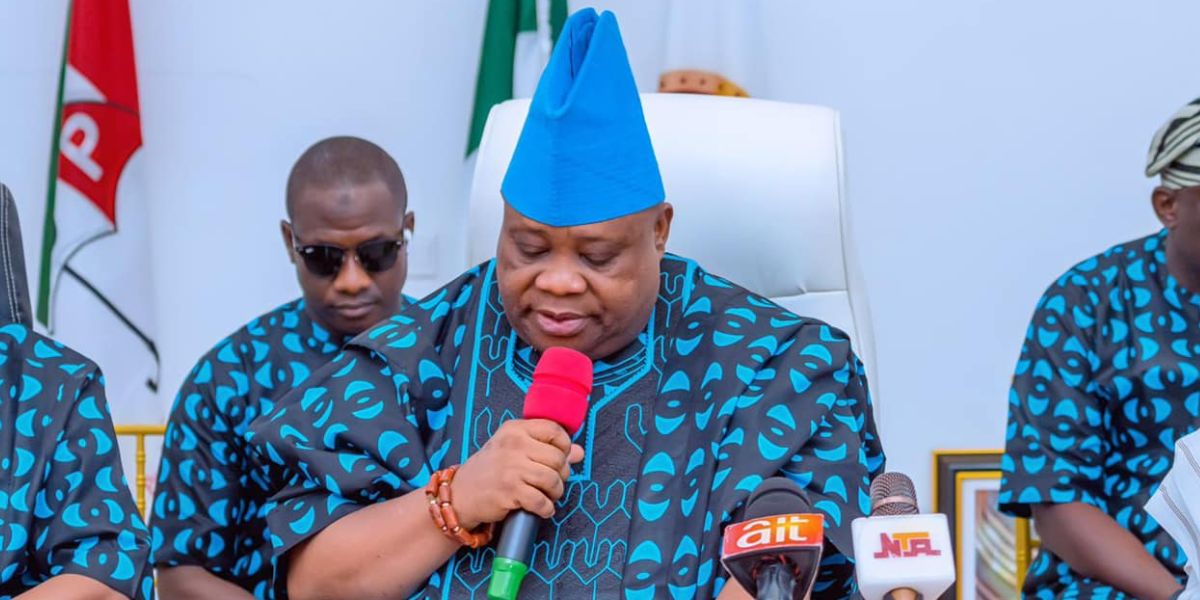
Speaking at a press conference in Osogbo, Governor Ademola Adeleke accused the EFCC of freezing the state’s accounts without obtaining a court order.
He said the state government was informed of the directive through a letter from its banker and described the action as an abuse of power aimed at intimidating his administration ahead of the August 15 governorship election.
Adeleke alleged that the account freeze was part of a broader campaign of harassment against his government, citing what he described as the disruption of local government administration, arrests of political figures and intimidation of supporters.
He called on the EFCC Chairman to publicly explain the reason for freezing the accounts and present evidence to justify the decision.
The governor also announced that he had directed the Osun State Attorney General to file a case at the Federal High Court in Osogbo to challenge the action.

Despite the development, Adeleke said his administration would continue to function and would not be distracted by what he described as politically motivated intimidation.
In response, the EFCC maintained that its decision had nothing to do with the forthcoming governorship election.
The commission said it had been investigating the Osun State Government since March 2026 over the alleged mismanagement of about ₦11 billion in Ecology Funds, Intervention Funds and Federation Account Allocation Committee (FAAC) allocations.
According to the EFCC, several state officials, including the Accountant-General, have already been questioned as part of the investigation.
The agency explained that the account was frozen after investigators noticed large transfers from government accounts into several corporate accounts beginning on August 2.
It said the action was taken under its statutory powers to protect public funds and prevent further movement of suspicious transactions.
“The Osun State Government account was frozen to save public funds from being looted,” the commission stated, adding that it could not stand by while public money was allegedly being diverted.
The EFCC also revealed that several other state governments are currently under investigation as part of its efforts to promote accountability.

Meanwhile, the African Democratic Congress (ADC) condemned the account freeze, describing it as “political terrorism.”
The party accused the Federal Government of using state institutions to weaken the Osun State Government ahead of the election.
ADC National Publicity Secretary, Bolaji Abdullahi, argued that freezing government funds would affect workers, healthcare, education and other public services, while accusing the ruling party of trying to destabilise the state for political gain.
Legal experts also questioned the legality of the EFCC’s action.
Senior Advocate of Nigeria, Prof. Konyinsola Ajayi, said the law is clear that bank accounts can only be frozen through a valid court order.
Former Chairman of the National Human Rights Commission, Prof. Chidi Odinkalu, also maintained that the EFCC has no legal authority to freeze any account through an administrative directive alone.

Similarly, lawyer Isiaka Olagunju argued that if public officials are under investigation, the commission should target those individuals rather than freeze an entire state’s finances, warning that such actions could harm innocent citizens who rely on government services.
The Human Rights Writers Association of Nigeria (HURIWA) also criticised the move, saying the timing of the account freeze raised serious constitutional and democratic concerns.
The group warned that anti-corruption agencies must remain impartial and avoid actions that could create the impression of political interference.
As the controversy continues, the Nigeria Police Force announced the deployment of about 15,000 personnel for the August 15 governorship election in Osun State.
The deployment will include senior police officers, mobile police units and specialised security teams to ensure a peaceful, free and credible election.
The Commissioner of Police in charge of election security, Samuel Etaifo, assured residents that the police would remain neutral and enforce the law against anyone who violates electoral regulations before, during or after the poll.