

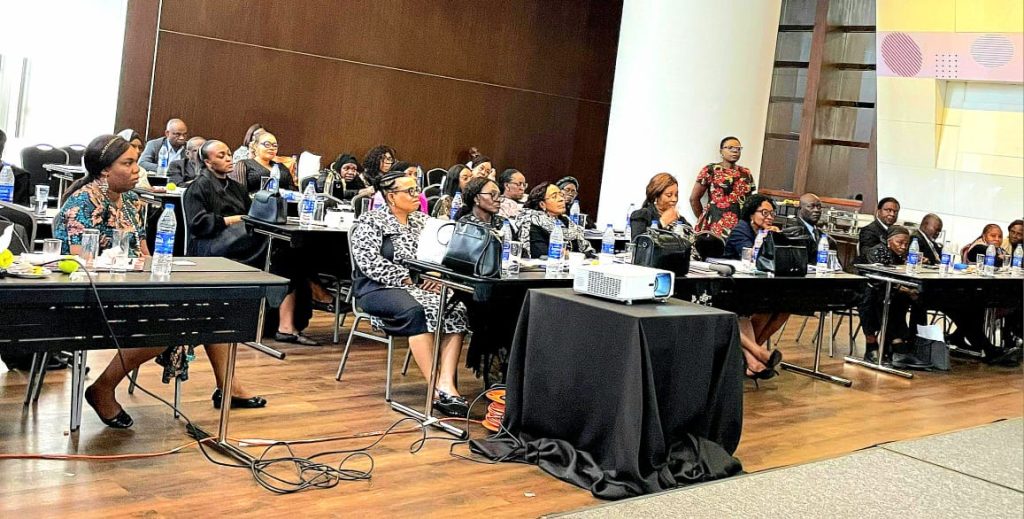
Experts at a three-day training workshop in Lagos have called for urgent reforms in Nigeria’s justice system to address the growing impact of artificial intelligence on evidence handling, survivor protection, and courtroom procedures in sexual offence cases.

The workshop, focused on sexual offences and trauma-informed justice for judges and family court magistrates, examined how emerging technologies are reshaping adjudication processes and creating new risks for survivors of abuse.
Speaking on “Artificial Intelligence, Deep Fakes and Gender-Based Harm,” Special Adviser to the President on Justice Sector Reforms and ICT, Fernandez Marcus-Obiene, warned that AI-generated content, especially deepfakes, has already become a real challenge in courtrooms.

He explained that such technologies require little technical expertise to manipulate evidence, stressing that courts are already dealing with cases where digital content may be fabricated or misleading.
He also raised concerns about gaps in Nigeria’s legal system, noting that the country’s Evidence Act does not fully account for modern AI-driven manipulation of digital proof, creating difficulties in determining authenticity during trials.
Participants further discussed risks linked to virtual court hearings, including impersonation and identity fraud, urging stronger verification systems to protect judicial integrity and safeguard survivors.

Representatives from International IDEA emphasized that artificial intelligence is now an unavoidable part of legal processes and must be used with strict human oversight, particularly in sensitive cases involving survivors of violence.
They also highlighted how AI tools can be used responsibly to protect identities, such as distorting voices and faces in recorded testimonies to ensure confidentiality.
Experts from the Cece Yara Foundation and Neem Foundation also called for trauma-informed reforms, improved forensic interview practices, better psychological support systems, and stronger institutional safeguards for survivors of sexual and gender-based violence.

They warned that unaddressed trauma can negatively affect judicial decision-making, empathy, and courtroom fairness, urging continuous training and mental health support for justice sector professionals.
The workshop, organised by the Federal Ministry of Women Affairs in partnership with international development bodies, aims to strengthen survivor-centred justice, improve evidence handling, and build resilience within Nigeria’s judicial system.




