

State Police: Presidency, National Assembly Move to Fast-Track Constitutional Framework
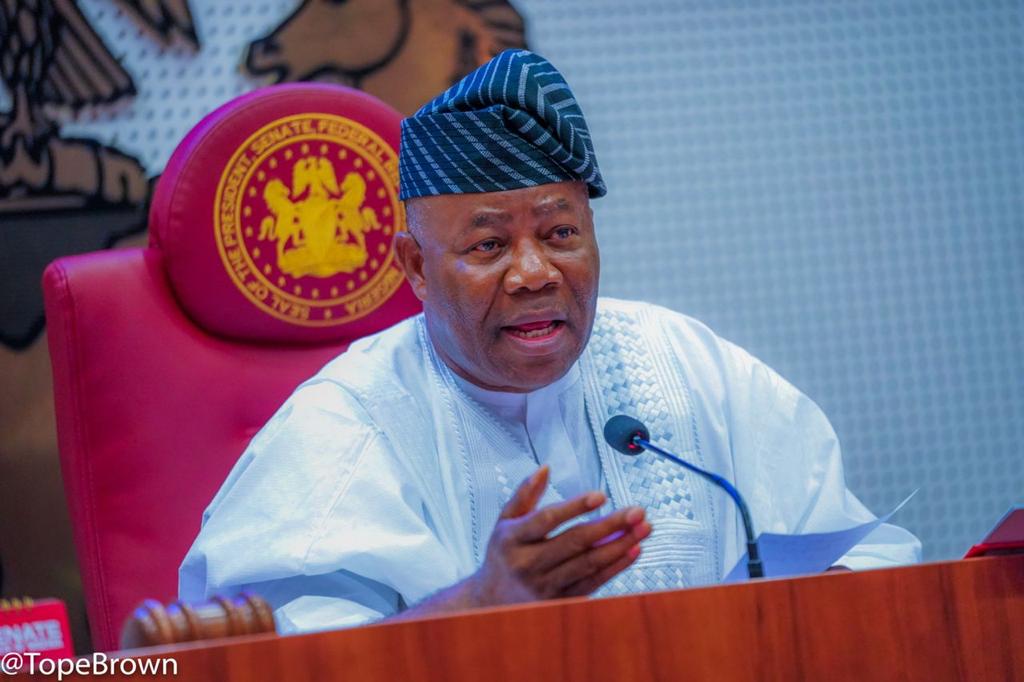
The Presidency and the National Assembly are currently working on a constitutional framework aimed at accelerating the establishment of state police across Nigeria, Senate President Godswill Akpabio has revealed.
Akpabio disclosed this on Thursday while speaking with journalists after leading Principal Officers of the Senate on a Sallah homage to President Bola Tinubu at his residence in Ikoyi, Lagos.
According to him, the proposed arrangement is designed to allow states to play a more active role in securing lives and property, while still operating under a central regulatory structure that ensures national standards and coordination.
“We can’t do it alone. The National Assembly will assist him to ensure that we improve on the area of security. It has actually improved,” Akpabio said.
He noted that although security challenges still exist in parts of the country, the overall situation has improved, stressing that insurgents no longer hold any territory in Nigeria.
“There is no part of Nigeria today that you have the flag of any insurgents being hoisted,” he added.
Akpabio, however, acknowledged that isolated attacks still occur, especially on vulnerable locations such as schools, churches, and mosques, which he described as soft targets.

He explained that lawmakers are considering the creation of a national state police commission that would oversee recruitment, training, promotion, and operational standards for any proposed state police structures.
On funding, the Senate President said the National Assembly is also looking at increasing the Police Trust Fund from 0.5 per cent to 1 per cent of revenue from the production account, with possible additional contributions from state governments.
Beyond security, Akpabio praised President Tinubu’s economic reforms, describing them as difficult but necessary steps that are beginning to yield positive results.
He listed key policies such as the removal of fuel subsidy, harmonisation of exchange rates, tax reforms, and the end of Ways and Means financing as measures that have helped correct long-standing economic distortions.
According to him, the reforms have contributed to stabilising the foreign exchange market and improving fuel availability, even though challenges still persist.
On infrastructure, he highlighted ongoing federal projects including the Lagos–Badagry–Sokoto super corridor and the coastal highway, saying they are critical to boosting economic activity and agricultural development.
Akpabio also called for increased crude oil production to strengthen foreign exchange earnings, especially in light of new domestic refining capacity and the naira-for-crude policy.
He assured that the National Assembly would continue to work with the executive arm of government to strengthen national security and support policies aimed at driving economic growth and stability.




