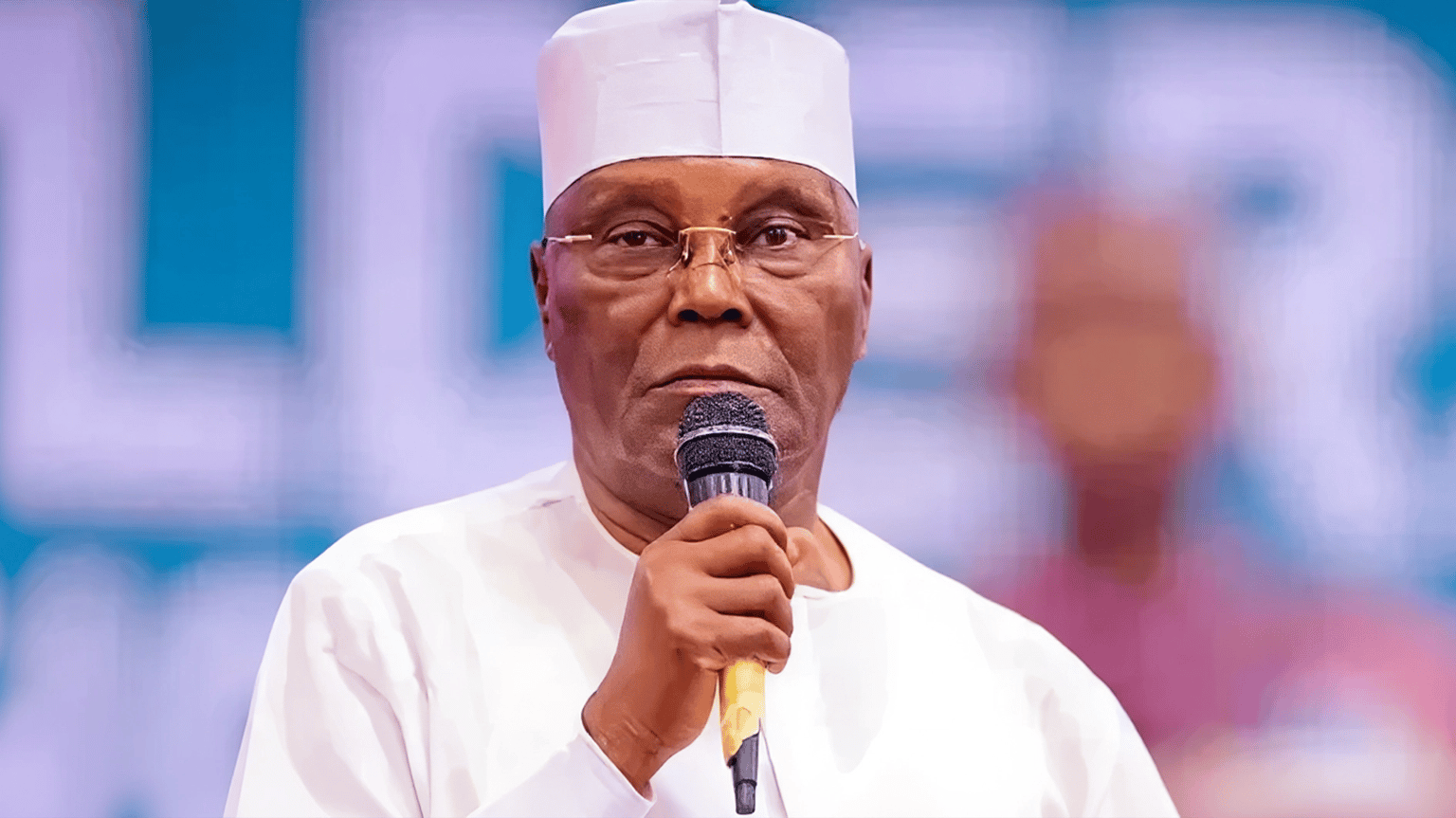
ATIKU’S NELFUND STUDENT-DEBT GAMBLE: AN APPEALING PROMISE WITHOUT A FUNDING PLAN
Debt relief may assist distressed graduates, but an uncosted cancellation policy could weaken the fund and deny future students equal opportunity
By Gloria Fraser, MFR
Former Vice-President Atiku Abubakar’s promise to review the Nigerian Education Loan Fund and forgive the debts of “qualifying” students sounds compassionate. However, compassion without eligibility rules, costing or a sustainable replacement plan is not yet an education policy. It is an attractive political headline awaiting an economic explanation.
Accuracy is essential. Some reports claimed Atiku promised to cancel NELFUND or erase every student loan. His spokesman, Phrank Shaibu, used narrower language: an Atiku administration would reduce the underlying cost of education and, after reviewing the scheme, forgive “qualifying student debts.”
That distinction matters. Targeted relief for borrowers who become permanently disabled, die or suffer exceptional hardship can be defensible. Indiscriminate cancellation is entirely different.
Atiku must therefore answer five questions. Who qualifies? How much would forgiveness cost? Who replaces the cancelled money? Would it apply retrospectively? What system would finance future students?
Until those answers are supplied, the proposal remains an uncosted campaign promise rather than an implementable programme.

A LOAN IS NOT AUTOMATICALLY OPPRESSION
Responsible student finance allows a young person to study today and repay gradually after education improves that person’s earning capacity. For many poor families, the alternative to borrowing is not debt-free university; it is no university education.
NELFUND offers zero-interest financing for institutional charges and upkeep. Repayment is linked to employment and earnings instead of being demanded while beneficiaries remain in school or unemployed. The framework caps deductions at a proportion of income.
That is not equivalent to a commercial loan carrying high interest, collateral and fixed repayments irrespective of circumstances.
Former United States President Barack Obama observed that higher education should not be “a luxury reserved for the privileged few,” but an economic necessity. Student finance exists because admission should not depend entirely upon what parents can afford at one particular moment.
THE WELL MUST BE REPLENISHED
By August 2026, NELFUND reported cumulative disbursements of approximately ₦322.69 billion and about 1.66 million processed applications. TVC News
The scale of demand demonstrates why politicians must speak carefully.
A revolving education fund resembles a community well. Today’s students draw water because public resources filled it. When beneficiaries become financially capable, repayments help replenish it for another generation. If a politician drains the well for applause without creating a dependable source of water, tomorrow’s students will arrive carrying empty buckets.
As an African proverb teaches, “A river is filled by many small streams.” Graduate repayments may enter gradually, but together they strengthen the fund’s capacity to support others.
NELFUND also receives statutory public financing, including a share of federally collected taxes, levies and duties. Repayments nevertheless support sustainability, accountability and expansion. Cancelled debt does not vanish; it becomes a cost transferred to taxpayers, future applicants or other public services.
Nigeria’s 2026 budget projected a deficit of approximately ₦23.85 trillion and debt-service expenditure of ₦15.52 trillion. President Bola Ahmed Tinubu subsequently said debt servicing would consume nearly half of projected government revenue in 2026. Reuters
This is not a country with unlimited fiscal room. Anyone proposing debt forgiveness must identify the replacement funding.
WHAT OTHER COUNTRIES ACTUALLY DO
International experience does not support a simplistic choice between unaffordable fees and universal cancellation.
Australia’s Higher Education Loan Program allows students to defer eligible costs. In the 2026–2027 income year, compulsory repayments begin only when repayment income exceeds A$69,528 and rise according to capacity. Australian Government
In England, graduates under Plan 5 repay 9 per cent only on earnings above £25,000. When income falls below that threshold, repayments stop and resume only when earnings recover. UK Government
Neither system is perfect. Australia reduced eligible student debts by 20 per cent, while Britain writes off balances after specified periods. Their lesson is that relief must be legislated, costed and incorporated into a sustainable financing structure.
ATIKU’S VALID POINT—AND MISSING POLICY
Atiku is right that loans cannot substitute for controlling education costs. Universities should not raise charges recklessly because NELFUND exists. Government must improve institutional financing, accountability and learning quality.
Thankfully, under President Tinubu, Nigeria has so far avoided the prolonged nationwide ASUU shutdowns that repeatedly extended degree programmes and destabilised families. This does not mean every labour grievance has disappeared: ASUU has issued strike threats and disputes remain. Nevertheless, the uninterrupted national university calendar is a meaningful achievement.
The administration implemented salary adjustments ranging from 23.5 to 35 per cent for federal tertiary-institution workers and released part of the salaries withheld during the previous administration. The Presidency reported that the federal education allocation rose from ₦1.54 trillion in 2023 to ₦3.52 trillion in 2025, although experts still consider education’s budget share inadequate.
These commitments illustrate what Atiku’s proposal overlooks: a president must finance salaries, institutions, student support, infrastructure and basic education simultaneously. Every campaign promise competes for finite public revenue. Atiku’s proposal has not accounted for these commitments or the fiscal trade-offs created by his promises.
But “qualifying” is not a policy definition. “Reducing costs” is not a budget. “Forgiveness” is not a funding mechanism.
If Atiku intends to introduce tuition-free tertiary education, he should say so and publish its projected cost. He should explain whether government would pay institutions directly, how quality would be protected and how Nigeria would prevent another cycle of underfunding, strikes and deteriorating facilities.
REFORM NELFUND; DO NOT POLITICISE IT
The responsible alternative is to improve NELFUND, not convert it into an electoral giveaway.
Government should establish an earnings threshold below which repayment cannot begin; suspend deductions during unemployment; provide hardship relief; discharge debts following death or permanent incapacity; publish audited disbursements; recover money withheld by institutions; and prevent unjustified tuition increases.
Repayment should integrate with tax, payroll and identity systems so graduates contribute according to capacity.
The system should also provide scholarships and grants for exceptional students and households facing extreme deprivation. Loans, scholarships, grants and properly funded institutions are complementary instruments, not ideological enemies.
THE FINAL WORD
Atiku has identified a legitimate concern, but he has not presented a credible alternative. Targeted debt relief can be humane and affordable. Broad cancellation without costing or replenishment would be fiscally irresponsible.
Nigeria’s students deserve more than competing slogans. They need a financing system that keeps them in school without excluding the next generation.
A serious presidential candidate must do more than promise to erase a ledger. He must explain who qualifies, what it costs, who pays and how tomorrow’s student will be supported.
Until Atiku provides those answers, Nigerians should regard his proposal as an appealing but incomplete campaign promise—not a workable education policy.
THE NATIONAL PATRIOTS
The National Patriots supports affordable education, targeted hardship relief and transparent, income-linked student finance. NELFUND must be improved, audited and protected against abuse. Its revolving capacity should not be sacrificed for electoral applause. Every student assisted today carries a responsibility, when financially capable, to preserve that opportunity for those coming tomorrow.
Princess Gloria Adebajo-Fraser, MFR
President, The National Patriots
Former Special Adviser to President Goodluck Jonathan, GCFR
Vice-Chairman, Strategic Communications Committee, Buhari PCC 2019
Member, Strategy Committee, Presidency 2023.