


Fresh Suit Reopens Qualification Controversy as Judiciary Faces Major Constitutional Test Ahead of 2027
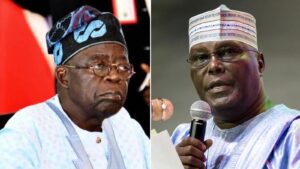
A crucial legal distinction must frame the latest reported challenge to President Bola Ahmed Tinubu’s qualification ahead of the 2027 presidential election: the Supreme Court did not simply declare the President’s qualification generally “unresolved” after the 2023 election.


Rather, the apex court dismissed former Vice President Atiku Abubakar’s attempt to introduce fresh evidence obtained from Chicago State University substantially on jurisdictional and procedural grounds, including the constitutionally prescribed 180-day limit for determining presidential election petitions. The Presidential Election Petition Court had separately rejected qualification-related grounds advanced before it.

That distinction is important because Atiku has now reportedly approached the Federal High Court in Abuja to challenge Tinubu’s qualification to contest the 2027 presidential election.
If confirmed from the court record, the development potentially moves the controversy into a fundamentally different legal setting — before the 2027 election rather than after it.
The question may therefore no longer simply be what the courts decided following the 2023 presidential election, but whether a fresh challenge concerning eligibility for another election is legally competent as a pre-election matter and, if so, what issues the Federal High Court is empowered to determine on their merits.
Following the 2023 election, Atiku challenged Tinubu’s return and later sought to introduce material obtained from Chicago State University in support of his case.
The Supreme Court refused the application to introduce the fresh evidence and ultimately dismissed Atiku’s appeal, affirming Tinubu’s election.
A new pre-election action would consequently have to survive its own threshold questions of jurisdiction, standing, timing and cause of action before any substantive allegation concerning qualification could be determined.
Filing a lawsuit does not establish disqualification.
President Tinubu remains constitutionally entitled to the presumption that he is qualified unless a competent court determines otherwise under applicable law.

But the reverse principle is equally important: political office cannot place any candidate beyond judicial scrutiny where a properly constituted legal challenge exists.
This is where the judiciary faces an important institutional test.
The courts must resist pressure from both sides. Those opposed to Tinubu cannot demand disqualification merely because they believe allegations against him. His supporters equally cannot insist that questions properly brought before a competent court should never be examined.
The Constitution, evidence and law — not political allegiance — must determine the outcome.
If the reported Federal High Court action proceeds, Nigerians deserve a transparent judicial process capable of establishing precisely what questions are properly before the court, what was already conclusively determined in the 2023 litigation and what, if anything, remains legally open for adjudication concerning the 2027 election.
That distinction will be critical.

The judiciary should neither manufacture a pathway to disqualification nor construct a shield against legitimate judicial examination.
Nigeria does not need a political judgment dressed in judicial robes. It needs a decision firmly anchored in the Constitution, evidence and established law.
Whatever the eventual outcome, it must be one capable of surviving not only political disagreement, but the much harder tests of appellate scrutiny, constitutional principle and history.
Dr. G. Fraser. MFR
Headlinenews.News Special Investigative Report.




