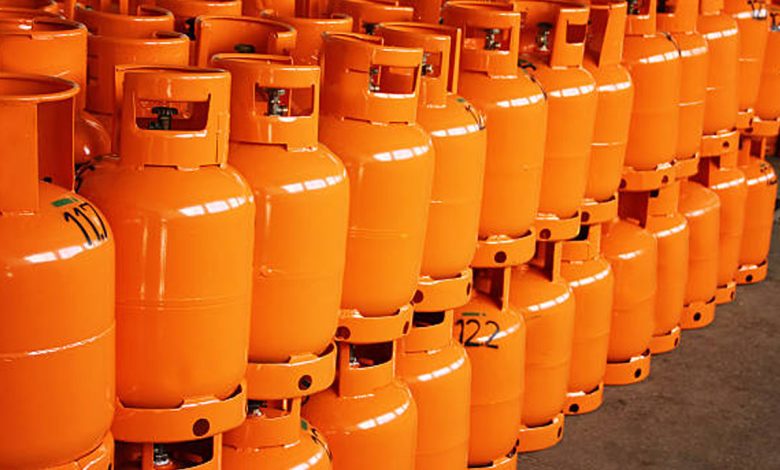
Liquefied Petroleum Gas (LPG) marketers imported 16,642.66 metric tonnes of cooking gas within the first 19 days of June as part of efforts to address supply shortages and stabilise rising prices across Nigeria.
The imports contributed to a total of 95,769.26 metric tonnes supplied into the domestic market between June 1 and June 19, according to data released by the Nigerian Midstream and Downstream Petroleum Regulatory Authority (NMDPRA).
The figures were presented by the agency’s Chief Executive, Rabiu Umar, during an emergency stakeholders’ meeting convened by the Minister of State for Petroleum Resources (Gas), Ekperikpe Ekpo, over the persistent increase in LPG prices.

Import Activity and Supply Breakdown
During the review period, four LPG cargoes were discharged in Lagos. Algasco LPG imported 2,047 metric tonnes on June 1, while Rainoil Limited brought in 7,696.45 metric tonnes on June 15. Algasco also discharged additional cargoes of 3,900.63 metric tonnes on June 18 and 2,998.58 metric tonnes on June 19.
The imports come amid ongoing concerns over insufficient domestic supply, which has forced marketers to rely more heavily on foreign sources. Consumers have also reported scarcity at retail outlets, with many households turning to alternative cooking fuels such as charcoal and firewood.

Supply Improves but Price Gaps Persist
Despite challenges, the federal government’s interventions appear to be improving supply levels. The NMDPRA reported that average daily LPG supply rose to 5,040 metric tonnes in June, up from 4,262 metric tonnes in May 2026.
According to Umar, supply sufficiency improved from 11 days to 22 days following coordinated engagements with producers, terminal operators, and marketers.
Nigeria’s LPG stock position stood at 85.87 million kilogrammes as of June 21, representing about 22 days of supply sufficiency.
However, prices remain above official benchmarks. In the South-West, LPG sells between N1,600/kg and N2,100/kg, compared to an indicative range of N1,018/kg to N1,177/kg. Similar gaps were recorded in other regions across the country.
The regulator attributed the price disparity to non-cost-reflective pricing, infrastructure limitations, low imports, and global market disruptions.

The NMDPRA also noted a mismatch between production and domestic availability, stating that Nigeria often produces more LPG than is supplied locally due to exports.
Between January and May 2026, Chevron reportedly exported 148,222 metric tonnes of LPG, representing its entire production during that period.
The agency has proposed increased imports, stricter monitoring of the supply chain, and the redirection of export volumes into the domestic market as immediate steps to improve affordability and availability.
An additional 44,100 metric tonnes of LPG is expected to be discharged before the end of June, while further imports by Matrix LPG and Asharami Synergy are also scheduled.
Authorities say ongoing interventions could help stabilise supply and ease prices in the coming weeks, with market indicators already suggesting a slight drop below N2,000/kg in some areas over the weekend.