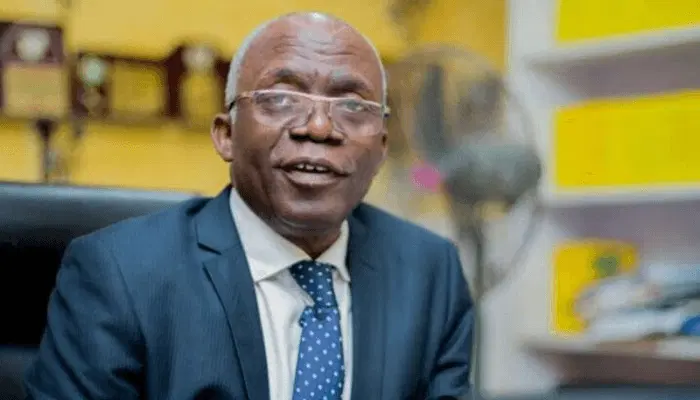
Falana: EFCC Has Legal Power to Freeze Osun Government Accounts
Human-rights lawyer and Senior Advocate of Nigeria (SAN), Femi Falana, has defended the Economic and Financial Crimes Commission (EFCC) over its decision to freeze the accounts of the Osun State Government.
Falana said the anti-graft agency did not act illegally by obtaining an order to restrict access to the state government’s accounts, stressing that the EFCC has legal powers to take such action when investigating suspected financial crimes.
According to the lawyer, the law empowers the EFCC to freeze accounts belonging to government institutions, including federal, state and local governments, where there are grounds for such intervention.
“As far as the law is concerned, the EFCC has not acted illegally. Under the law, the EFCC has the power to freeze the accounts of the federal government, state governments, or local governments,” Falana said.

His comments come amid controversy over the EFCC’s decision to freeze several Osun State Government accounts shortly before the state’s August 15, 2026 governorship election.
The commission had linked the action to an investigation into the alleged diversion of about ₦11 billion in Ecology Funds, intervention funds and allocations from the Federation Account Allocation Committee (FAAC).
The EFCC maintained that the investigation was based on suspected financial misconduct and was not politically motivated, despite the timing of the account restriction.
The development generated significant political tension in the state, with Governor Ademola Adeleke and other stakeholders raising concerns about the potential impact of the action on the state’s finances and the electoral process.
President Bola Ahmed Tinubu subsequently directed the EFCC to take immediate steps to unfreeze the accounts. The President said that although the commission had acted pursuant to a valid court order and within its statutory powers, the timing of the action could create the impression that a federal institution was being used to interfere with the election.

Tinubu directed the EFCC to return to court to seek the vacation of the order freezing the accounts and to discontinue related actions.
Falana’s position, however, focuses on the legality of the EFCC’s intervention rather than the political controversy surrounding its timing. His comments suggest that the commission’s authority to restrict access to government accounts during a financial-crime investigation is recognised under Nigerian law.
The controversy has therefore raised two separate legal questions: whether the EFCC had the power to freeze the accounts, and whether the timing or manner in which the power was exercised was appropriate given the approaching election.
While the first question concerns the commission’s statutory powers, the second touches on broader issues surrounding due process, institutional independence and the neutrality of state institutions during elections.
The Osun account controversy has also intensified debate over the role of anti-corruption agencies in politically sensitive investigations, particularly when their actions occur close to major elections.
With the state’s governorship election approaching, the dispute has become part of the wider political contest between the ruling Peoples Democratic Party (PDP) administration in Osun and opposition parties seeking to take control of the state.