

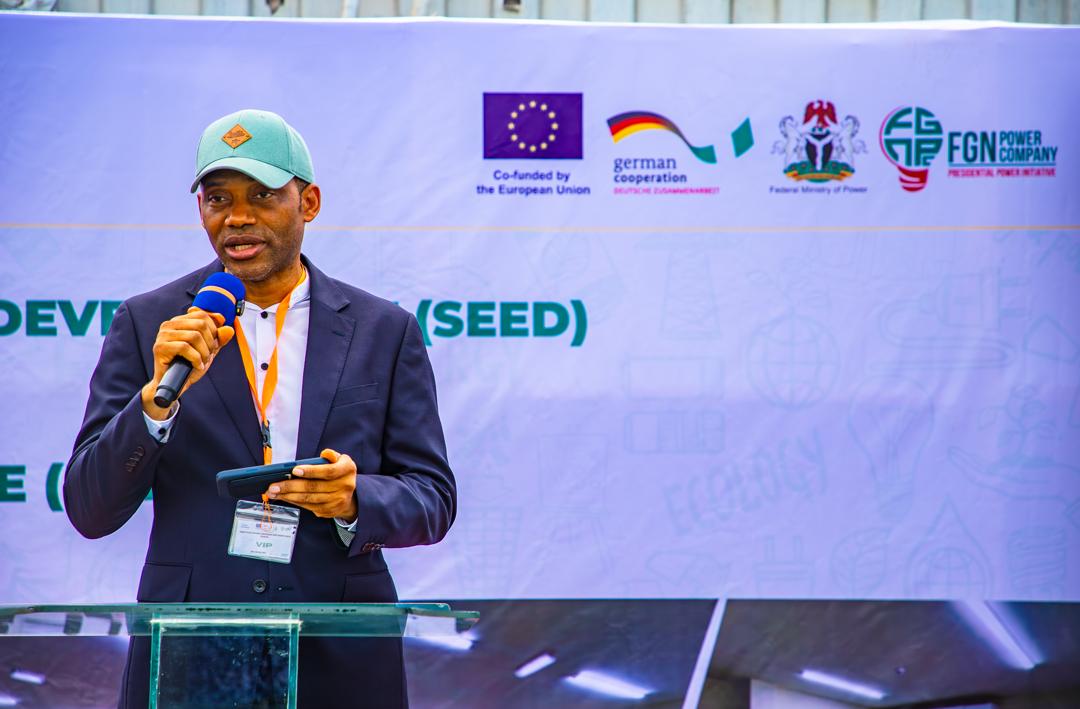
The Federal Government has launched a major energy capacity-building programme in Abeokuta under the Presidential Power Initiative, aimed at training about 6,000 professionals to strengthen Nigeria’s electricity sector.

The initiative was unveiled through the Siemens Energy Education and Development (SEED) training facility, established to improve technical skills and support reforms in the power industry.
Speaking at the inauguration, the Director of Human Resources Management at the Federal Ministry of Power, Samaila Nasiru, said the project goes beyond infrastructure development and focuses on building human capacity as a foundation for sustainable progress in the energy sector.

He explained that while significant investments are being made in transmission and distribution networks under Phase One of the Presidential Power Initiative, long-term success depends on a skilled workforce capable of managing and maintaining the system effectively.
The programme is designed as a five-year training plan targeting thousands of energy professionals, with certifications expected to meet international standards through collaboration with regulatory bodies such as COREN and NEMSA.

Officials of the FGN Power Company also described the initiative as a strategic investment in local content development, aimed at strengthening indigenous expertise and reducing dependence on foreign technical support.
The Managing Director of Siemens Energy in Nigeria noted that the training scheme will also support government efforts to reform and modernise the electricity sector, while improving efficiency and reducing technical losses.

Training activities are expected to take place across multiple locations including Abeokuta, Ibadan, Offa, Birnin Kebbi and Sokoto, with additional centres planned in partnership with relevant stakeholders.
Development partners including GIZ and other international collaborators also expressed support for the programme, describing it as aligned with broader power sector reform goals.

The initiative is expected to boost employment, improve technical capacity, and position Nigeria as a regional hub for energy expertise.




