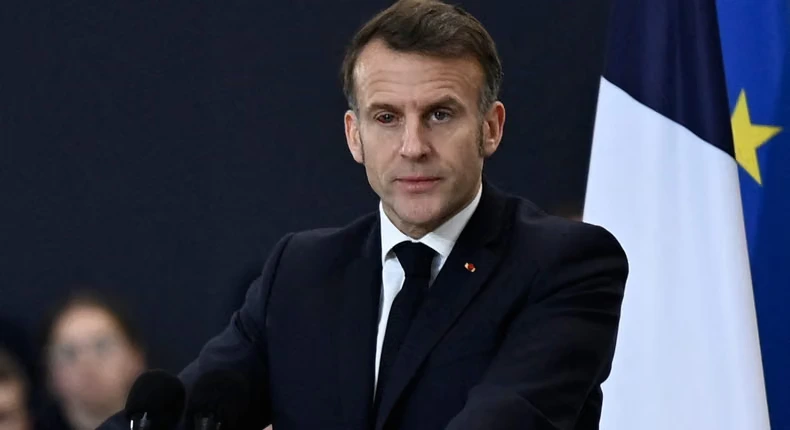
France is preparing to become the largest shareholder in Eramet, a major mining company with significant operations in Gabon, through a €500 million ($558.5 million) fundraising plan designed to strengthen the company’s financial position.
The proposed capital increase, scheduled for the fourth quarter of 2026, would give the French state a larger stake in the company and place it ahead of the Duval family, Eramet’s traditional leading shareholder. The move also reflects France’s determination to secure reliable supplies of critical minerals for its domestic industries and the wider European economy.

Eramet announced on 12 October that an agreement had been reached between its two principal shareholders regarding their participation in the planned fundraising. The transaction is intended to restore the company’s financial stability and provide the resources needed to continue its business strategy.
FRANCE SEEKS A LARGER STAKE IN ERAMET
The French state currently holds approximately 27.1 per cent of Eramet through its state shareholding agency, Agence des Participations de l’État (APE).
Under the proposed arrangement, the government plans to subscribe to its allocated shares and acquire subscription rights associated with the Duval family’s investment vehicles. This could increase France’s influence over the mining group, with its effective voting rights at general meetings capped at 49 per cent.
The final ownership structure will depend on the terms and outcome of the capital increase, which has not yet been completed.

The fundraising follows an earlier announcement in February 2026, when Eramet outlined plans to raise additional capital to address its deteriorating financial position.
French Economy Minister Roland Lescure said the investment demonstrated the government’s commitment to strengthening the country’s strategic independence in critical minerals and metals.
For Paris, Eramet represents an important industrial asset because of its operations across several countries and its role in supplying materials used in manufacturing, infrastructure and emerging energy technologies.

GABON’S MANGANESE INDUSTRY AT THE CENTRE OF THE DEAL
One of Eramet’s most important international operations is located in Gabon, where its subsidiary, Compagnie Minière de l’Ogooué (Comilog), operates the Moanda manganese mine.
The mine is widely recognised as the world’s largest manganese mining operation, making it a significant contributor to Gabon’s position in the global minerals market.
Manganese is particularly important to the steel industry because it improves the strength and durability of steel products. It also has applications in battery technologies, increasing its strategic value as countries seek to diversify their energy sources and industrial supply chains.

Eramet’s activities in Gabon extend beyond mining. Through its subsidiaries, the group is involved in manganese processing and railway transportation. Its operations include the Transgabonais railway, which transports minerals as well as passengers and other goods.
The company also supplies manganese products to industrial facilities in France, Norway and the United States, connecting Gabon’s mineral resources to international manufacturing markets.
France’s proposed investment would strengthen its position in the parent company responsible for these activities, although it does not represent a separate acquisition of Gabon’s mining assets.
ERAMET’S PRESENCE IN SENEGAL AND OTHER MARKETS
Beyond Gabon, Eramet maintains important mining and mineral-processing activities in Senegal, where its Grande Côte subsidiary extracts mineral sands along the Atlantic coast, north of Dakar.
Its products include ilmenite, rutile, leucoxene and zircon, which are used in various industrial applications. The operation began production in 2014 and forms part of Eramet’s wider international portfolio.
The company also has operations involving nickel in Indonesia and New Caledonia, as well as lithium and other mineral resources in different markets. These activities make the group an important player in the global supply chain for materials required by traditional industries and emerging technologies.
For France, strengthening its influence over Eramet offers a way to protect access to these resources at a time when governments worldwide are competing to secure supplies of strategically important minerals.
FINANCIAL PRESSURES DRIVE THE FUNDRAISING
Despite its extensive international operations, Eramet has faced significant financial and operational difficulties.
The company has been affected by falling prices for some minerals and a reduction in its nickel mining quota in Indonesia. These challenges have placed additional pressure on its finances, prompting the group to consider asset sales and seek fresh capital.

The proposed €500 million fundraising is intended to improve its financial position, strengthen its equity base and help it meet its banking obligations while continuing its business strategy.
The French government’s participation is therefore both a financial intervention and a strategic investment. By increasing its stake, the state hopes to stabilise an important industrial company while protecting access to critical materials.
Eramet has indicated that other investors could participate in the company in the future. However, the immediate priority remains completing the planned capital increase and restoring financial stability.

IMPLICATIONS FOR AFRICA AND GLOBAL MINERAL SUPPLY
France’s move could have wider implications for the African mining sector, particularly in Gabon, where manganese production plays an important role in the national economy.
The increased French stake would strengthen the government’s influence over a company whose African operations are central to its international mining business. However, the transaction does not automatically change the ownership of individual mines or establish new arrangements for the distribution of benefits between Eramet and its host countries.
For Gabon, the key questions include whether the development will lead to greater investment, increased local mineral processing, improved infrastructure and more employment opportunities.
The country has an interest in capturing more value from its mineral resources rather than relying primarily on the export of raw materials. Greater local processing could support industrial development, although achieving this would require investment, infrastructure and clear agreements with mining operators.
The proposed transaction also comes amid wider international competition for critical minerals, with governments seeking to reduce vulnerabilities in their supply chains and strengthen domestic industrial capacity.

France’s investment in Eramet therefore reflects a broader effort to secure access to strategic resources while supporting a company facing financial challenges.
The capital increase remains a proposal scheduled for the final quarter of 2026. Its final outcome will determine the French state’s eventual shareholding and the extent of its influence over the mining group.