


A major political storm is gathering within the All Progressives Congress in Kano State as grassroots stakeholders, ward mobilisers, youth blocs and political coordinators across Kano Central intensify demands for direct primaries following the controversial consensus arrangement that produced former governor Ibrahim Shekarau as the preferred senatorial candidate.

What initially appeared to be a peaceful political compromise is rapidly evolving into a full-scale internal rebellion capable of reshaping APC calculations ahead of the 2027 elections.
Headlinenews.news investigations indicate that anger is spreading across several political structures within Kano Central, with many supporters insisting that while aspirants may have stepped down under pressure, “the people have not stepped down.”
The controversy intensified after reports emerged that several aspirants were allegedly persuaded to withdraw in favour of Shekarau despite earlier expectations that direct primaries would determine the party’s eventual candidate.
Ironically, party leaders in Yobe State had publicly maintained that direct primaries would proceed wherever consensus failed, a position many Kano stakeholders now cite as evidence of inconsistency within the party’s internal democratic process.
Across Kano Central, several local coordinators and support groups now argue that denying party members the right to test popularity through primaries could weaken APC cohesion at a critical political moment.
One stakeholder, who requested anonymity for fear of sanctions, said:
“Why should anyone fear primaries if they truly have the people behind them? Kano Central is politically sophisticated. Delegates and grassroots supporters want to participate, not receive instructions from above. Political capital must be tested, not assumed.”
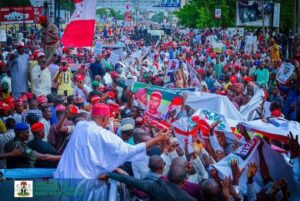
Another aggrieved party organiser claimed supporters are already mobilising hundreds of buses for a planned show of strength at the APC secretariat to demonstrate resistance against what they described as “political imposition.”

While the exact number of buses and participants could not be independently verified, multiple party insiders confirmed that consultations and mobilisation efforts are ongoing across several local government areas.
The development exposes a deeper generational and strategic battle within Kano politics — one between established political heavyweights and emerging aspirants seeking a more competitive and open political process.

Some younger party members argue that Kano Central’s future political relevance depends on rewarding visible grassroots engagement, modern mobilisation capacity, youth penetration and sustained constituency presence rather than relying solely on legacy political influence.
In the meantime, two of the leading aspirants, Dr. Muhammad Zango and Malam Zaure, who are believed by supporters to command significant grassroots structures across Kano Central, have declined extensive public comments on the controversy.


Sources close to both camps, however, disclosed that while they had prepared extensively for direct primaries and remained confident in their political strength, they had chosen to avoid actions capable of escalating tensions within the party out of loyalty to the APC and respect for party leadership.

The sources added that both camps nevertheless insist that aspirants who invested heavily in consultations,
mobilisation, logistics, campaign structures and political engagements should be adequately compensated if the primary process is ultimately abandoned. According to insiders, the issue goes beyond mere reimbursement for nomination forms, as several aspirants reportedly committed substantial financial and political resources in preparation for what they believed would be a competitive democratic contest.

Political analysts also warn that the APC’s internal tensions could create openings for rival political forces in Kano.
There is a growing belief among observers that Rabiu Musa Kwankwaso, whose political relationship with Shekarau has deteriorated sharply over the years, could deploy substantial political influence and grassroots structures to challenge and weaken Shekarau’s electoral prospects if the current internal crisis within the APC remains unresolved.
The concern among stakeholders is that a divided APC entering the 2027 contest without reconciliation or transparent primaries could hand opponents a strategic advantage in Kano Central, one of the most politically sensitive battlegrounds in Northern Nigeria.

Several stakeholders specifically questioned whether the APC can afford internal disunity in Kano, one of Nigeria’s most politically consequential states with millions of registered voters and a history of fiercely competitive elections.
Critics also argue that consensus arrangements work best when voluntarily negotiated, not when aspirants and their supporters believe the outcome was predetermined.
Supporters of Shekarau, however, maintain that his experience as former governor, senator and Minister of Education makes him one of the most recognisable political figures in Northern Nigeria and capable of stabilising party structures ahead of 2027.

Yet, opponents insist that recognition alone cannot replace active grassroots validation through direct primaries.
For many APC stakeholders now pushing back, the issue has moved beyond personalities. They argue that the larger question is whether party democracy will genuinely exist ahead of 2027 — or whether candidates will increasingly emerge through elite arrangements disconnected from grassroots sentiment.
Inside Kano political circles, one message is growing louder:
“No more imposition if APC truly wants to win.”

The National Patriots insist that transparent primaries remain the strongest foundation for internal democracy, party unity, and electoral legitimacy. Kano Central deserves a process where grassroots voices are heard, tested, and respected. Political consensus should emerge through consultation, not perceived coercion. In a democracy, the credibility of the process is often as important as the candidate itself. The APC must carefully protect internal confidence, fairness, participation, and grassroots trust ahead of the crucial 2027 elections.
— Imran Khazaly
Headlinenews.news Special Investigative Report.




