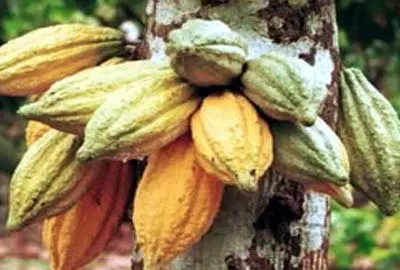
The Federal Government has disclosed that Nigeria loses an estimated $2 billion annually in potential earnings because of inadequate local processing and value addition in the cocoa industry.
The government said the country was not fully benefiting from its cocoa resources, as much of the economic value generated from processing and manufacturing cocoa products was being captured outside Africa.

The Minister of Agriculture and Food Security, Abubakar Kyari, disclosed this at a two-day Africa Cocoa and Coffee Conference held in Lagos. The conference was organised by the Cocoa and Coffee Farmers Alliance Association of Africa (COCEFAAA), in partnership with the Federal Ministry of Agriculture and Food Security and the Cocoa Research Institute of Nigeria (CRIN).
Kyari, who was represented by the ministry’s Deputy Director of Tree Crops, Ajayi Olutobaba, said Nigeria had an installed cocoa processing capacity of approximately 2,000 tonnes annually, but only about 30 per cent was being utilised.
He explained that the Federal Government intended to move the country beyond exporting raw cocoa beans by encouraging local production of cocoa butter, cocoa liquor, cocoa powder and chocolate.

According to the minister, Nigeria could significantly increase its earnings by attracting investors into processing facilities rather than relying predominantly on the export of unprocessed agricultural commodities.
He said the government would support investments in the sector and strengthen the country’s position as a reliable supplier of cocoa to international markets.
Kyari also pledged support for the rehabilitation of ageing farms, improved seedlings, agricultural extension services and assistance for smallholder farmers. He stressed that better agricultural inputs, effective pest and disease control, and climate-smart farming practices were essential to protecting future harvests.

The minister called on African countries to strengthen cooperation in agricultural research, harmonise standards and adopt a united approach when engaging international commodity buyers.
He noted that Africa produces approximately 70 per cent of the world’s cocoa but captures only a small share of the value generated by the global chocolate industry, which is worth more than $130 billion.
He further highlighted the decline in Africa’s share of global coffee production, from 27.2 per cent in the 1970s to approximately 12.5 per cent today. He cited Ethiopia and Uganda as examples of African countries generating substantial earnings from coffee exports.

Kyari maintained that African countries could improve their position in global markets through stronger collaboration, increased local processing and better agricultural practices. He also emphasised the importance of traceability in meeting international market requirements, particularly those relating to deforestation-free agricultural products.
NIGERIA’S COCOA PRODUCTIVITY REMAINS LOW DESPITE IMPROVED SEEDLINGS
The Acting Executive Director of the Cocoa Research Institute of Nigeria, Dr Abiodun Adedeji, said Nigeria’s cocoa productivity remained between 250 and 300 kilogrammes per hectare annually, despite years of efforts to distribute improved planting materials.

He called for better earnings for farmers, expanded local processing, stronger agricultural research and improved data collection to support the development of a sustainable cocoa industry.
Adedeji disclosed that 601,000 cocoa pods had been distributed to farmers between 2011 and 2015, while another 300,000 seedlings were distributed during the COVID-19 period.
He added that the Federal Government had mandated CRIN to produce and distribute one million improved hybrid cocoa seedlings.
Despite these interventions, he said the country’s average output per hectare had remained largely unchanged, highlighting the need for more effective strategies to improve productivity.

Adedeji also urged African countries to collaborate more closely on research and development to develop improved crop varieties and farming systems capable of addressing emerging agricultural challenges.
He observed that much of the economic value generated by cocoa and coffee was retained by countries outside the continent, leaving African producers with a disproportionately small share of the proceeds.
AFRICA SEEKS GREATER CONTROL OF THE COCOA AND COFFEE VALUE CHAINS
The Global President and Founder of COCEFAAA and conference convener, Comrade Adeola Adegoke, said Africa produces about 80 per cent of the world’s cocoa but captures less than 10 per cent of its value.

He argued that the continent needed to move beyond producing raw commodities and take a stronger role in processing, manufacturing and marketing finished products.
Adegoke referred to the 2023–2024 cocoa season, when a global supply deficit of approximately 490,000 tonnes contributed to a sharp increase in prices, which rose above $10,000 per tonne before falling following reports of a surplus by the International Cocoa Organization.
He questioned why African farmers continued to earn relatively little despite the continent’s significant contribution to global cocoa production.
Representing the Lagos State Commissioner for Agriculture and Food Systems, Abisola Olusanya, the Director of Agribusiness at the state ministry, Mrs Aramide Gansallo, also called for a shift from exporting raw cocoa and coffee beans to processing, branding and consuming locally manufactured products.

She said transforming the agricultural sector would also require making farming more attractive to young people by presenting it as a viable business, a technology-driven industry and a professional career.
Meanwhile, the Managing Director of Sunbeth Global Concepts, Olasunkanmi Owoyemi, represented by the company’s Manager of Corporate Affairs and Communication, Abdussamad Abdurrahman, said Africa had continued to supply raw materials to the world while other countries benefited from processing them into higher-value products.
He disclosed that the company was developing a processing facility with a capacity of 70,000 metric tonnes at its industrial park, with completion expected in 2027.
He said the investment would contribute to local value addition and stressed that traceability had become increasingly important for accessing international markets.

IITA ADVOCATES CLIMATE-RESILIENT VARIETIES TO BOOST PRODUCTION
The International Institute of Tropical Agriculture (IITA) has called for the adoption of high-yielding, climate-resilient crop varieties to improve cocoa and coffee production across West Africa.
At the conference, the institute disclosed that climate-related challenges, including extreme temperatures and irregular rainfall, had contributed to a 10 per cent decline in cocoa output across the region.
IITA Senior Researcher, Ranjana Bhattacharjee, urged cocoa- and coffee-producing countries to consider alternative varieties that could withstand changing weather conditions and sustain productivity.

She highlighted the potential of Liberica coffee and other varieties as alternatives for African producers facing increasing climate pressures.
Bhattacharjee identified ageing trees, unmanaged pests and diseases, high production costs, limited access to credit and international price fluctuations as additional challenges affecting cocoa and coffee farmers.
She encouraged West African countries to learn from Indonesia’s increasing cocoa output by adopting improved varieties, enhancing soil nutrition, strengthening crop protection and expanding access to agricultural financing.
The researcher also warned that climate-related pressures were worsening production challenges in major cocoa-producing countries, including Ghana and Côte d’Ivoire, where drought and cocoa swollen shoot virus disease were affecting farmers.
She called on African policymakers to address the disparity between the earnings of cocoa farmers on the continent and those in Latin America, arguing that Africa’s contribution to global production should translate into better incomes for its farmers.

STATES CALL FOR INVESTMENT IN PRODUCTION AND PROCESSING
Representing Abia State Governor, Alex Otti, the state’s Deputy Governor, Ikechukwu Emetu, said Africa’s cocoa and coffee transformation must cover the entire value chain, from improved seedlings and farming practices to post-harvest management, processing, branding and export.
He stressed that improving production alone would not be sufficient without investments in the other stages of the agricultural value chain.
A representative of the Ondo State Government, Mrs Foluke-Tunde Daramola, disclosed that the state had begun efforts to revive cocoa production through improved seedlings and the rehabilitation of ageing plantations.
She also revealed plans to establish 1,000 hectares of coffee plantations at Oke-Agbe.
Similarly, the Permanent Secretary of Cross River State’s Ministry of Agriculture and Irrigation Development, Dr Joseph Odey, emphasised the importance of traceability and deforestation-free production.
He said sustainable agricultural development required more than improved seedlings, noting the need for reliable nurseries, extension services, processing facilities, accessible financing and dependable markets.
A representative of COCEFAAA Ghana, Mr Nana Reuben, urged stakeholders to examine whether African farmers were receiving a fair share of the value generated by the cocoa and coffee industries. He also raised concerns about the ageing farming population and the long-term sustainability of cocoa production.
The two-day Africa Cocoa and Coffee Conference brought together policymakers, researchers, farmers, investors and development partners to discuss strategies for building sustainable and competitive cocoa and coffee value chains across Africa.
The discussions centred on increasing productivity, attracting investment, strengthening local processing, improving farmers’ incomes and ensuring that African countries retain a greater share of the economic benefits generated by their agricultural commodities.