


Part 1
The Turning Point: Why Nigeria Chose Reform Over Retreat
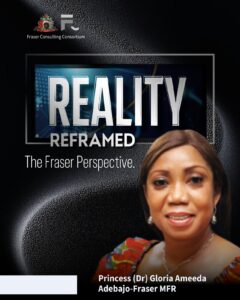
By Gloria Fraser, MFR
Opening Reflection
Every nation eventually arrives at a moment when yesterday’s solutions can no longer solve tomorrow’s problems. At such moments, leaders face an unenviable choice. They can preserve the comfort of familiar policies and postpone difficult decisions, or they can confront uncomfortable realities in the hope of securing a stronger future. Those moments shape more than governments; they shape generations. Nigeria reached such a moment in May 2023, when President Bola Ahmed Tinubu assumed office amid one of the most demanding political and economic landscapes in the nation’s democratic history.
The story of Nigeria’s Great Reset did not begin with President Bola Ahmed Tinubu. Nor did it begin with the removal of fuel subsidy or the unification of the foreign exchange market. Its origins stretch across decades of economic choices, political compromises and structural challenges that gradually reshaped the nation’s development. By the time Nigerians went to the polls in 2023, the country stood at a critical crossroads. Economic growth had slowed, inflationary pressures were rising, public finances were under strain, insecurity continued to affect productive communities and millions of citizens were demanding not only relief from hardship but a clearer vision for the future.
Every election is ultimately a contest between competing ideas about how a nation should be governed. The 2023 presidential election was no exception. It was fiercely contested, deeply polarising and reflected the diversity of political opinion within the country. When the votes were counted, President Tinubu emerged as the winner under Nigeria’s constitutional process and inherited not merely the authority of office but the responsibility of confronting challenges that had accumulated over many years. His administration therefore began under extraordinary expectations. Supporters anticipated bold reforms capable of repositioning the economy, while critics questioned whether such reforms would deepen existing hardship or produce meaningful change.
Those competing expectations continue to define public debate today.
Yet beneath the daily exchanges of politics lies a more enduring question. Was Nigeria approaching a point where significant structural reforms had become unavoidable, regardless of who occupied the Presidency? That question extends beyond party politics. It concerns the long-term sustainability of the Nigerian economy, the resilience of its institutions and the choices required to secure future prosperity.
This series does not suggest that every decision of the Tinubu administration is beyond criticism. Democracies are strengthened by scrutiny, accountability and informed debate. Nor does it seek to diminish the efforts of previous administrations, each of which confronted different national and global realities. Rather, it examines whether Nigeria had reached a stage where delaying major reforms carried greater risks than undertaking them.
That is the central argument of this series.
The articles that follow examine the political circumstances President Tinubu inherited, the economic realities confronting the nation, the security environment, the rationale behind key reforms, the criticisms they have attracted and the lessons Nigeria can draw from countries that undertook similar transformations. They also ask an equally important question: what must happen for these reforms to succeed, and what happens if the country loses the resolve to complete them?
History provides perspective. Politics explains the choices. Economics measures the consequences. Only when all three are considered together can Nigeria’s Great Reset be understood fairly.
For that reason, this is not simply a series about one President or one administration. It is a series about a nation confronting one of the defining moments in its post-independence history and attempting to determine whether reform can become the foundation of lasting national renewal.
The significance of every great national debate lies not in the volume of the arguments it generates but in the importance of the questions it seeks to answer. Few issues have divided public opinion in recent Nigerian history as profoundly as the economic reforms introduced by President Bola Ahmed Tinubu. To some, they represent the courageous decisions of a leader prepared to confront problems that previous administrations had found politically difficult to resolve. To others, they have imposed severe hardship on millions of citizens already burdened by inflation, unemployment and declining purchasing power. Both perspectives deserve to be heard because both arise from legitimate concerns about Nigeria’s future.
Yet beyond the headlines, political exchanges and partisan narratives lies a more fundamental question. Had Nigeria reached a point where postponing structural reforms had become more dangerous than undertaking them? That is the central proposition upon which this series is built.
This is not an exercise in political advocacy, nor is it an attempt to diminish the genuine difficulties many Nigerians continue to experience. Democracies are strengthened when governments are questioned, policies are rigorously examined and leaders are held accountable for the consequences of their decisions. Equally, serious national conversations require more than emotion or political loyalty. They require evidence, context and the willingness to evaluate difficult choices through the broader lenses of governance, economics and history.
That distinction is particularly important in Nigeria’s case.
Major reforms are rarely introduced because they are politically popular. More often, they are undertaken because policymakers conclude that the existing system can no longer sustain the demands placed upon it. Throughout history, governments across the world have often delayed painful structural adjustments because of their immediate political costs. In many instances, those delays merely increased the economic and social price eventually paid by their citizens. The question confronting Nigeria in 2023 was whether the country had reached that same point, where preserving the familiar had become more costly than embracing difficult change.
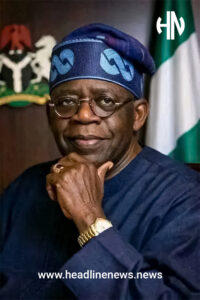

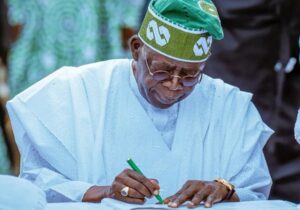
President Bola Ahmed Tinubu answered that question by choosing reform over retreat.
Whether every aspect of that decision was correct, whether the reforms could have been sequenced differently or whether additional measures should have accompanied them are entirely legitimate matters for public debate. Indeed, they should be debated in every healthy democracy. But before those judgments are reached, fairness requires another question to be answered first: What exactly was the condition of the nation when those decisions were made?
That is why this series adopts a broader perspective than the daily political conversation.
Politics explains the choices confronting elected leaders. Economics measures the consequences of those choices for businesses, investors and ordinary citizens. History provides the perspective that only time can offer, separating temporary controversies from lasting achievements and distinguishing policies that merely sounded convincing from those that genuinely transformed nations. Only when these three perspectives are considered together can Nigeria’s Great Reset be assessed fairly.
The articles that follow will therefore examine the circumstances inherited by the Tinubu administration, the structural challenges that had accumulated over decades, the rationale behind key economic reforms, the criticisms they have attracted, the lessons from countries that undertook similar transformations and the standards by which these reforms should ultimately be judged. Readers may agree with every conclusion, disagree with some or reject others entirely. What matters is that the discussion remains anchored in facts, informed analysis and Nigeria’s long-term national interest.
The conversation therefore begins where every objective assessment should begin—not with the reforms themselves, but with the condition of the nation before those reforms commenced. Before history delivers its verdict on President Bola Ahmed Tinubu’s decisions, it is necessary to understand the Nigeria he inherited. That is the focus of the next article.
The Final Word
Nations are rarely transformed by comfortable decisions. They are transformed when leaders recognise that yesterday’s solutions are no longer equal to tomorrow’s challenges. Whether Nigeria’s Great Reset becomes the foundation of lasting national renewal or another chapter of unrealised promise will ultimately be determined not by today’s political arguments but by tomorrow’s measurable outcomes. The first step towards that judgment is an honest understanding of where the journey truly began.
Food for Thought
“History does not reward nations for avoiding difficult choices. It remembers whether those choices produced a better future.”


THE NATIONAL PATRIOTS
The National Patriots believe that Nigeria’s reform journey should be assessed with fairness, evidence and perspective. The question is not whether change was difficult, but whether continued delay would have imposed even greater costs on the nation. That debate deserves facts rather than slogans and national interest rather than partisan passion.
Princess Gloria Adebajo-Fraser, MFRFormer Special Adviser to President Goodluck Jonathan, GCFR




