


Part 10
The Verdict of History: Will Nigeria Complete Its Great Reset?
By Gloria Fraser, MFR
Opening Reflection
History is the only court whose judgment cannot be influenced by power, persuaded by rhetoric or delayed by politics. It waits patiently for the passions of the moment to subside before delivering its verdict. Elections produce victors and vanquished; history asks a far more enduring question: Who left the nation stronger, more prosperous and more united than they found it? That is the question confronting Nigeria today as it stands at one of the most defining moments of economic and institutional reform since independence—and the question by which this generation will ultimately be judged.
History has never been particularly interested in political slogans. It remembers outcomes rather than arguments, achievements rather than intentions, and lasting institutions rather than fleeting popularity. Many leaders who were fiercely criticised during their years in office were later celebrated for laying the foundations of national renewal. Others who enjoyed overwhelming public approval eventually discovered that history judged them far more harshly than their contemporaries ever imagined. The verdict of history is rarely delivered during a leader’s tenure. It emerges gradually, after the political passions have subsided and the evidence has become impossible to ignore.
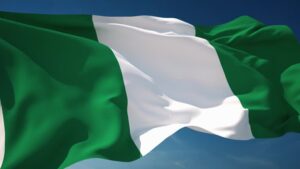
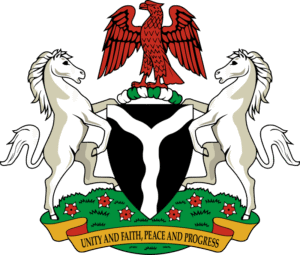
Nigeria has reached one of those defining moments.
Over the past several chapters, we have examined the circumstances that shaped the country’s present economic reality. We explored the structural weaknesses that accumulated over several decades, the difficult decisions successive governments postponed, the economic rationale behind major reforms, the relationship between security and prosperity, the importance of infrastructure and investment, the concerns raised by critics and the lessons that other nations offer. Those discussions lead naturally to one final question.
Will Nigeria complete its Great Reset, or will it once again retreat into the comfort of postponement?
This question extends far beyond the administration of President Bola Ahmed Tinubu. It concerns the future of the Nigerian state itself. Every generation inherits a nation shaped by the decisions of those who came before it. It also leaves behind a nation that will be judged by those yet to come. The responsibility of leadership, therefore, is not merely to govern the present but to enlarge the possibilities of the future.
That is why history’s judgment is often very different from political judgment.
Politics naturally focuses on today’s inflation figures, this month’s approval ratings, tomorrow’s election and the next news cycle. History asks broader and more enduring questions. Did economic institutions become stronger? Did public finances become more sustainable? Did governance improve? Were opportunities expanded for ordinary citizens? Did the nation become more resilient, more productive and more united?
These are the questions by which every great reform movement is ultimately measured.
No serious observer would suggest that Nigeria’s present challenges can be solved within a single presidential term. Countries that successfully transformed their economies rarely did so within four or eight years. Singapore’s rise took decades. South Korea’s industrial transformation unfolded over generations. India’s economic liberalisation has continued for more than three decades. Vietnam’s remarkable emergence as a manufacturing powerhouse was built patiently through consistent policies pursued over many years. Their experiences remind us that national transformation is a marathon, not a sprint.
The greatest danger confronting Nigeria today is therefore not simply economic hardship. It is the temptation to abandon difficult reforms before they have sufficient time to produce durable results. Nations sometimes reverse progress not because reforms were fundamentally flawed but because political impatience overtook strategic discipline. Development requires persistence. It demands that governments remain willing to improve policies where necessary without abandoning the broader direction that those policies were intended to achieve.
None of this implies that governments should be insulated from criticism. On the contrary, constructive criticism is indispensable to democratic progress. Citizens have every right to demand transparency, accountability and measurable results. Governments, in turn, have a responsibility to demonstrate that difficult sacrifices are producing tangible improvements in infrastructure, employment, investment, security, education and the overall quality of life. Reform cannot become an excuse for complacency. It must remain accountable to the people in whose name it is undertaken.
As Nigeria looks beyond immediate political contests, the central question is no longer whether reform is difficult. That has already been answered. The more important question is whether the nation possesses the collective patience, institutional maturity and political courage to sustain reforms until their benefits become firmly established. That is the question history is preparing to answer.
The answer to that question will not be written by one administration alone.
It will be written by every government that follows, every institution that endures, every business that invests, every farmer who returns confidently to the land, every entrepreneur who creates jobs and every citizen who chooses hope over cynicism. Nation-building has never been the responsibility of government alone. It is a partnership between leadership and the people, sustained by a shared belief that tomorrow can be better than today.
Nigeria has travelled a long and often difficult road since independence in 1960. It has experienced periods of economic boom and painful recession, military rule and democratic transition, remarkable resilience and profound disappointment. Through every chapter, however, one reality has remained constant: the country’s potential has almost always exceeded its performance.
That is why this moment matters.
The reforms presently under way should not be viewed merely as fiscal adjustments or economic policies. At their best, they represent an opportunity to redefine the relationship between the Nigerian state and its citizens. The objective is not simply to balance budgets or stabilise exchange rates. It is to build an economy that rewards enterprise rather than privilege, production rather than speculation, innovation rather than dependency, and long-term national interest rather than short-term political expediency.
Whether that objective is achieved depends on more than government policy.
It depends on institutions that enforce the rule of law fairly and consistently. It depends on a judiciary that commands public confidence. It depends on an electoral system that continues to strengthen democratic legitimacy. It depends on public servants who regard integrity as a duty rather than an option. It depends on businesses that create value responsibly and citizens who insist upon accountability without surrendering to hopelessness.
History teaches that no nation becomes great by accident.
Prosperity is planned.
Institutions are built.
Confidence is earned.
Trust is cultivated.
None of these achievements occurs overnight, and none survives without continuous effort.
The countries that transformed themselves most successfully understood an important truth: reform is not an event; it is a culture. It becomes part of the national character. Governments may change, but the commitment to sound institutions, productive investment, quality education, fiscal responsibility and the rule of law remains constant. That continuity, more than any single policy, explains why some nations continue to advance while others repeatedly begin again.
Nigeria now faces that choice.
The country can allow every election to become a reset that interrupts progress, or it can establish a broad national consensus that certain priorities should outlive politics. Economic stability, infrastructure development, security, educational excellence, institutional integrity and the fight against corruption should never belong to one political party. They belong to Nigeria.
Future generations will not ask whether every reform was popular.
They will ask whether the reforms produced a stronger economy, safer communities, better schools, modern infrastructure, greater opportunities for young people and a higher quality of life.
They will not measure this generation by the volume of political debate it generated but by the nation it handed to those who came after it.
That is the true verdict of history.
It is never written on election day.
It is written in the decades that follow.
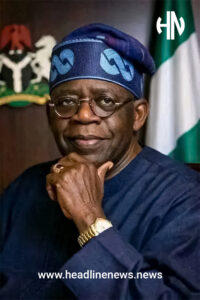
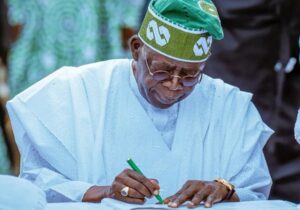
If Nigeria remains steadfast, strengthens its institutions, protects the vulnerable while sustaining reform, expands production, rewards enterprise and governs with discipline and integrity, future generations may look back on this period as the moment the nation finally broke free from the cycle of deferred promise.
If, however, reforms are abandoned whenever they become politically inconvenient, if institutions remain weak, if short-term expediency once again triumphs over long-term vision, history will record yet another opportunity lost.
The choice has never belonged to one president alone.
It belongs to an entire nation.
The Final Word
History is patient because it measures nations not by moments but by generations. It is unmoved by applause, indifferent to propaganda and untouched by political convenience. In the end, it asks only whether a people had the wisdom to confront reality, the courage to embrace necessary change and the discipline to sustain it. Nigeria’s Great Reset will not succeed because it was announced, debated or defended. It will succeed only if it leaves behind a nation that is stronger than the one that began the journey. If that happens, history will remember this era not as a time of sacrifice alone, but as the generation that chose nation-building over nation-wishing.
Food for Thought
“Every generation inherits a nation. Great generations leave behind a better one.”


THE NATIONAL PATRIOTS.
The National Patriots believe that history will judge Nigeria not by political rhetoric but by national results. We urge leaders, institutions and citizens alike to remain committed to reforms that strengthen the economy, deepen democracy, protect the vulnerable and expand opportunity. The greatest legacy any generation can leave is a nation stronger, fairer and more prosperous than it inherited.

Princess Gloria Adebajo-Fraser MFR.
Former Special Adviser to Former President Goodluck Jonathan.




